

"I absolutely loathe hydrangeas"
The flower of summer, desire and transformation

This post doesn’t fully show in email. Check it out on the Substack app or desktop for the full experience. Trust me it looks way better!

Well… I don’t loathe hydrangeas, but Madonna famously does. During the 2011 Venice Film Festival after a fan gifted her a bouquet of hydrangeas, she was heard whispering to a co-star, “I absolutely loathe hydrangeas. He obviously doesn’t know that.” after that same year, she posted a YouTube video titled Madonna’s Love Letter to Hydrangeas, a satirical-sepia-toned silent-film-style-short in -which she ended it with “I’m left with the fact I still hate hydrangeas! And I will always hate them! It’s a free country! So f**k you I like roses!!”

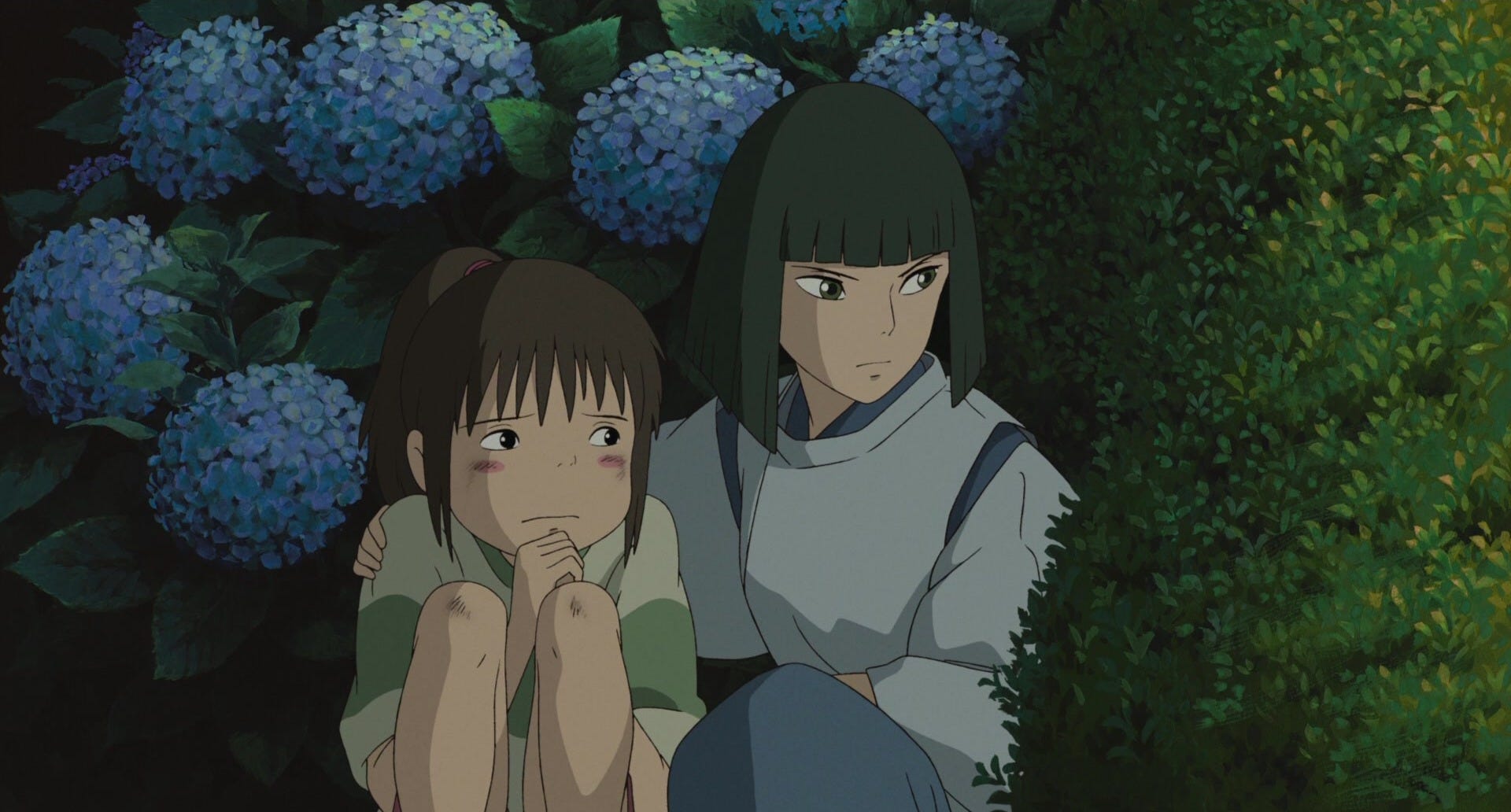
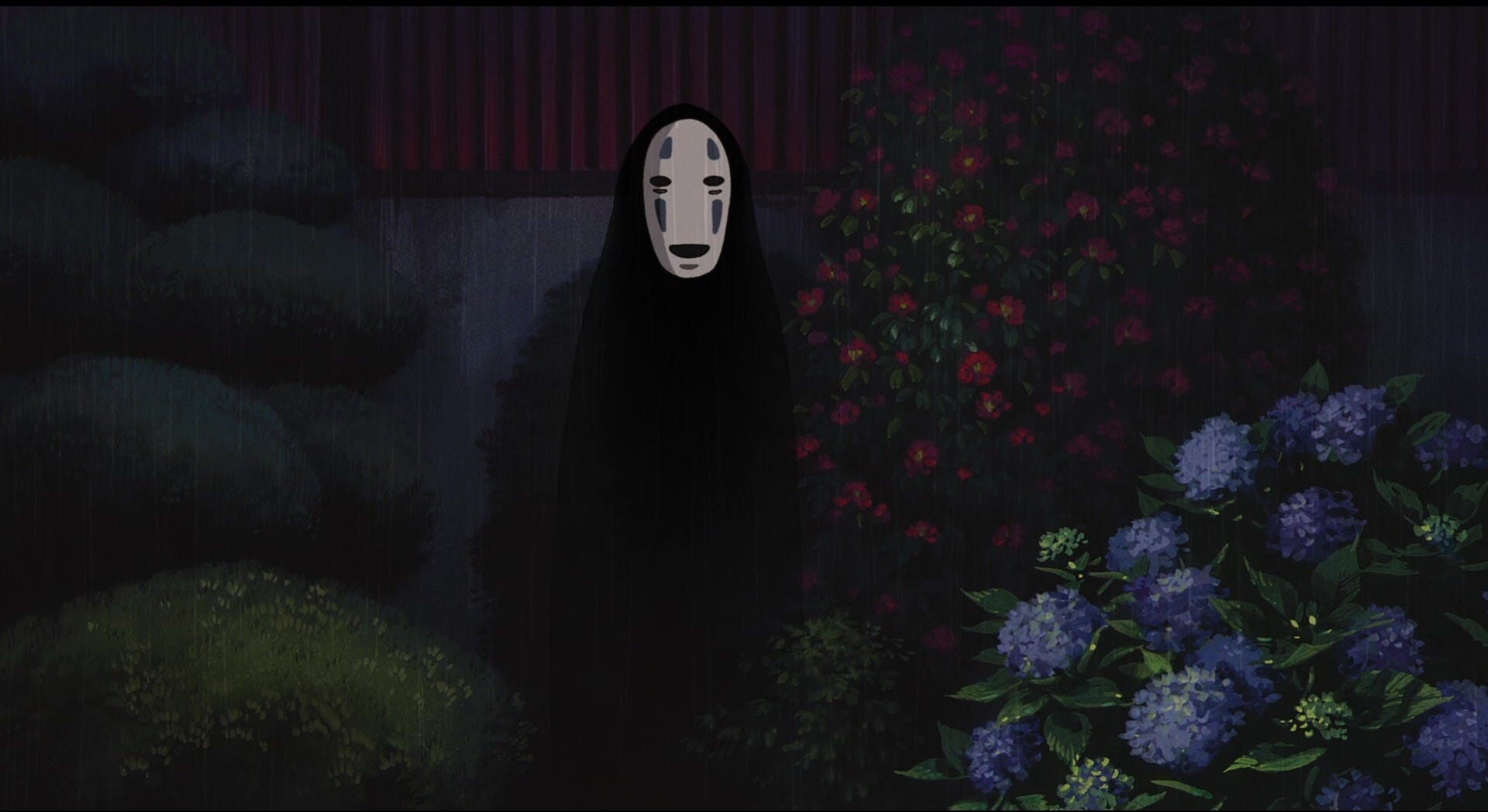
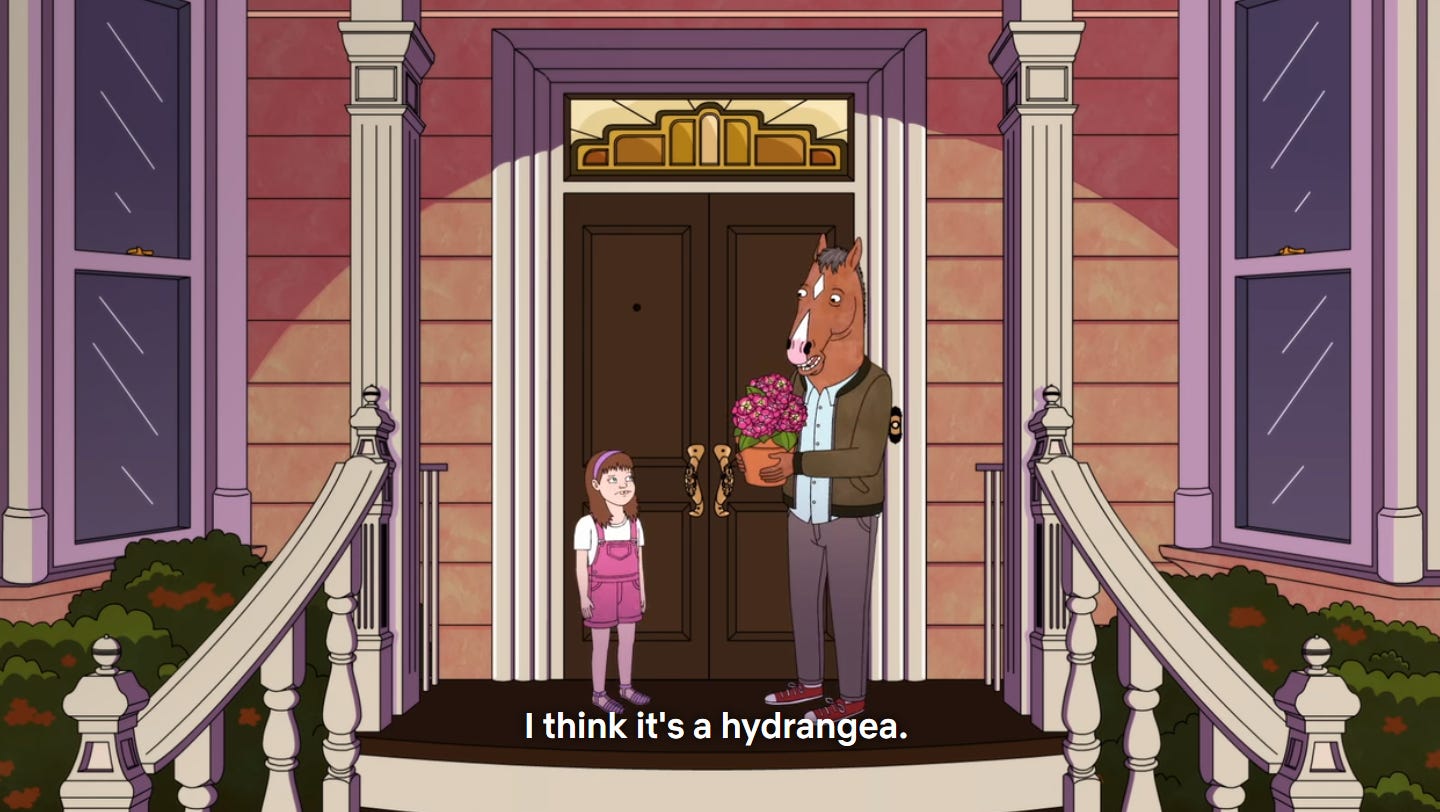
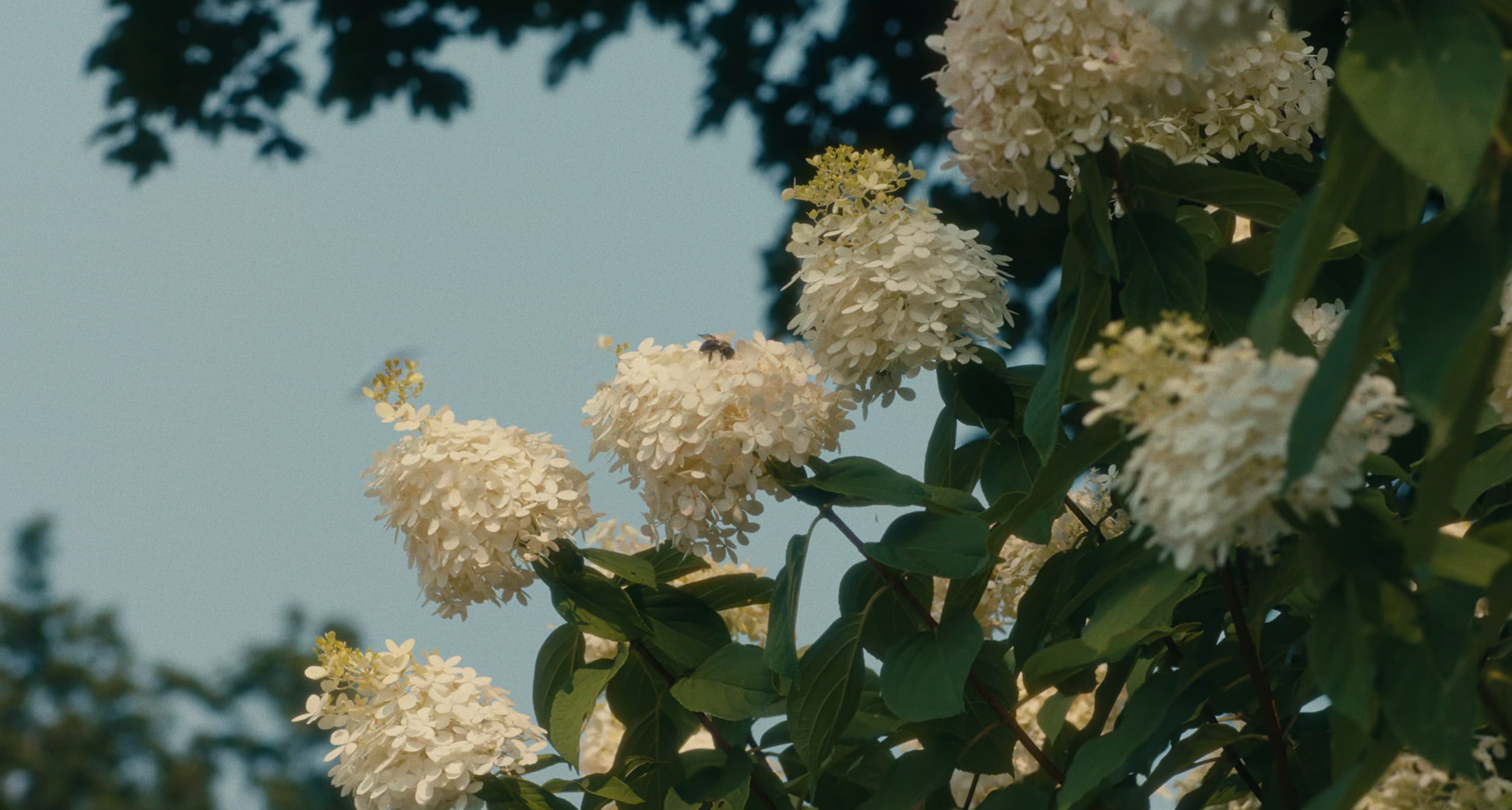
Last week, during the first Flowers in Cinema event with Alyson of Sometimes Y, I highlighted hydrangeas and explored their symbolism, as well as the connection they have developed with ideas of class and status in film. I chose hydrangeas because they feel like such a quintessential summer flower. What better flower to talk about in the middle of a New York City heatwave?
If you attended the event, you got a sneaky peak of this newsletter! If you missed it, or are curious about how it went, I’ll be sharing a round-up post next week with highlights from the evening <3
I never really cared much for hydrangeas until moving to New York 10 years ago, especially now living in the east coast I see them more frequently. They were never a staple in the dry, sunny landscape of San Diego where I’m from so I didn’t see them a lot growing up.
About
The name hydrangea comes from Greek words that mean “water vessel”.
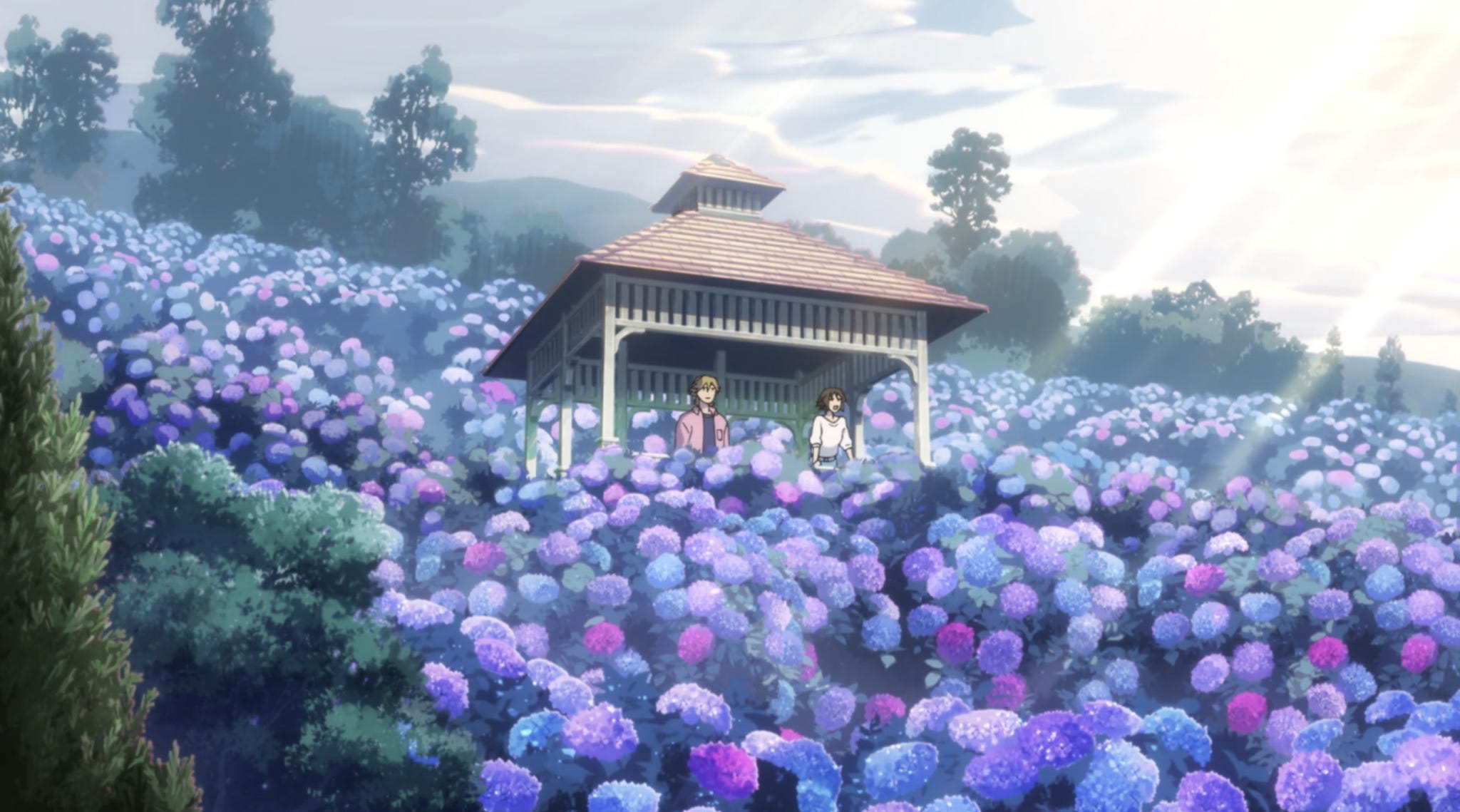
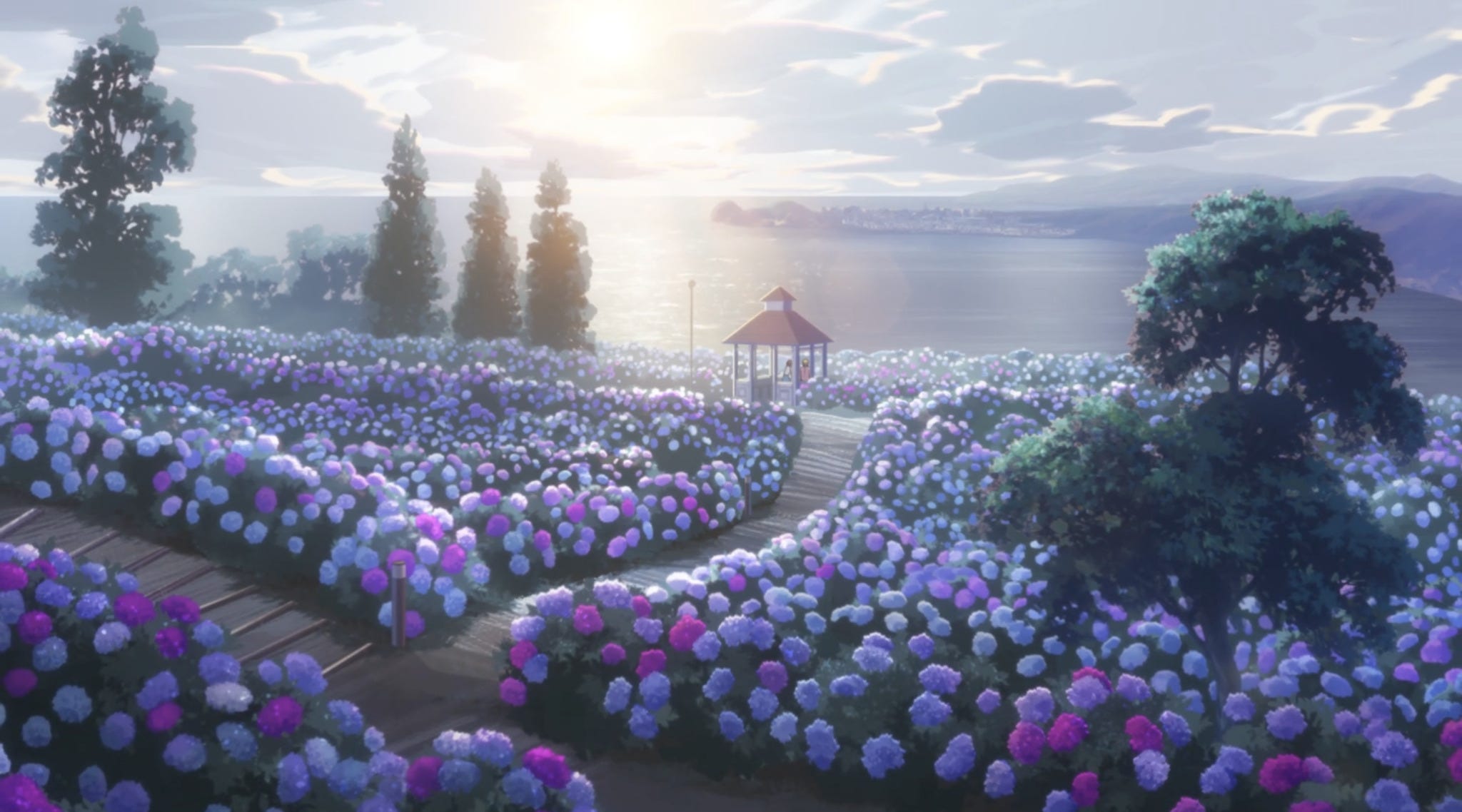
In Japan they have been growing hydrangeas for hundreds of years and every summer the temple gardens are filled with them. There is a Japanese legend about an emperor who gifted blue hydrangeas to the family of the woman he loved because he was sorry for not paying attention to her enough. This is why hydrangeas are still associated with saying sorry and being thankful in Japan.
Hydrangeas were then introduced to Europe during the 18th century through expeditions, where they quickly became cherished flowers. Europeans started growing hydrangeas in their gardens. By the time the Victorian era came around hydrangeas had become a part of the language of flowers. The meaning of hydrangeas changed a lot when they were adopted by a new culture. Despite their beauty, they became symbols of vanity and pride in Victorian England, illustrating how the same flower can carry a totally different meanings depending on culture.

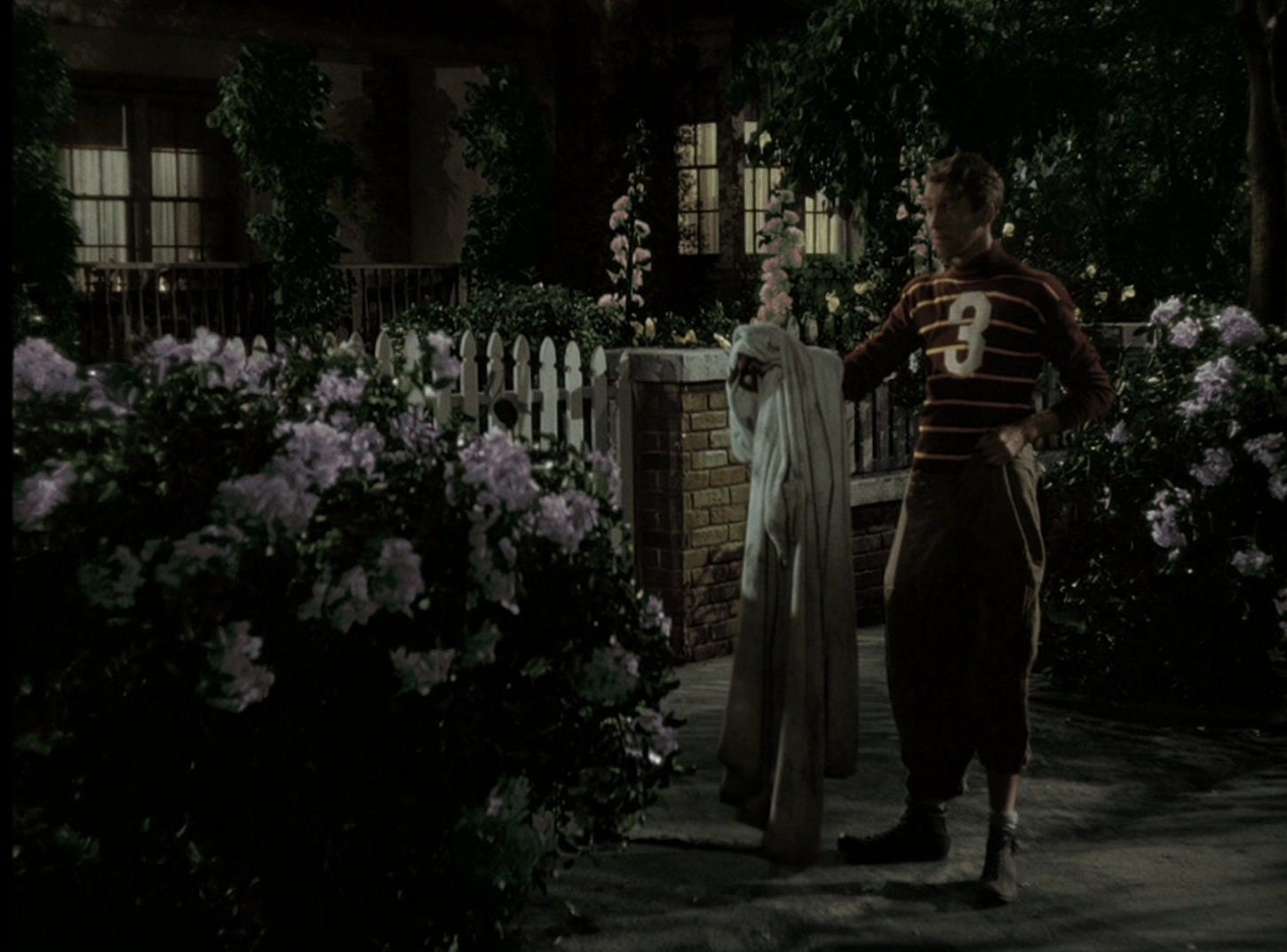
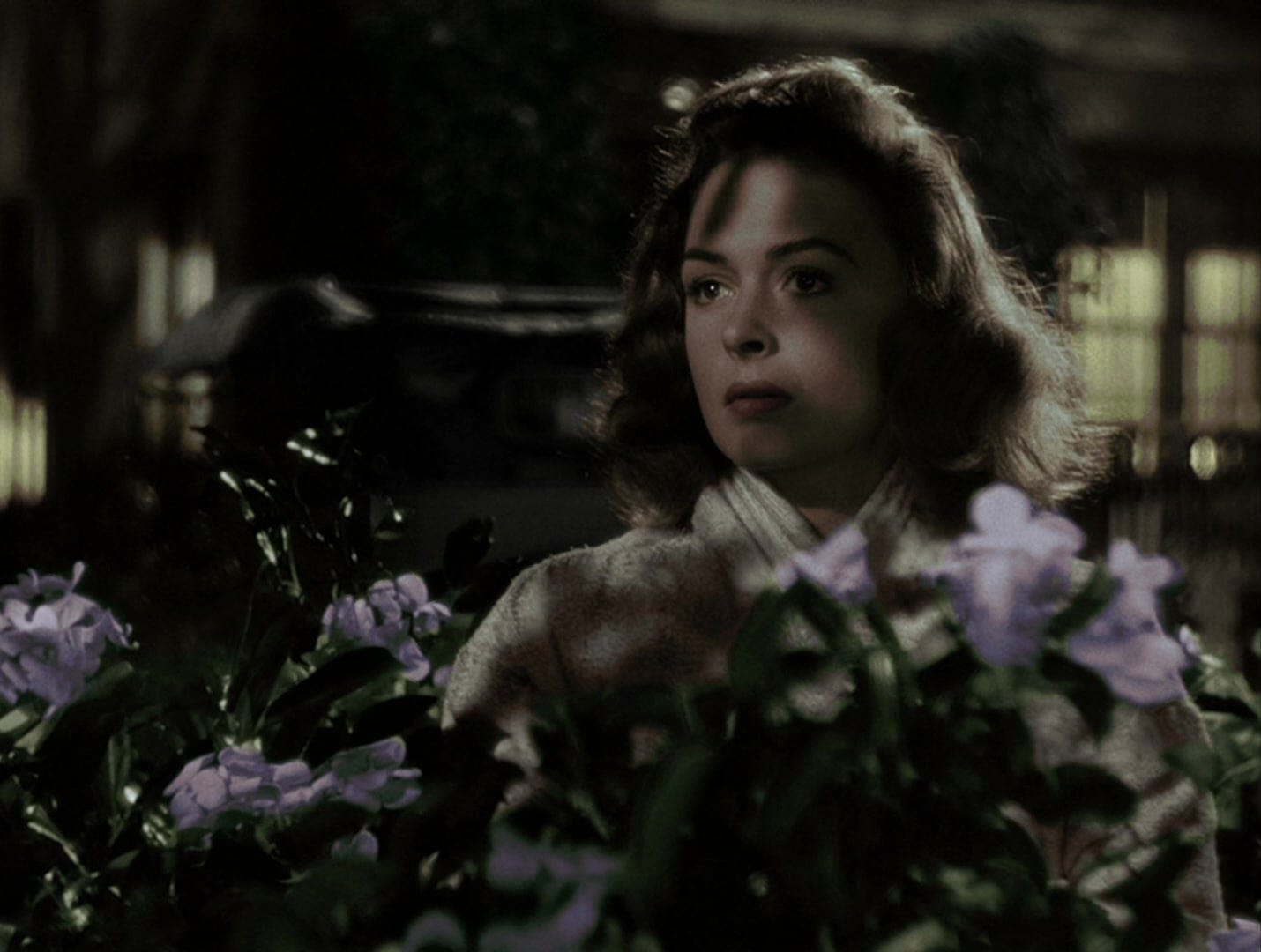
"Over here in the hydrangea bushes."
— It's a Wonderful Life (1946)
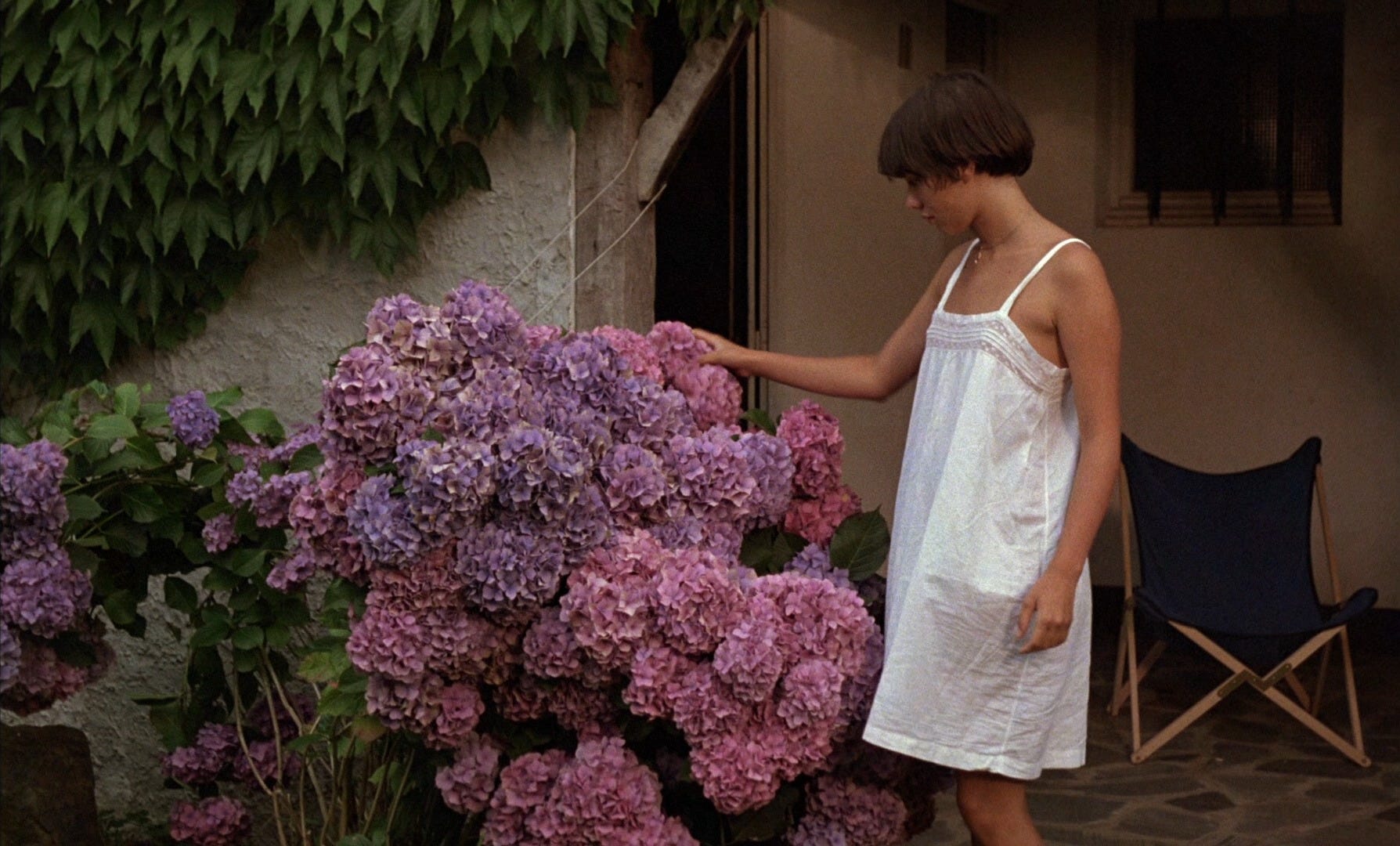
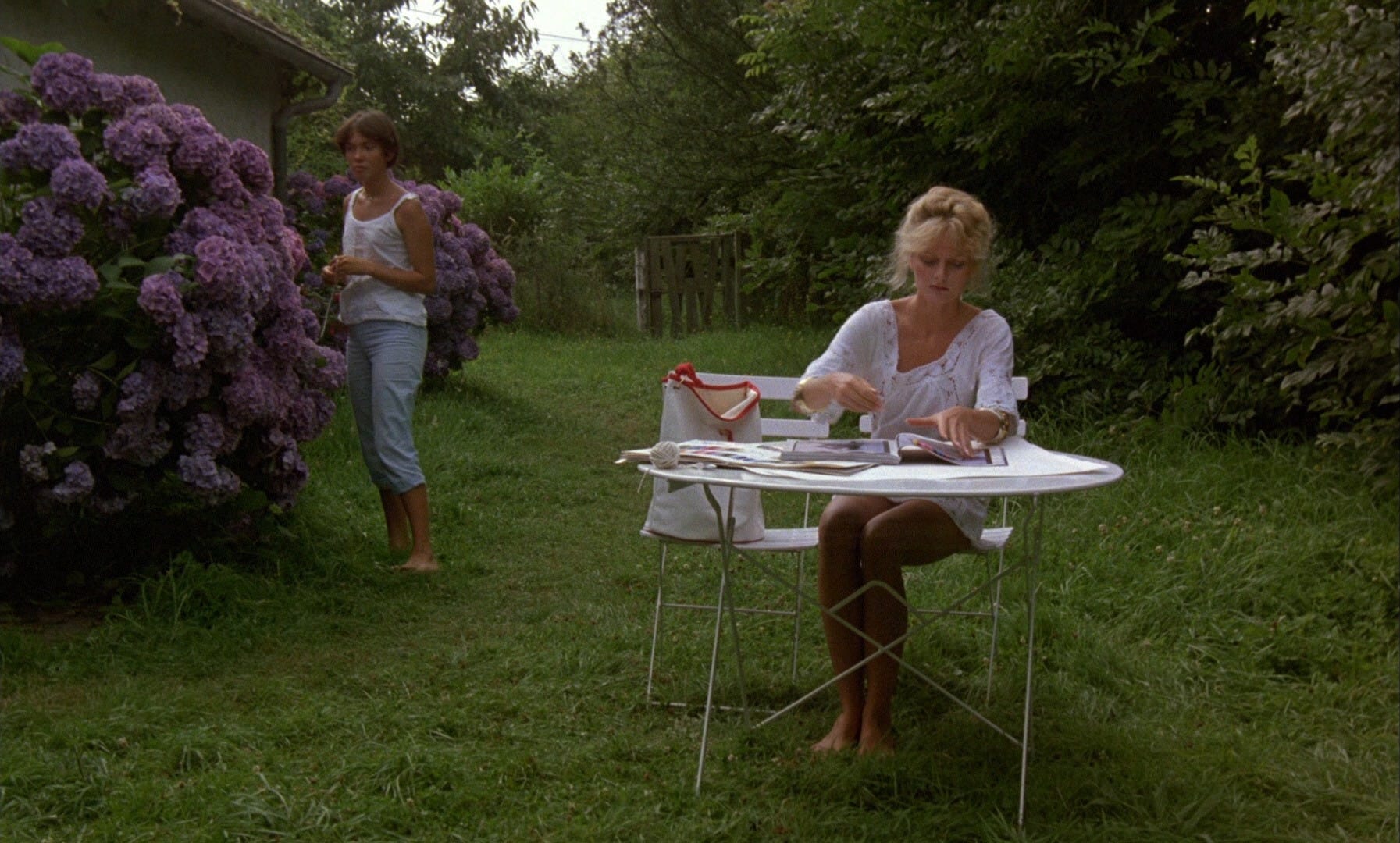
Pauline at the Beach
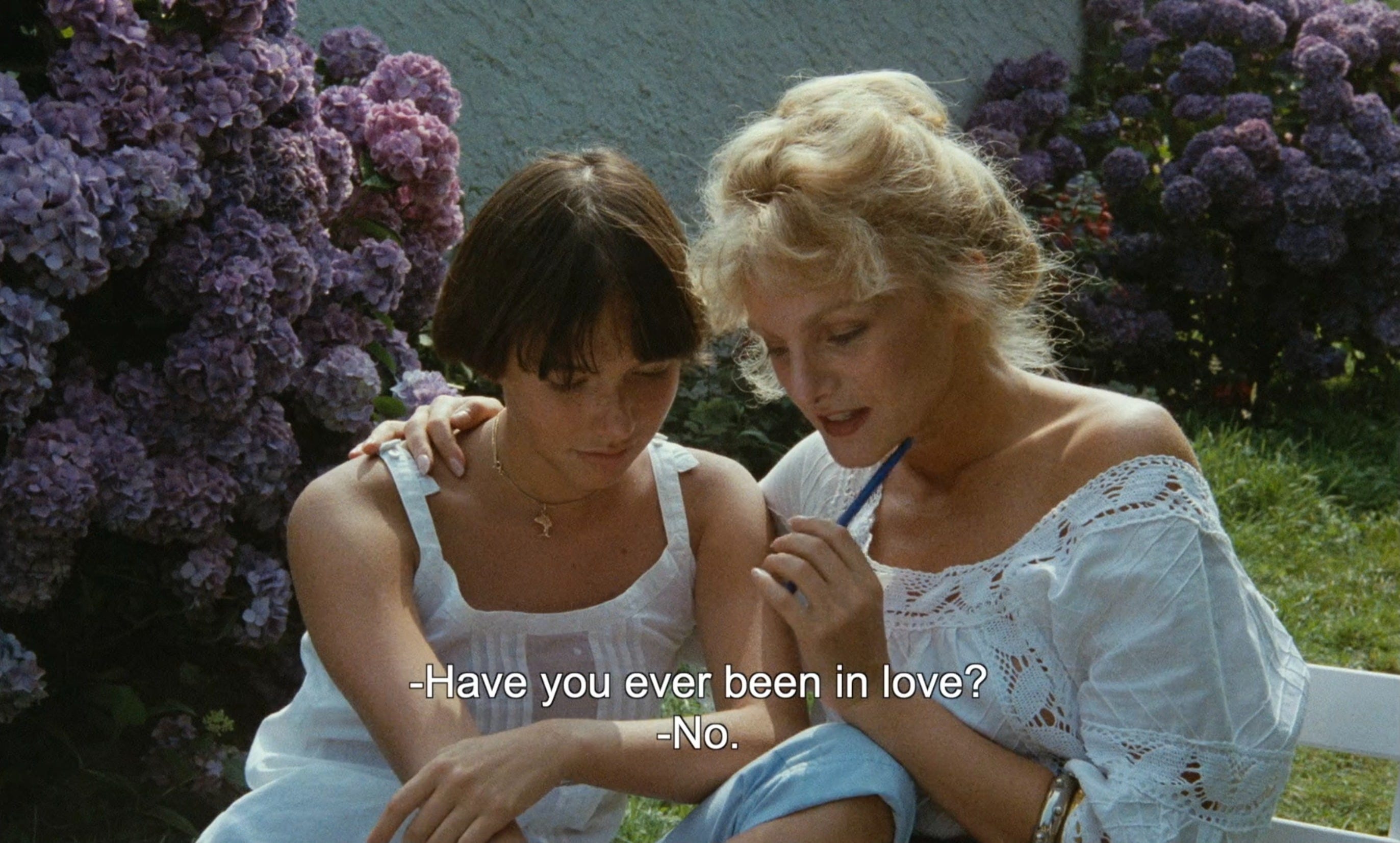
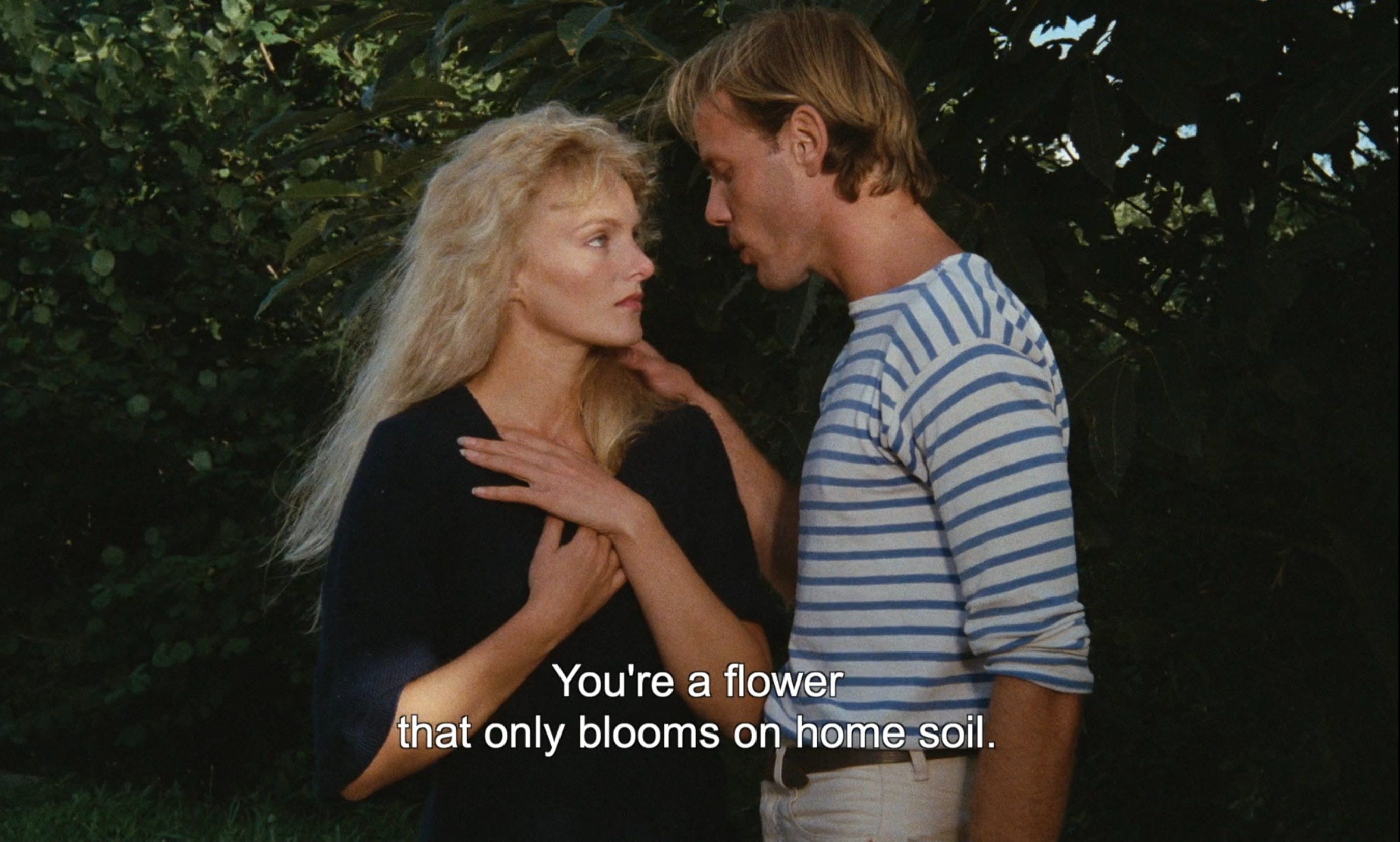
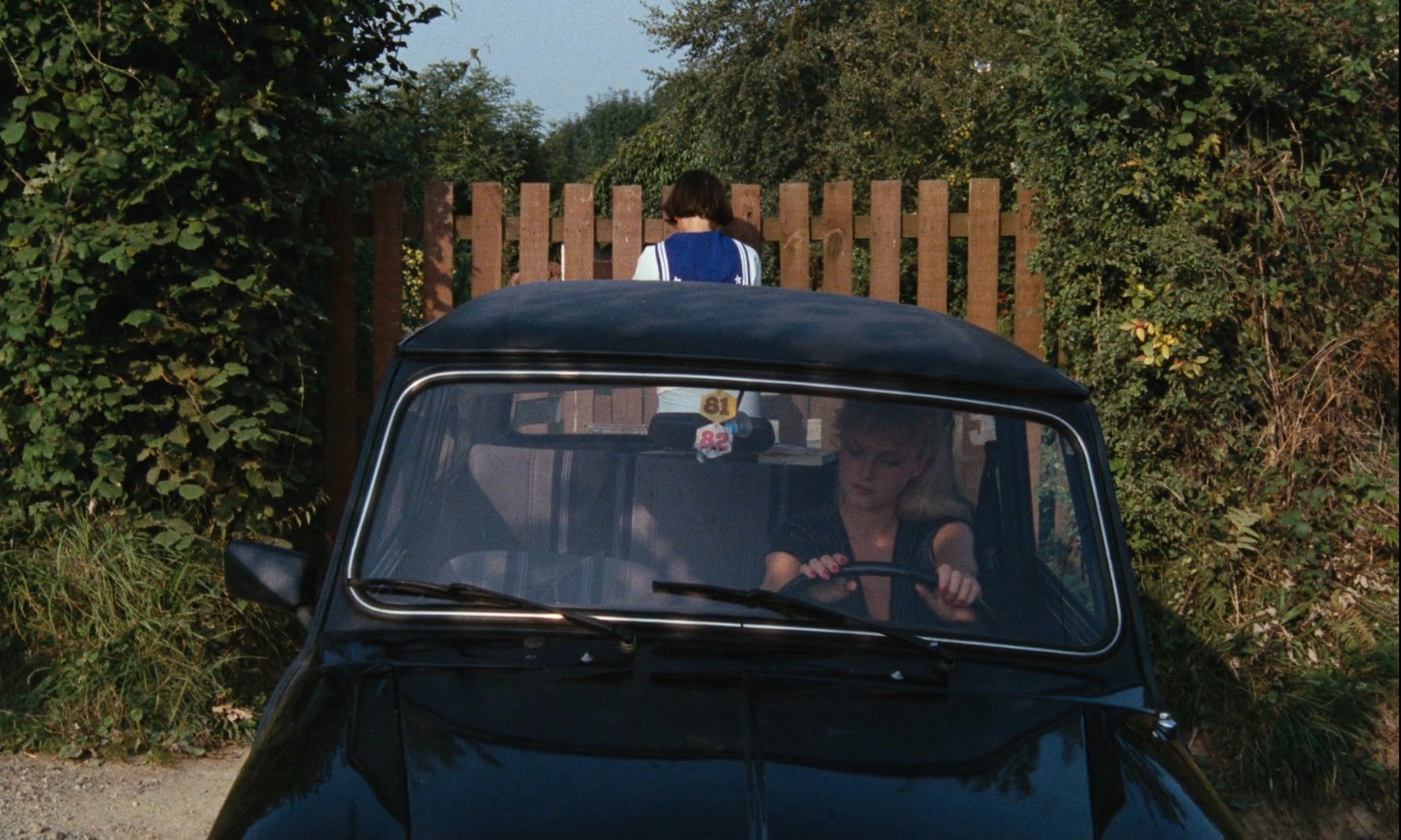
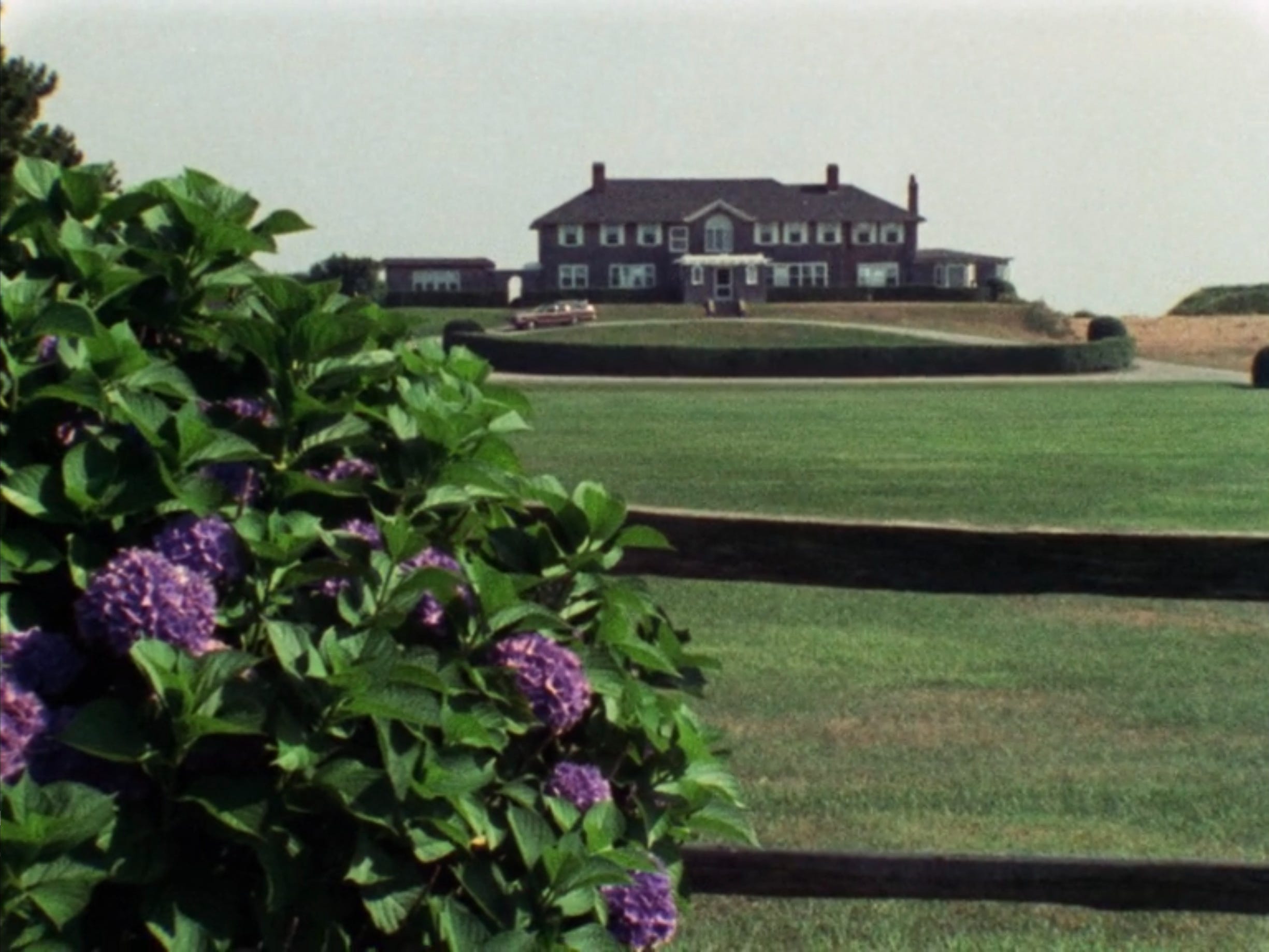
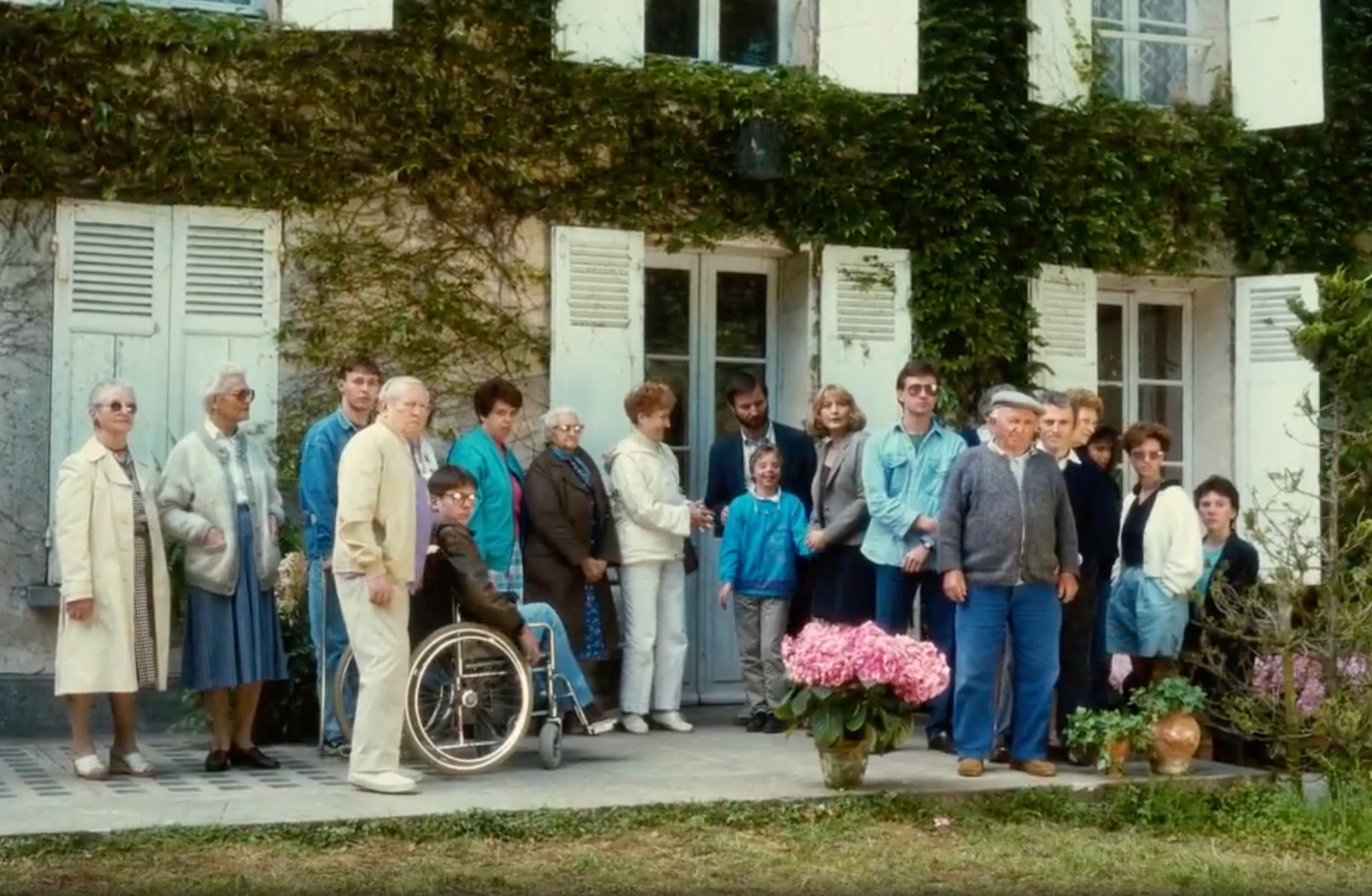
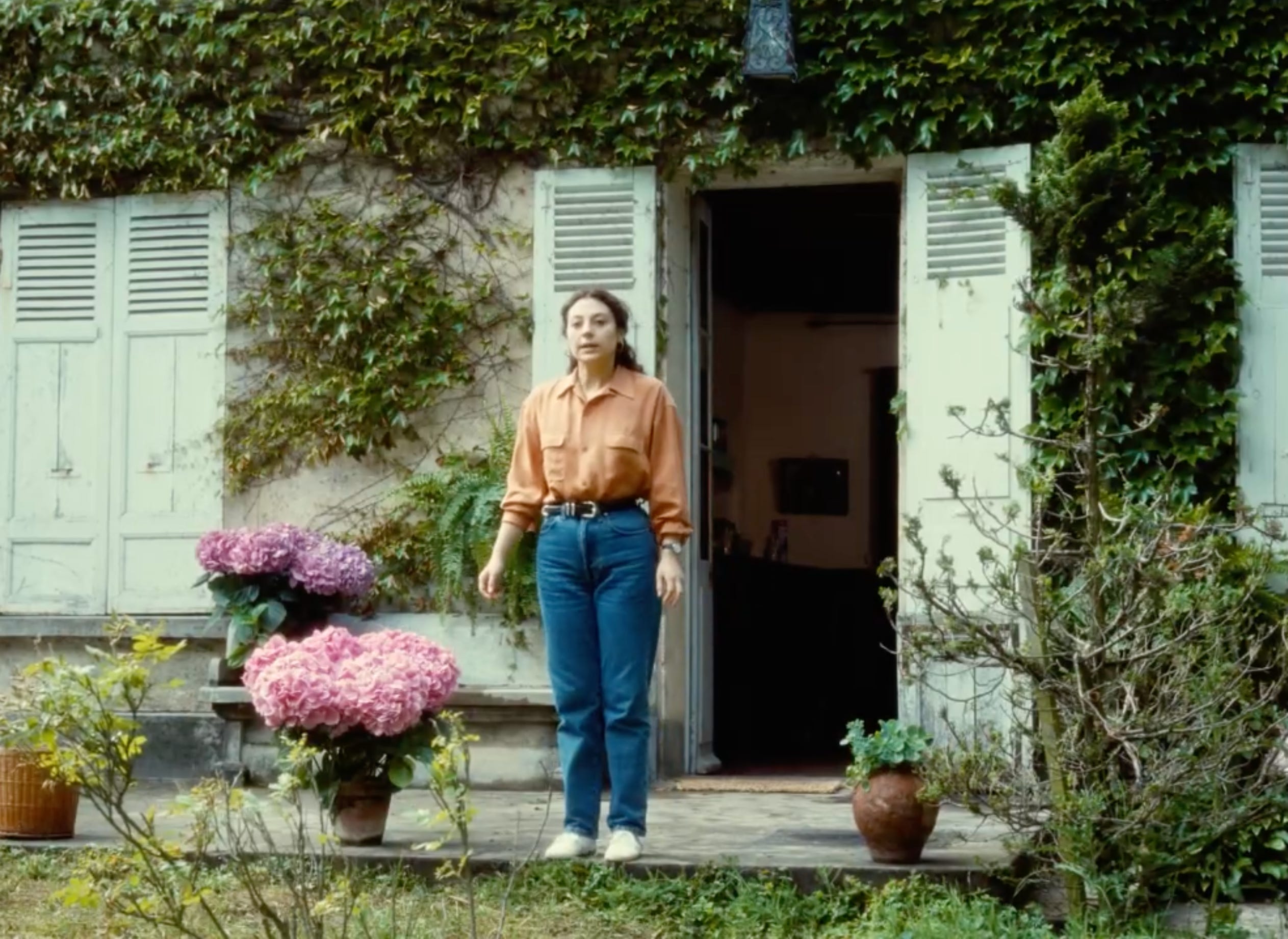
One of my favorite hydrangeas in a film is Pauline at the Beach (1983) directed by Éric Rohmer, where cousins Pauline and Marion go to a vacation home somewhere in the north-western coast of France for the summer. If you’re a regular reader you already know I'm always inspired by the world of Rohmer from the interior, fashion, and frizzy hair texture (we need more of this pls).
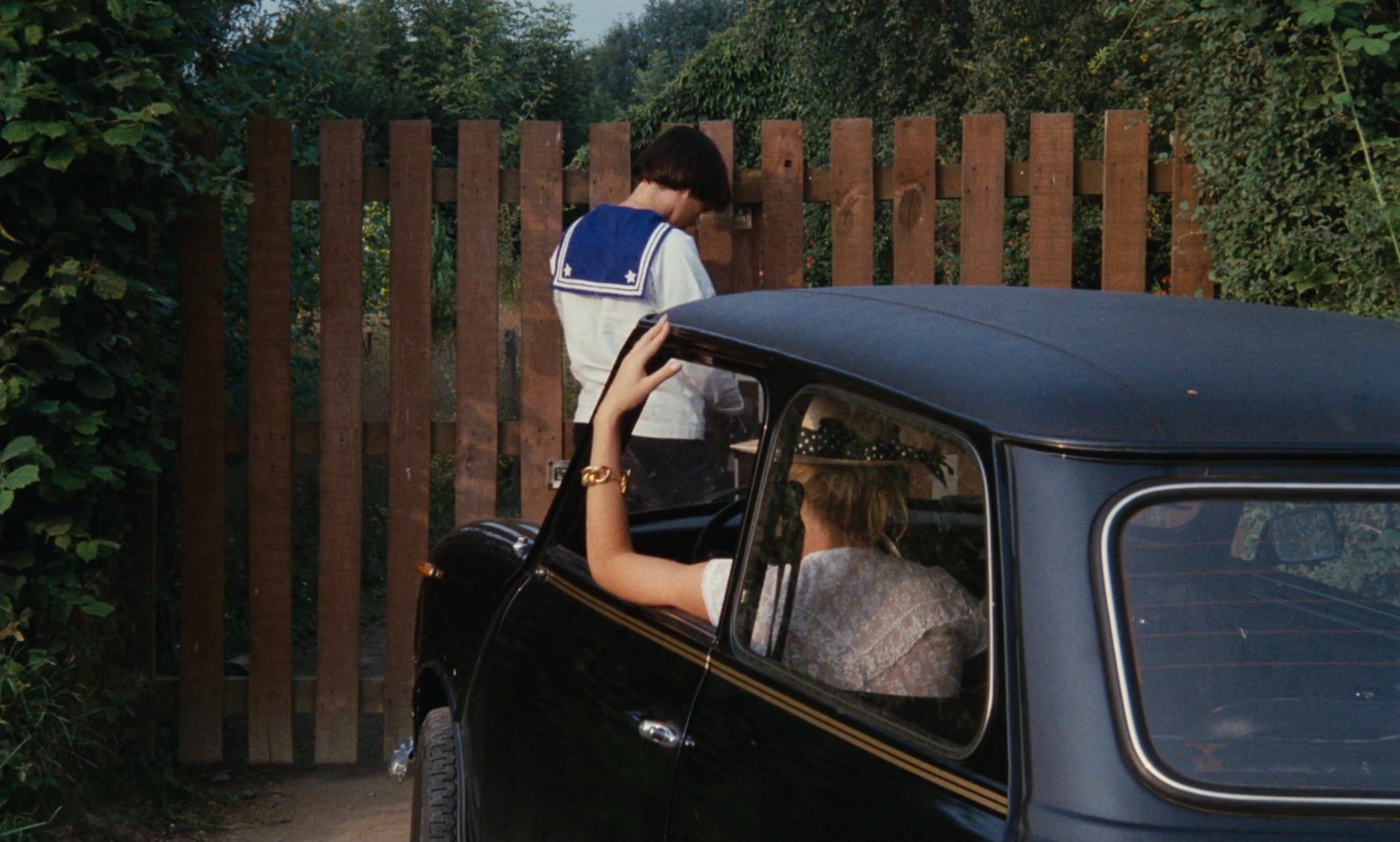
Within the first five minutes of the film you are already placed into this idyllic, summer-y scenic setting. It’s the beginning of summer, there’s possibility there’s hope theres the the possibility of reinventing yourself. You watch protagonist, Pauline open the wooden gates to their summer home while her cousin Marion drives in. Their backyard is filled with large, lush purple hydrangeas bushes that frame the story as summer unfolds for both Pauline and Marion. At the beginning, the blooms are vibrant and full, their purple intense in the early days of the season.
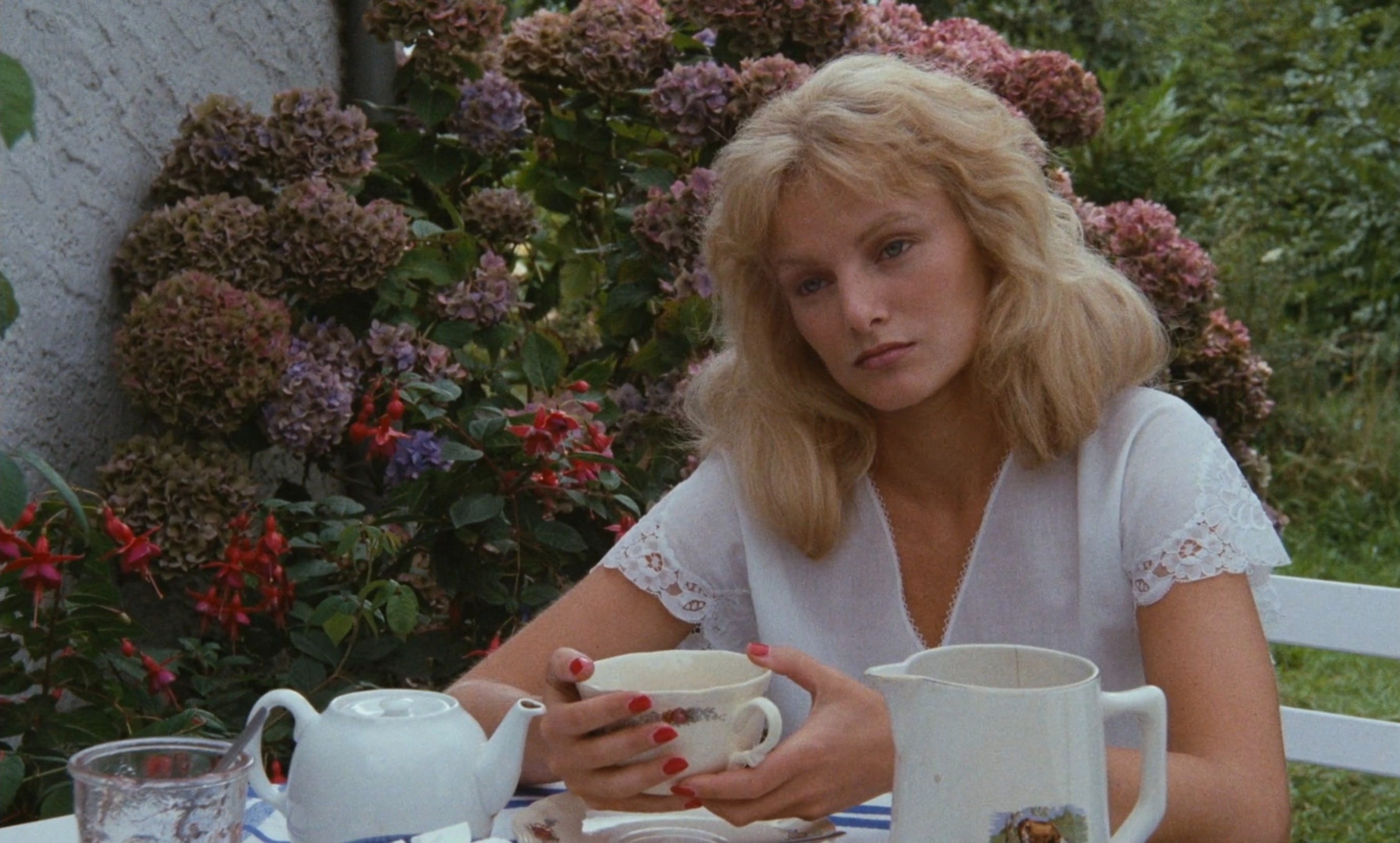
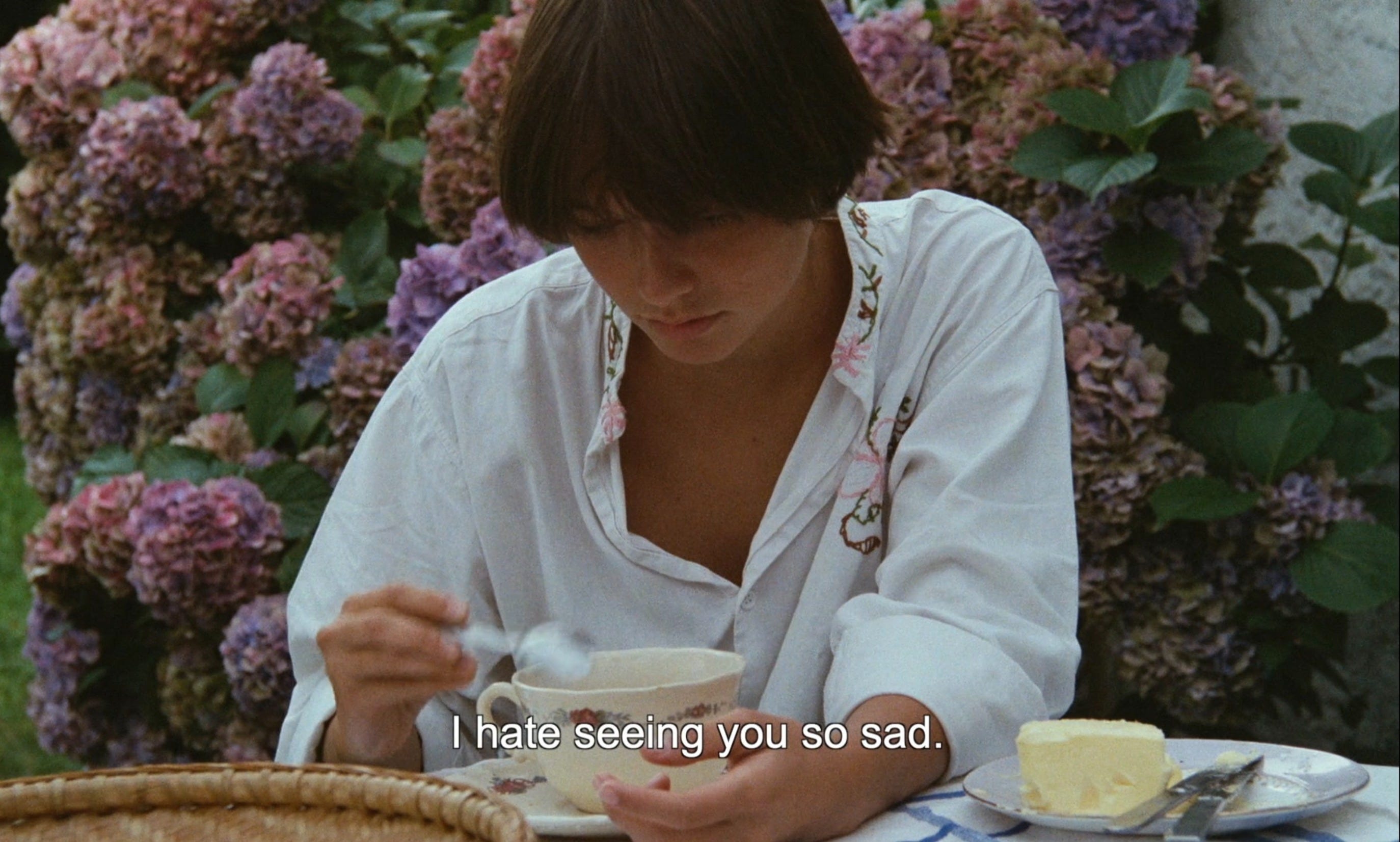
By the end of the film you can see the saturation of the purple disappear and appear wilted and brown. Their fading color mirrors the quiet disillusionment that settles in. Just as how they entered the summer home the film concludes on a cyclical note, closing with the same shot of the cottage gate it opened. You see Pauline is wearing the same exact sailor blouse when summer started but Marion is now wearing a black dress a big contrast from the white lace dress she started summer in.
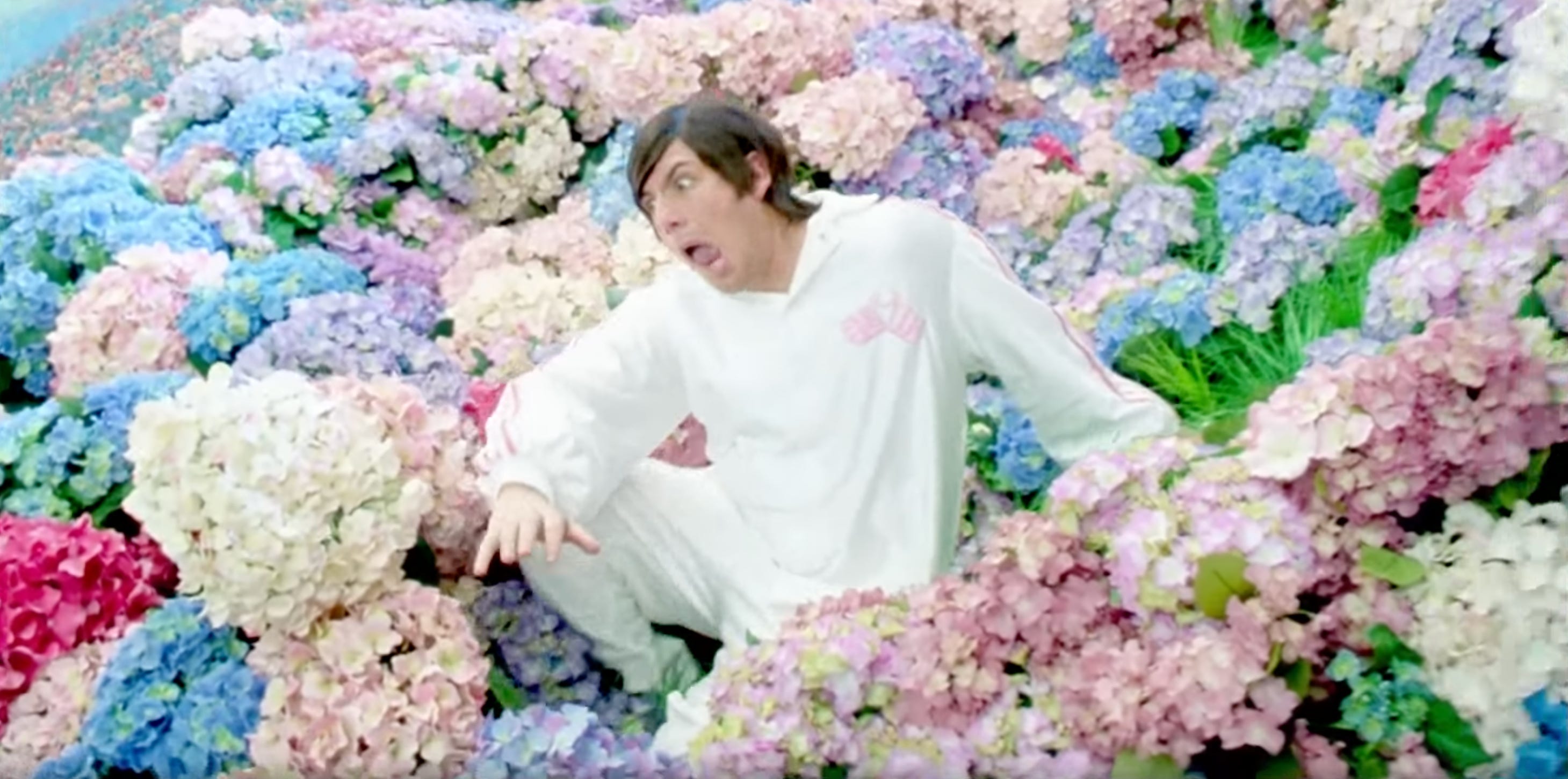
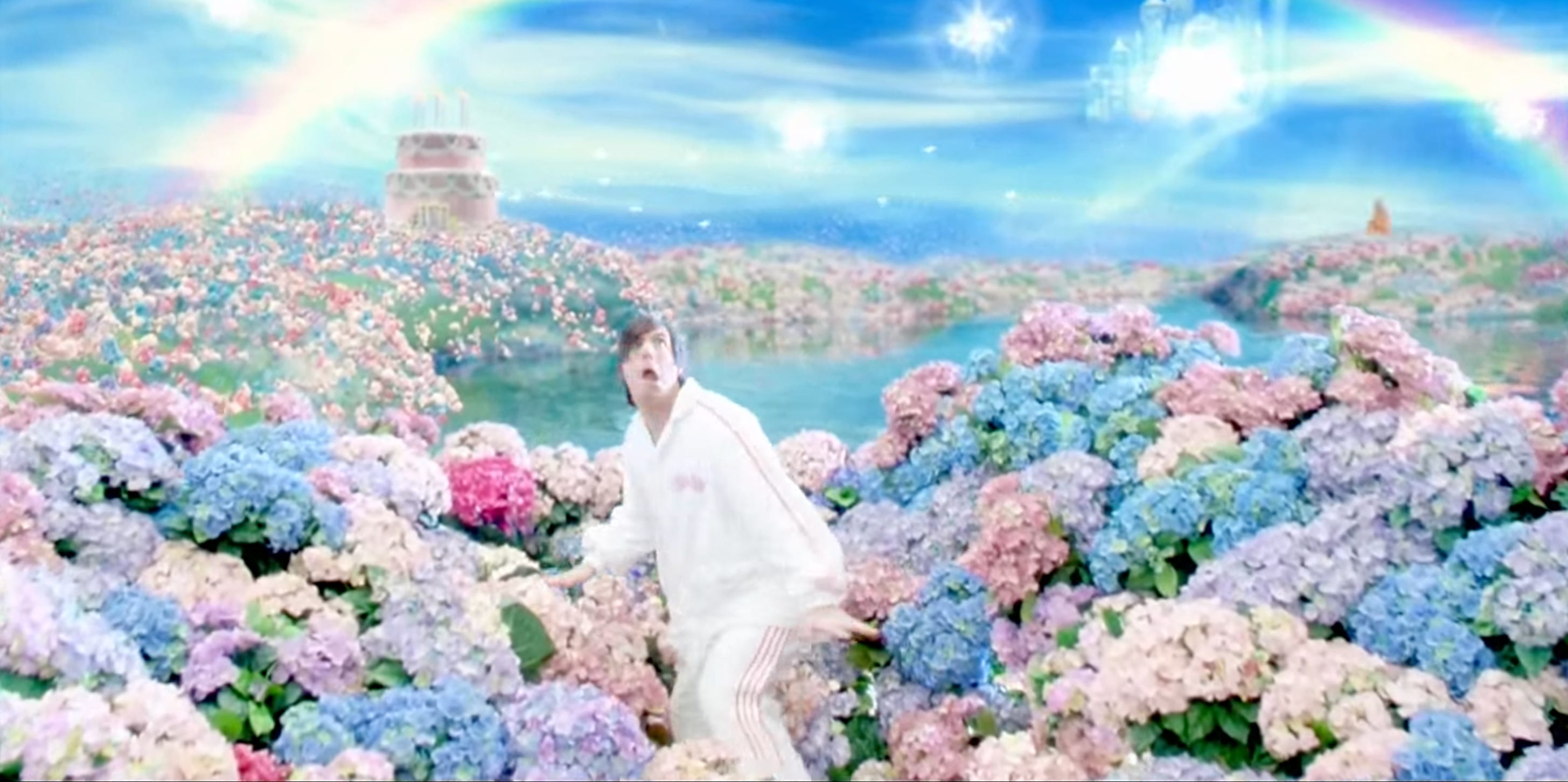
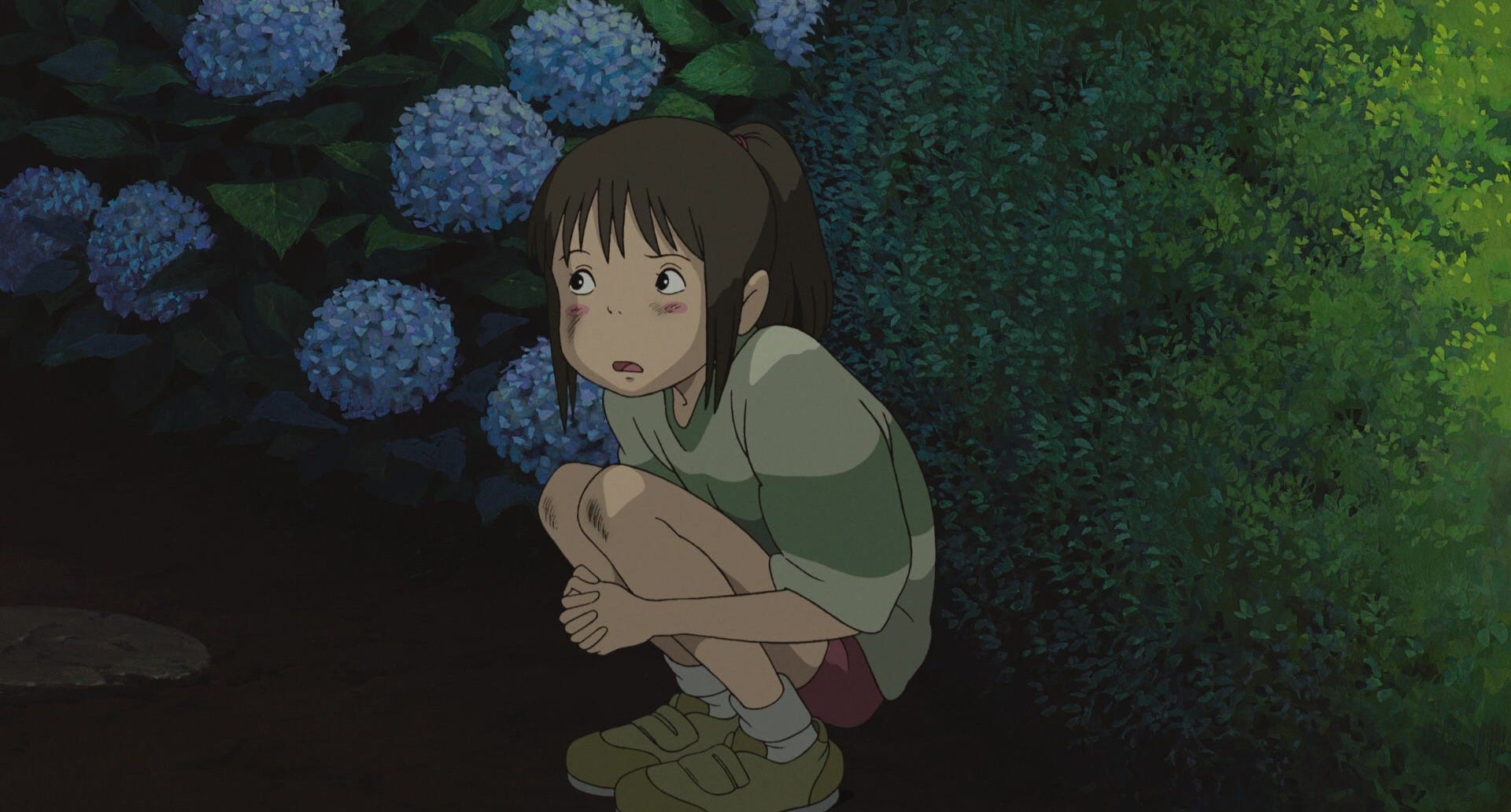
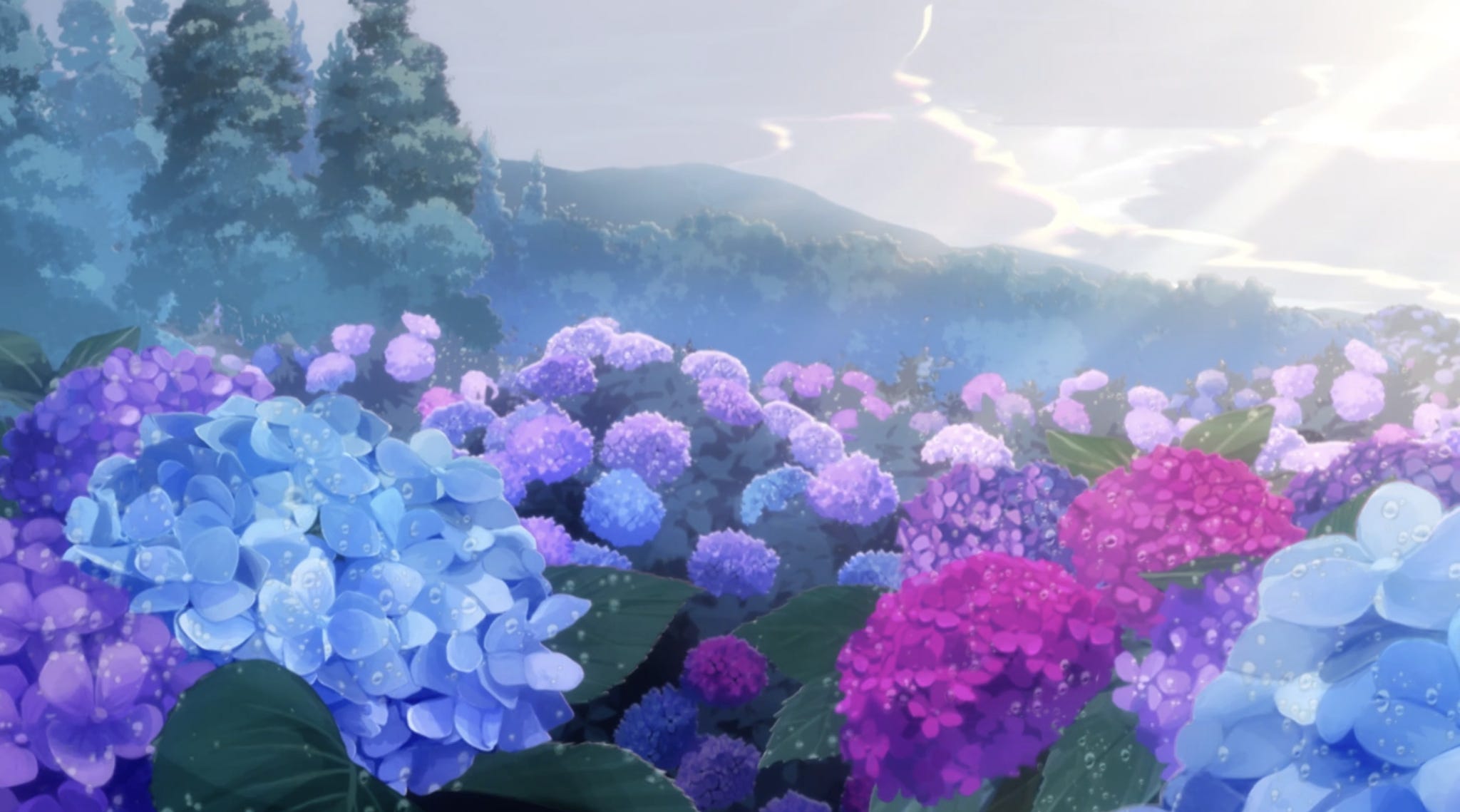
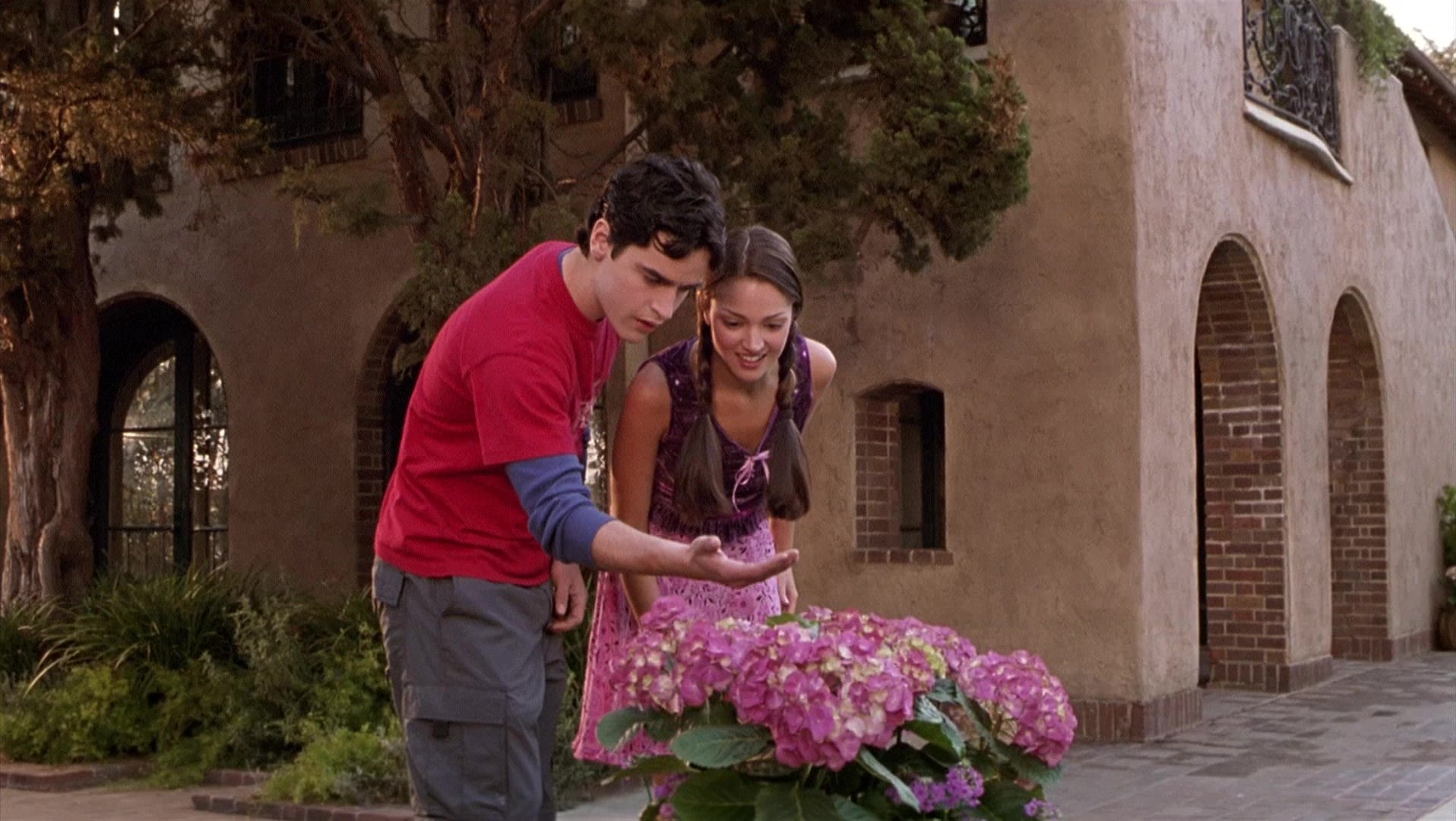
Little Nicky is easily a close second favorite of mine when it comes to showing hydrangeas. Early in the film, Nicky wakes up in Heaven, a world filled with pastel hydrangeas and angels dressed in white, which contrast sharply with Hell's dark, fiery landscape. While Pauline at the Beach uses hydrangeas to trace the emotional passage of summer in a grounded, real-world setting, Little Nicky transforms them into symbols of an idyllic paradise, showing how the same flower can take on an entirely different meaning in a fantasy world.


Class
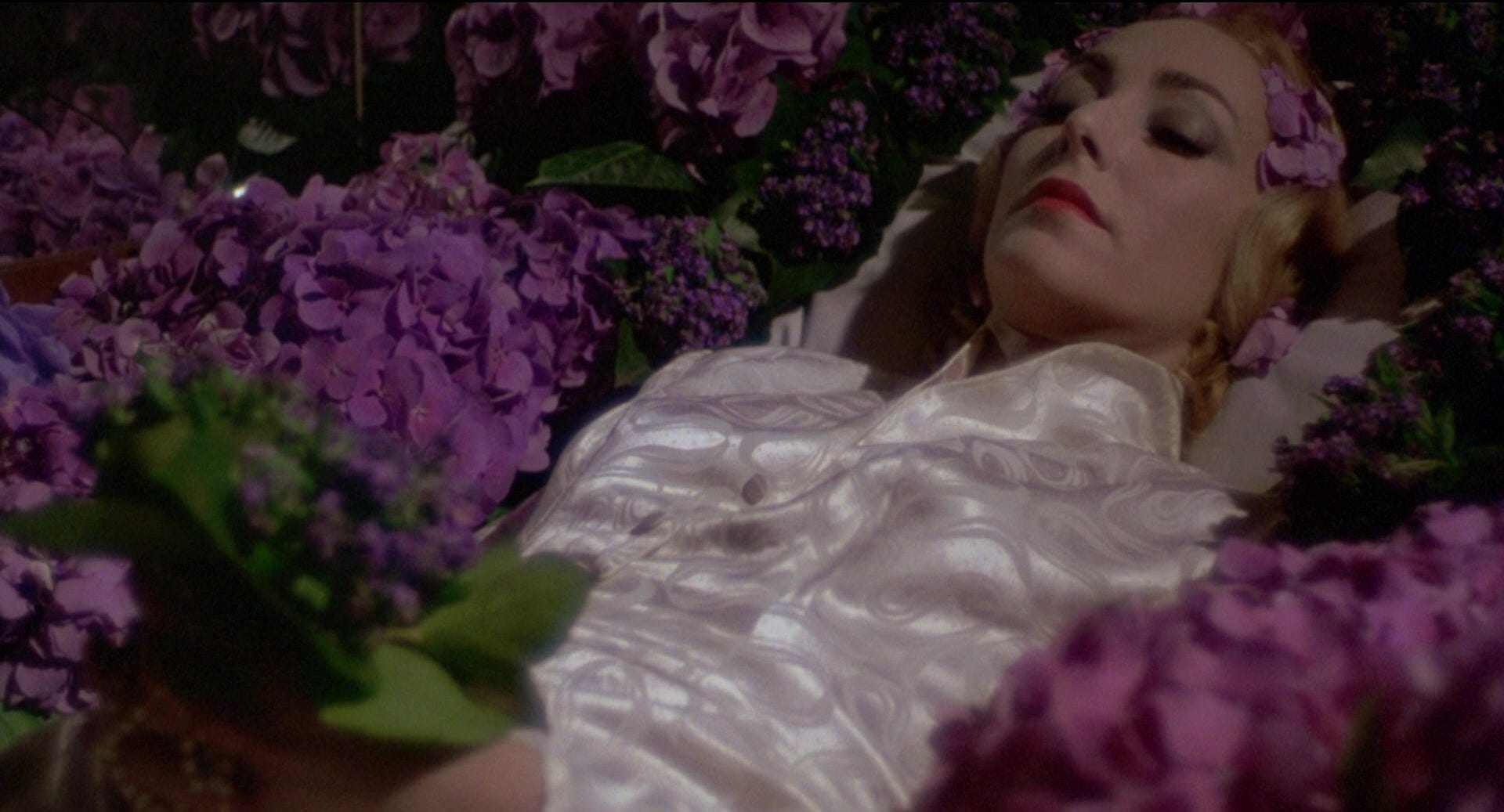
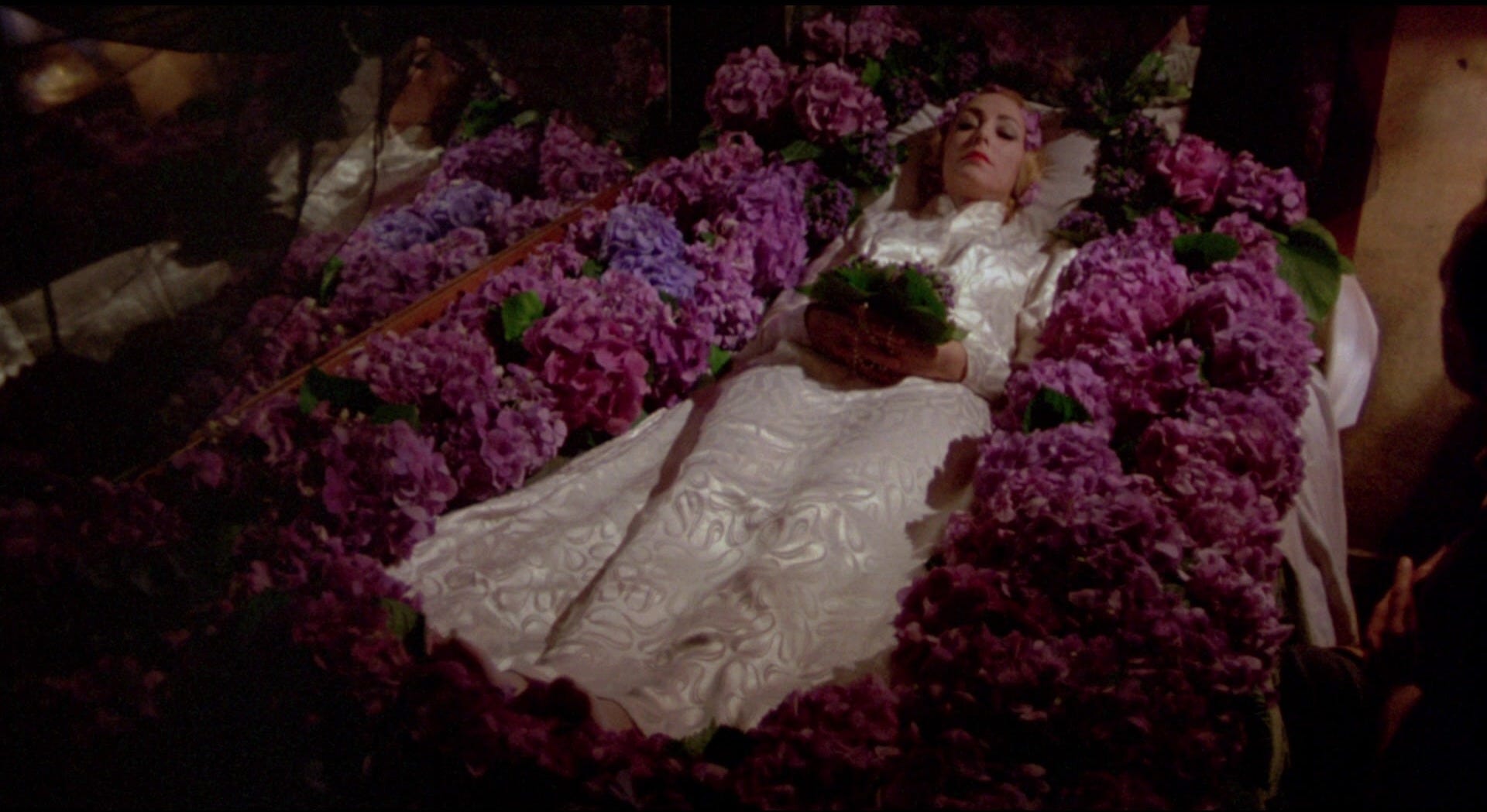
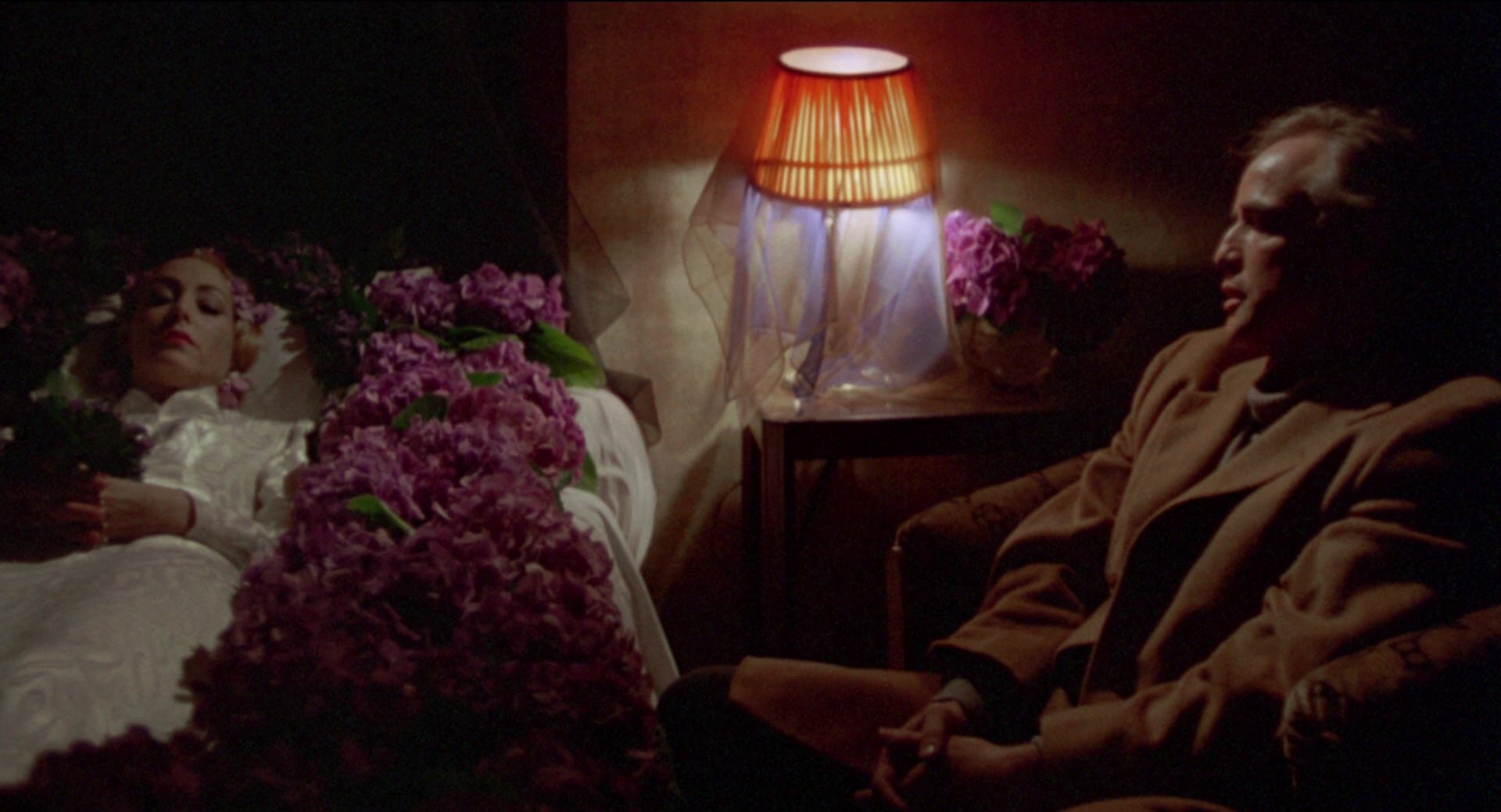
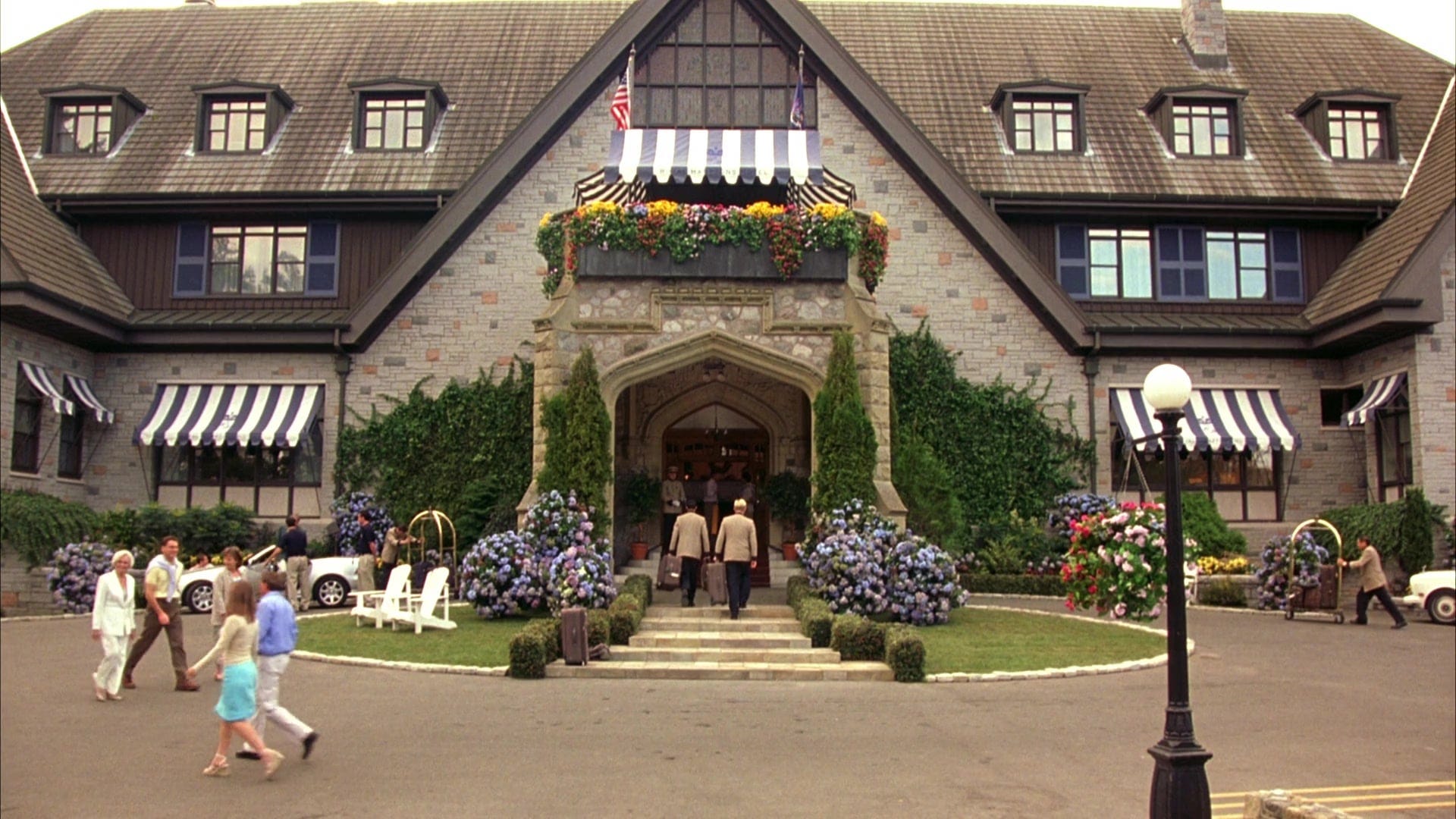
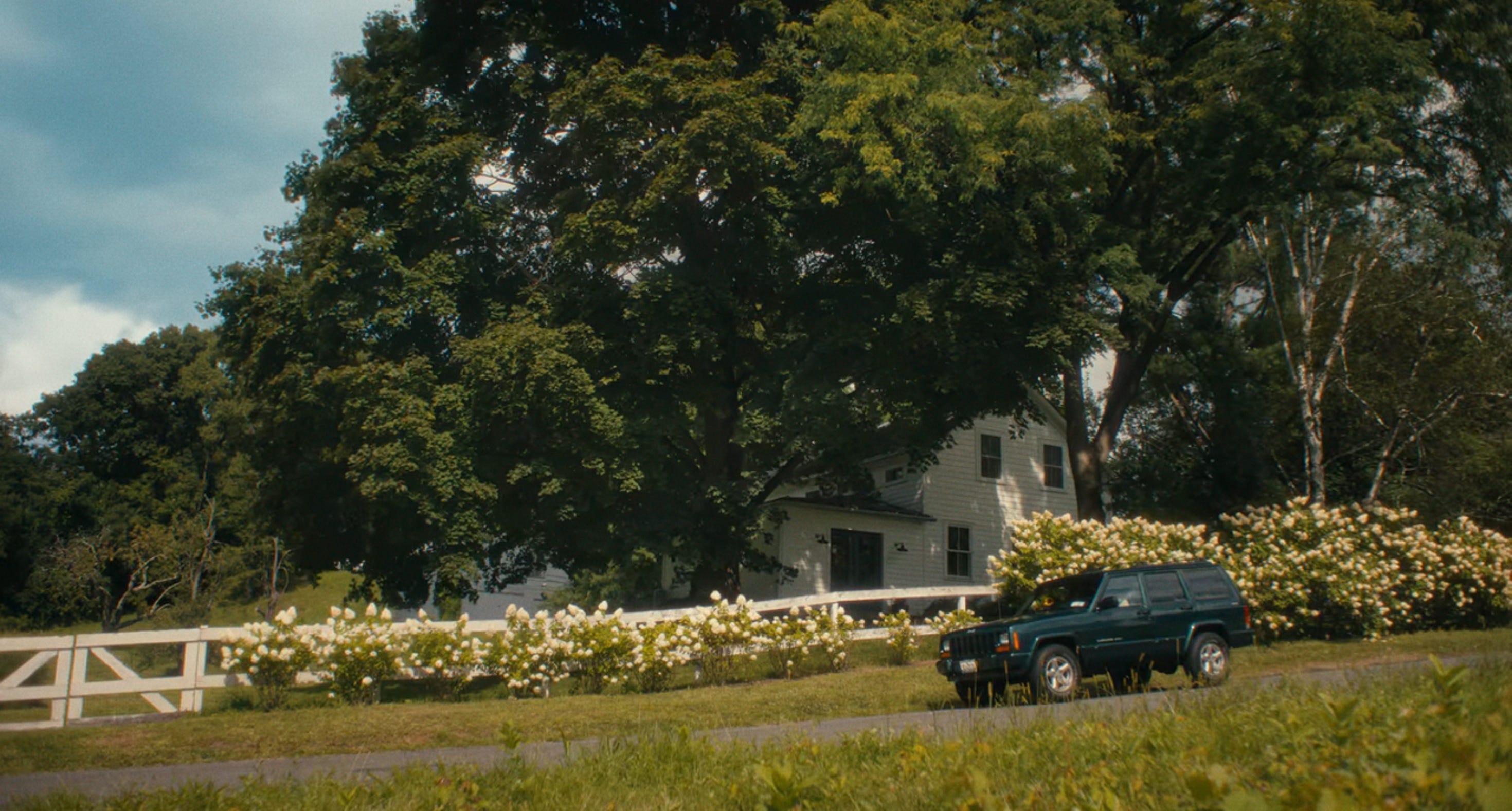
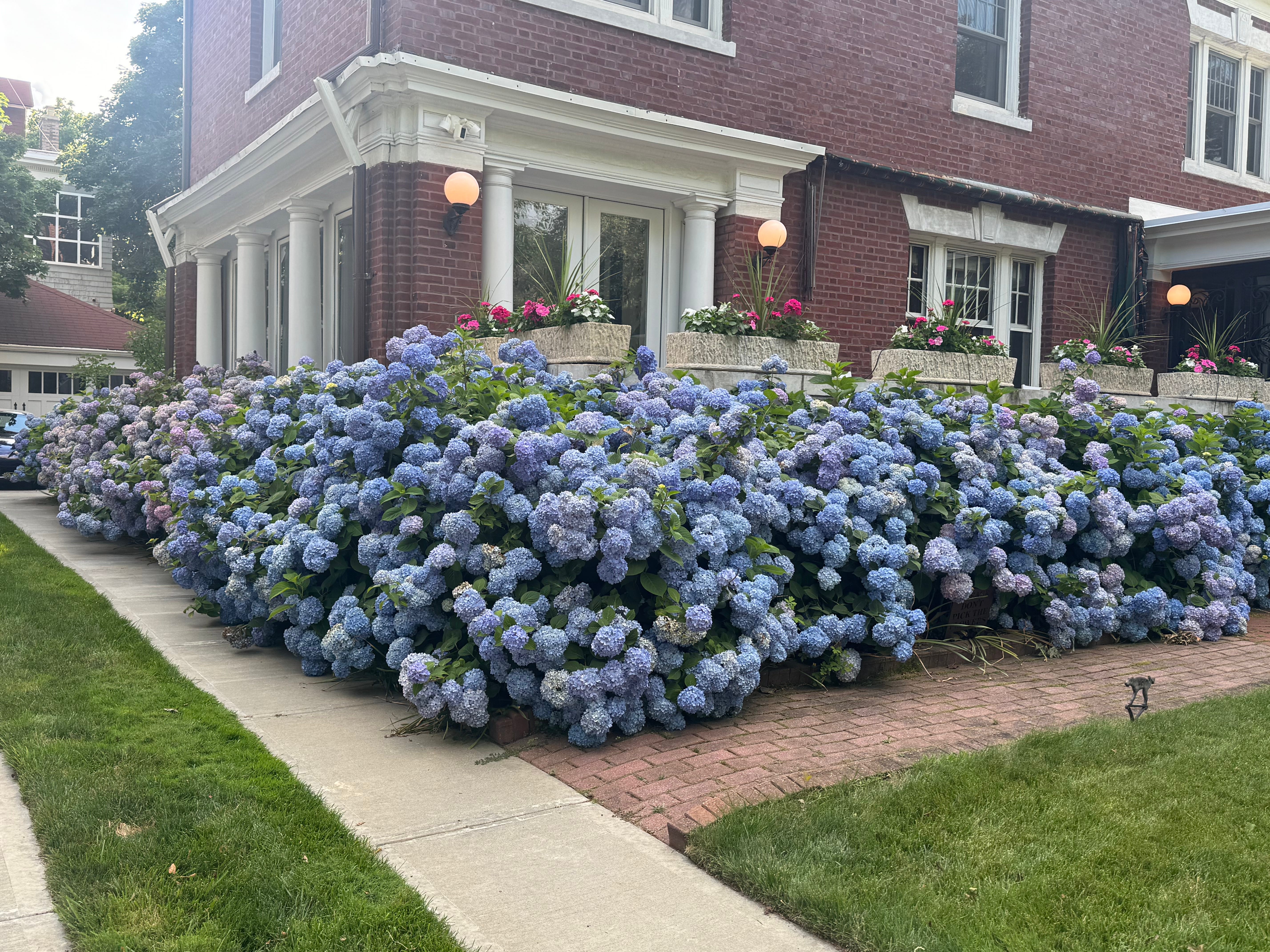
Hydrangeas have an association to the ideas of class and status. It’s hard not to see when large, immaculately maintained hydrangea bushes are a staple in wealthy coastal enclaves such as Nantucket, the Hamptons and Cape Cod.
They are often associated with neighborhoods where homeowners invest heavily in landscaping, from regular pruning and seasonal maintenance that keeps their large blooms looking healthy. Over time, this has created an association between hydrangeas and wealthier suburban landscapes, even though the flower itself is not exclusive to any particular class.
This shows how flowers often become tied to the environments around them, not because they inherently represent wealth, but because of the social meanings we attach to the spaces where they grow.
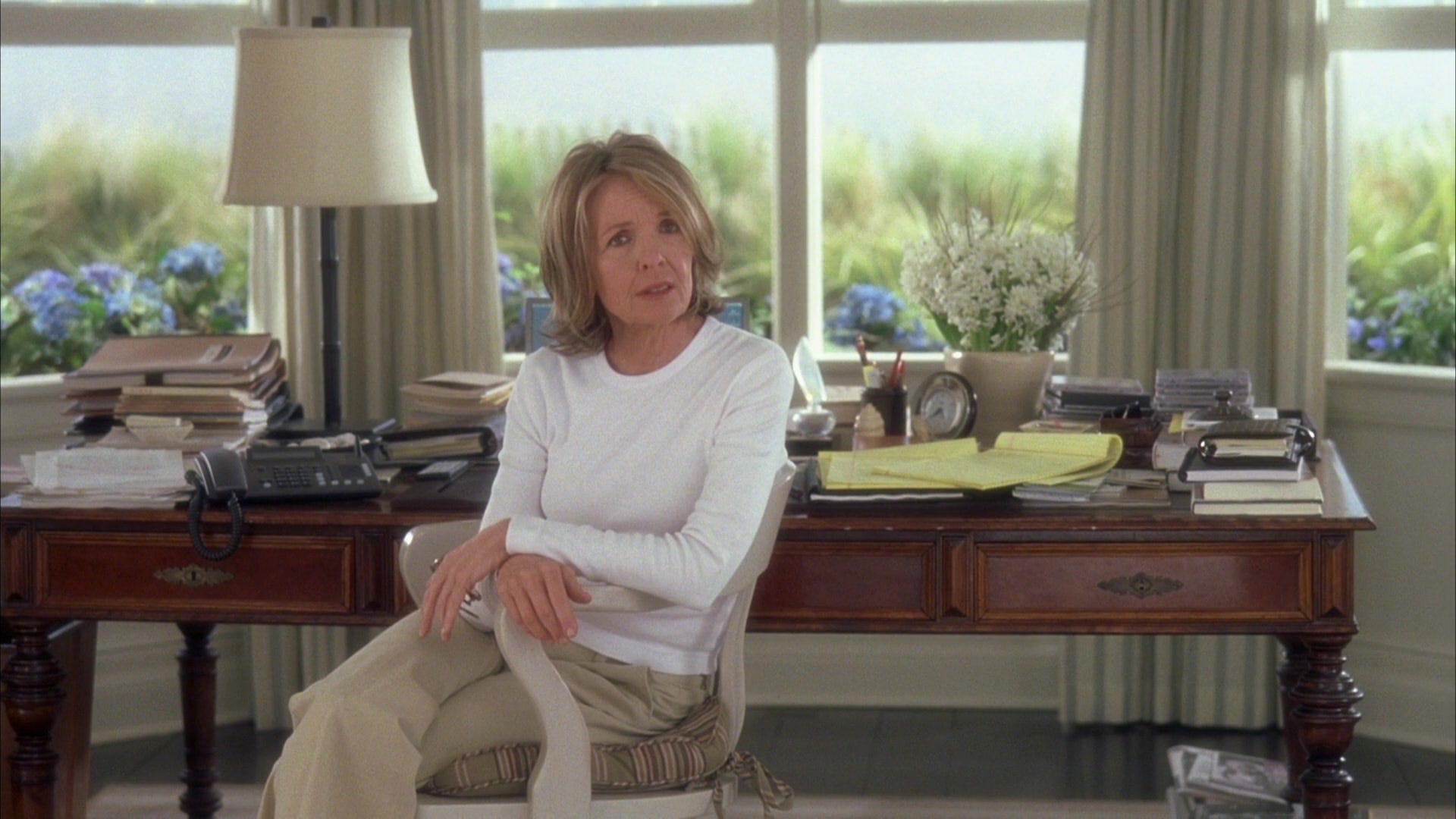
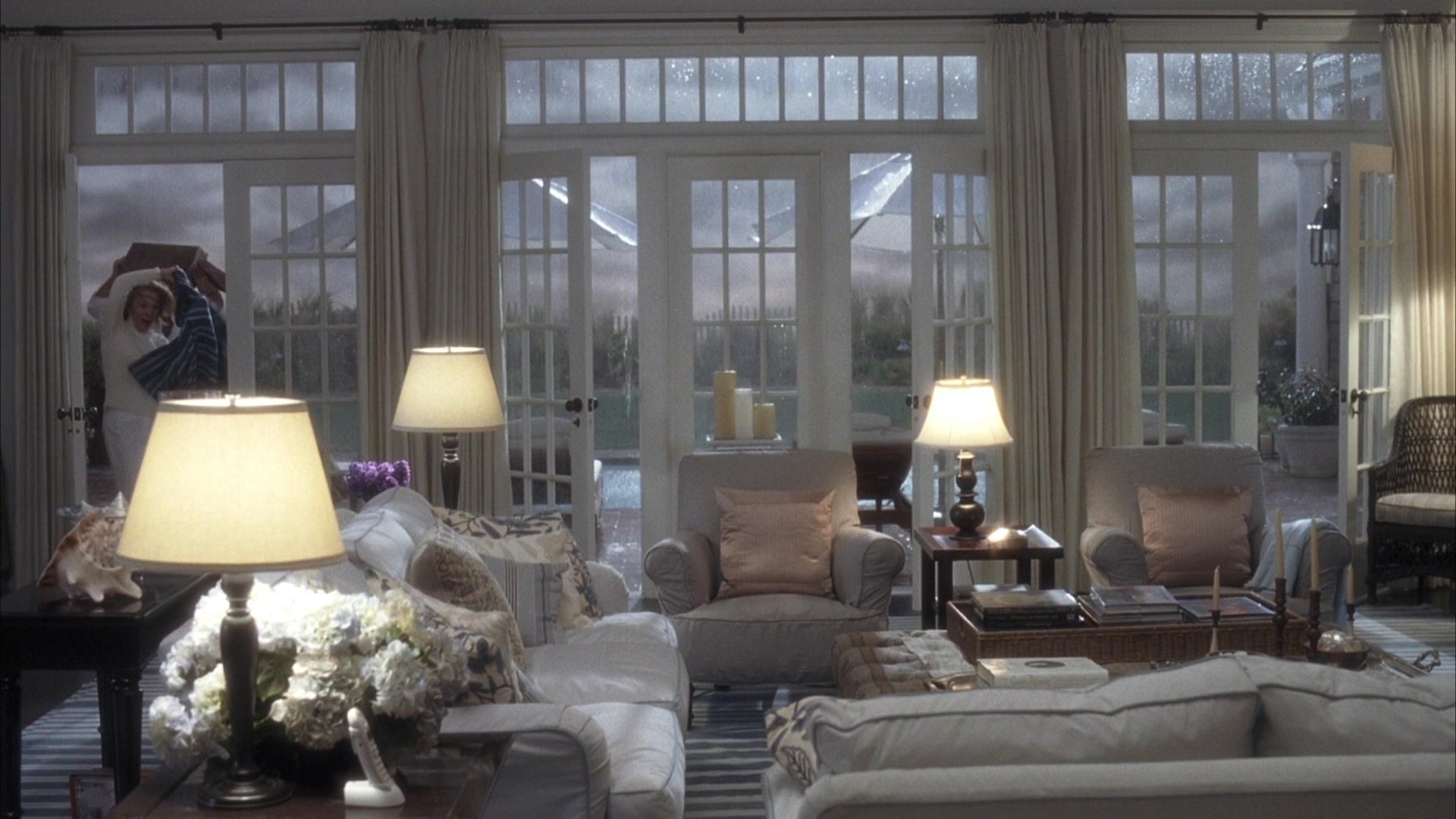
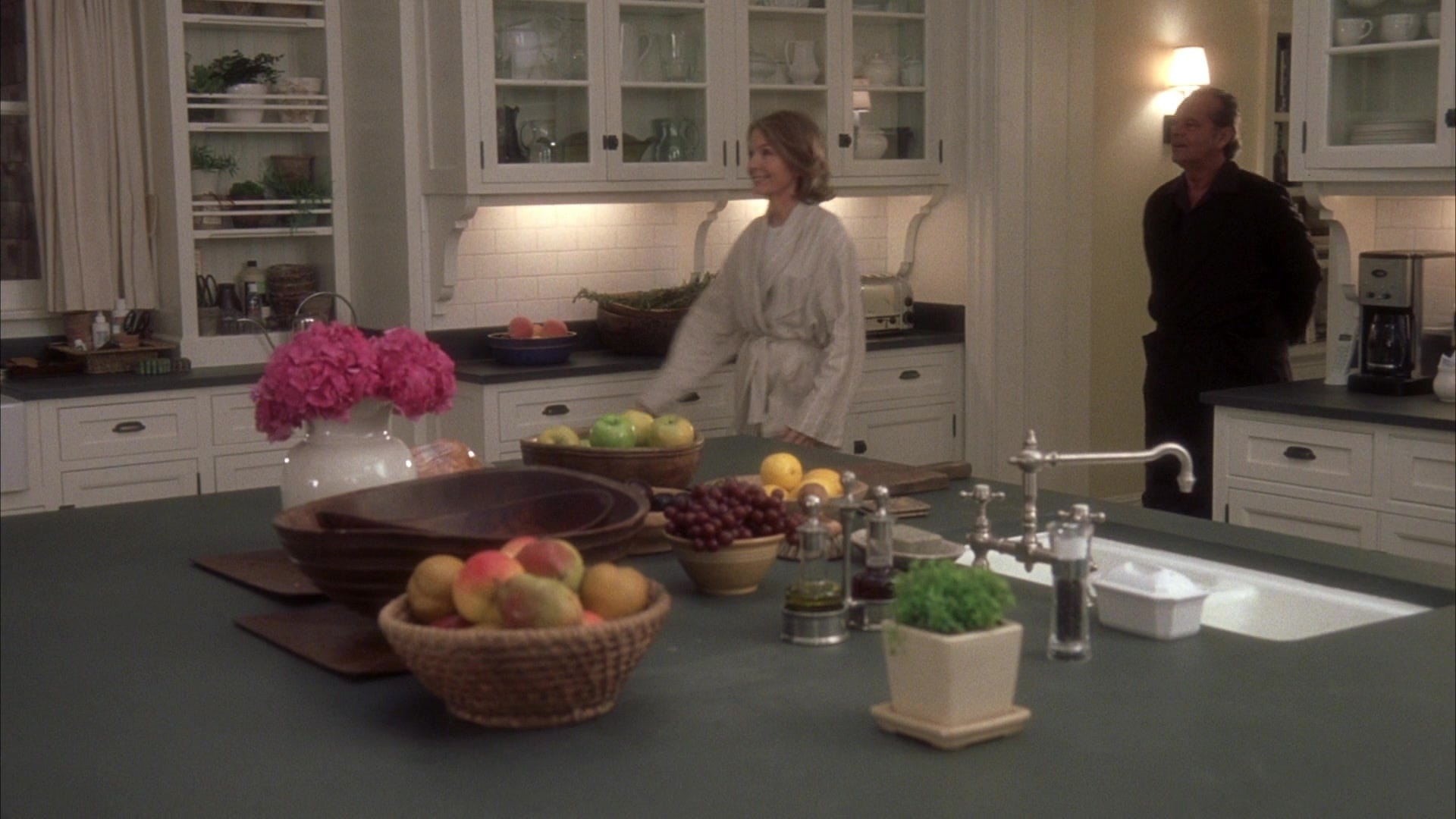
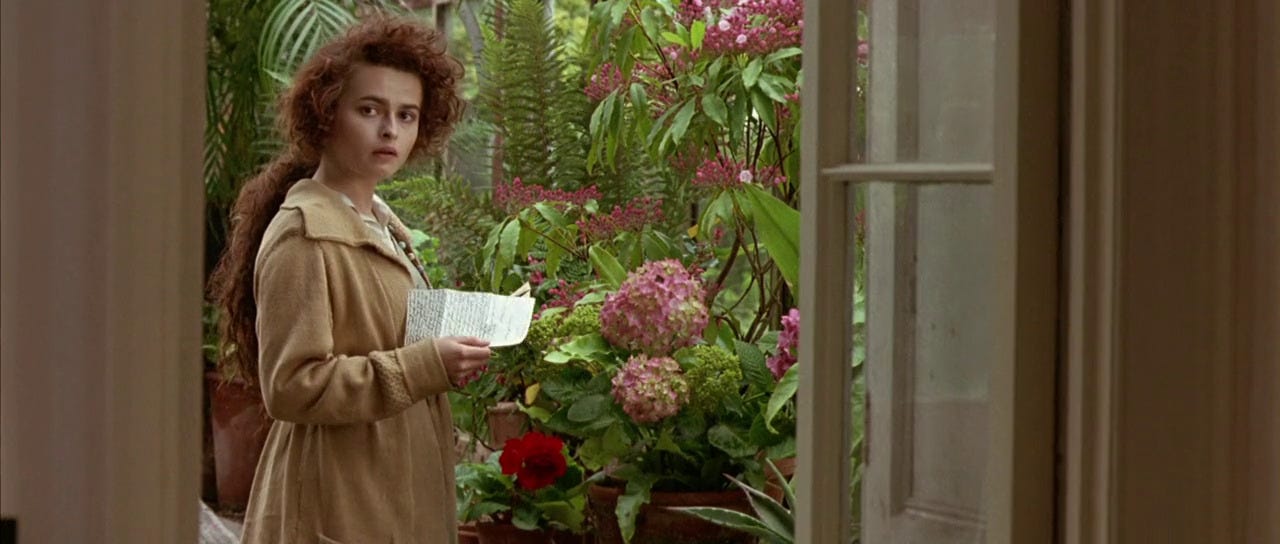
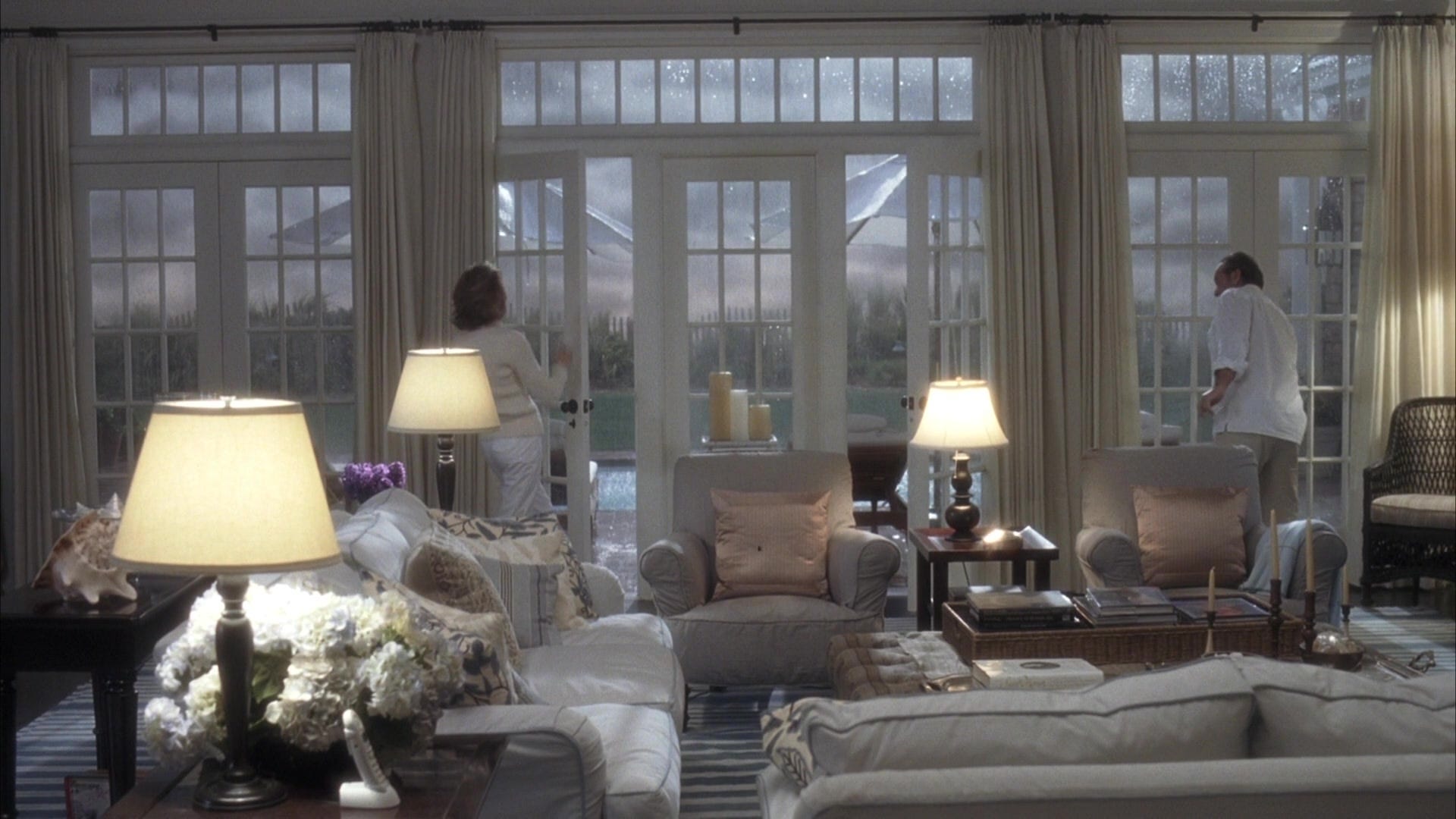
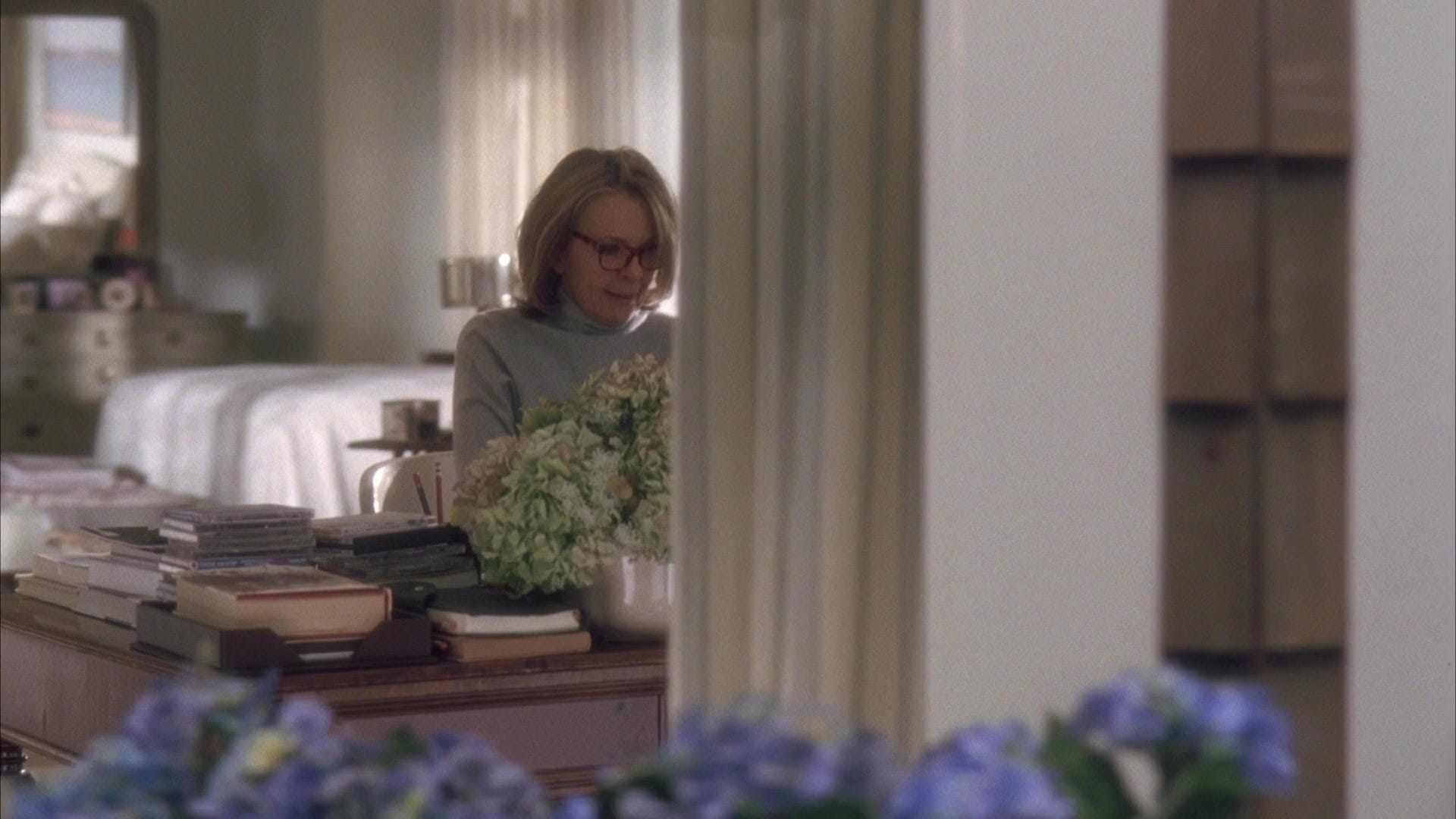
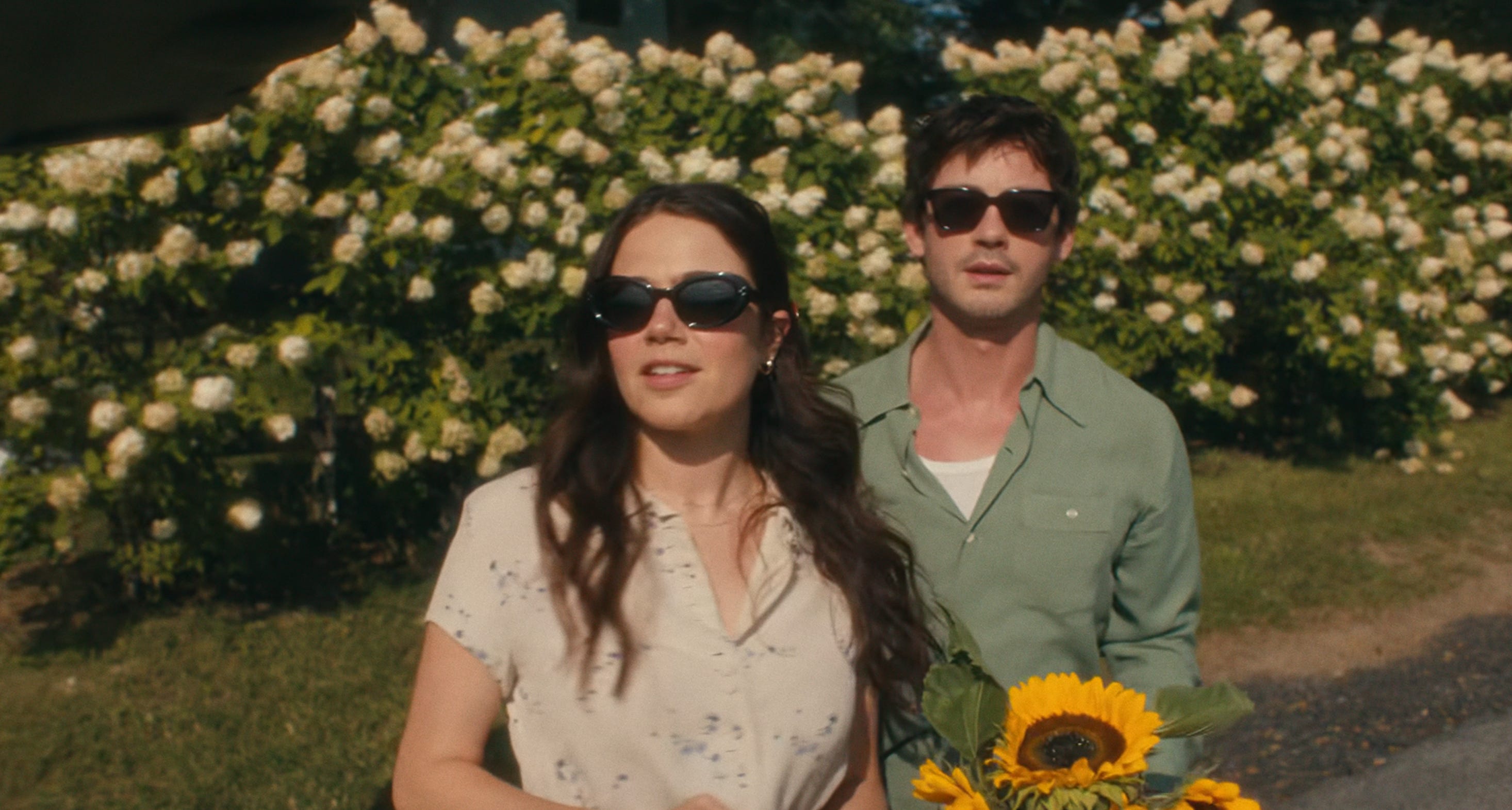
You can easily spot hydrangeas in films centered around wealthy families and sprawling homes. Something’s Gotta Give (2003), directed by Nancy Meyers, is a classic example. Hydrangea bushes frame the exterior of Erica’s beach house in The Hamptons, while fresh arrangements appear in vases throughout the home. At this point, hydrangeas have become almost inseparable from the Nancy Meyers aesthetic.
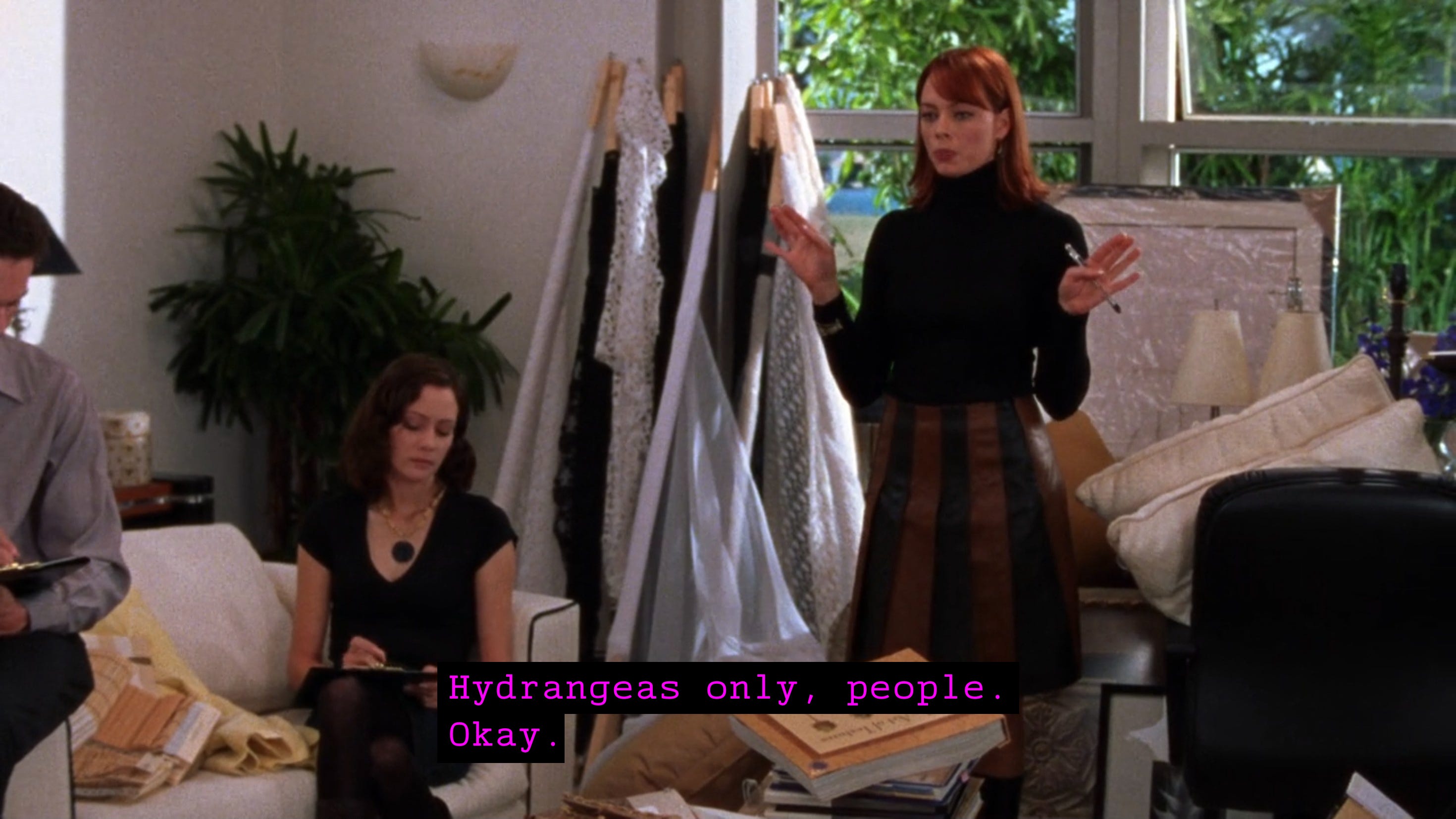
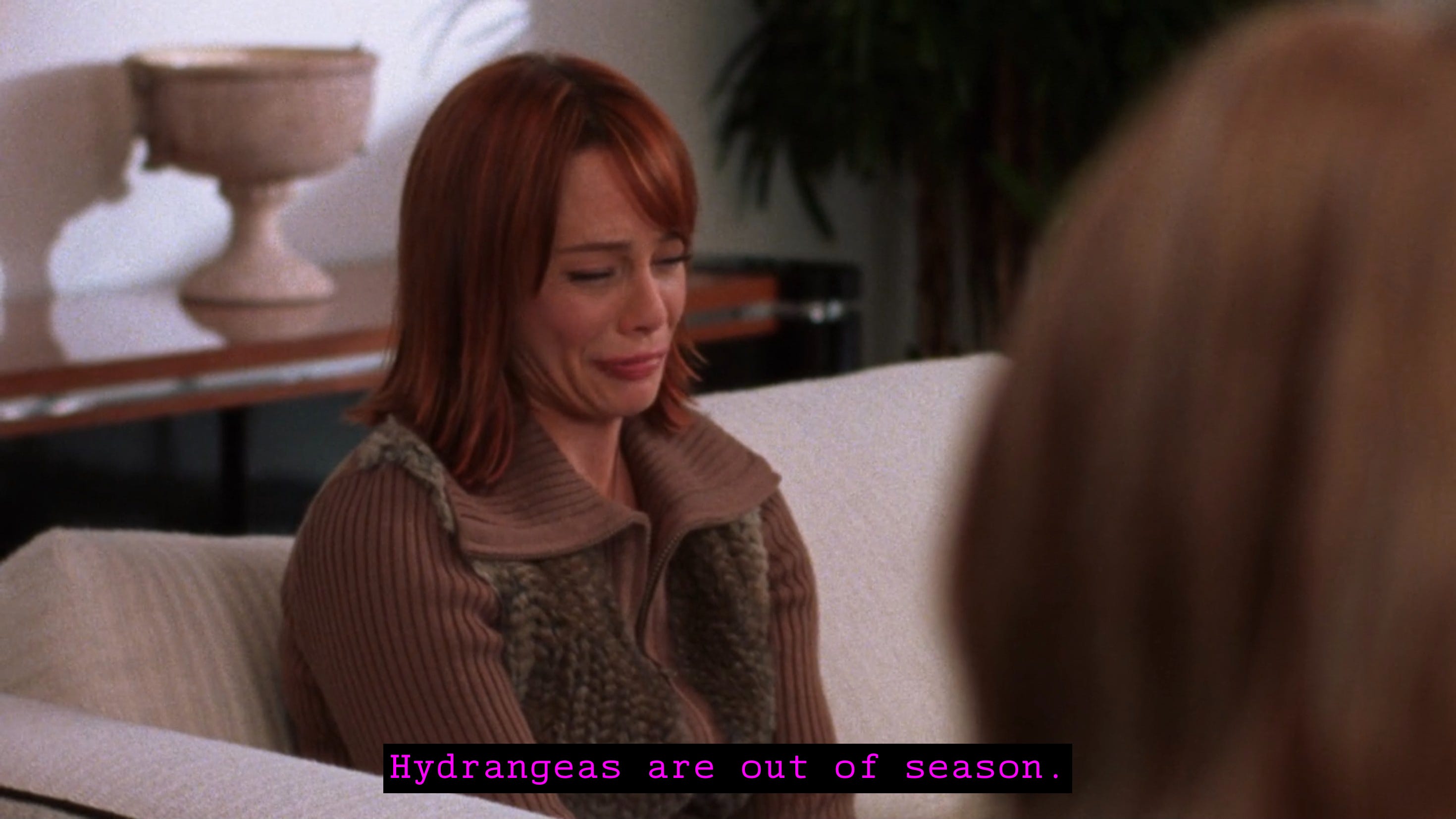
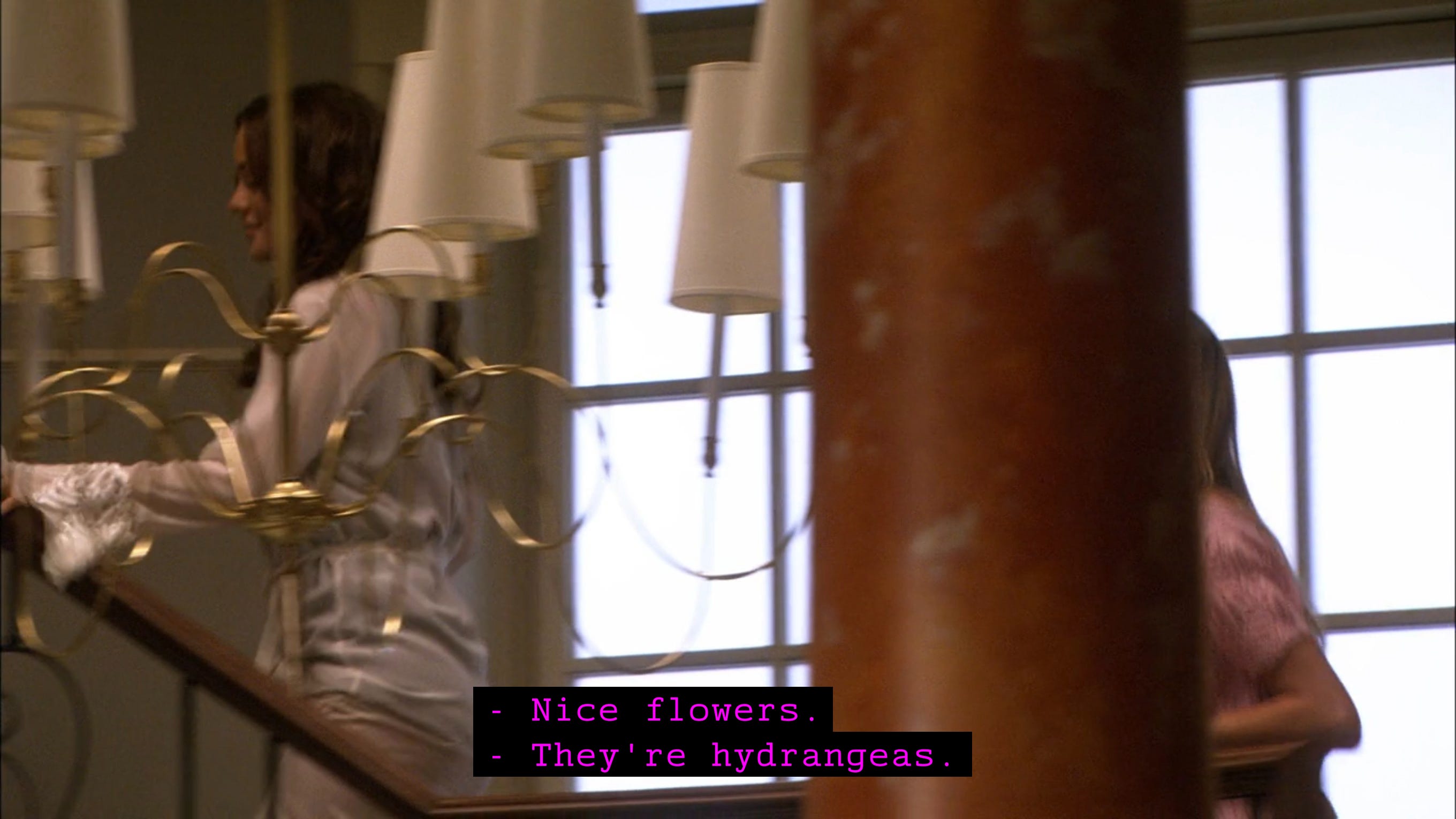
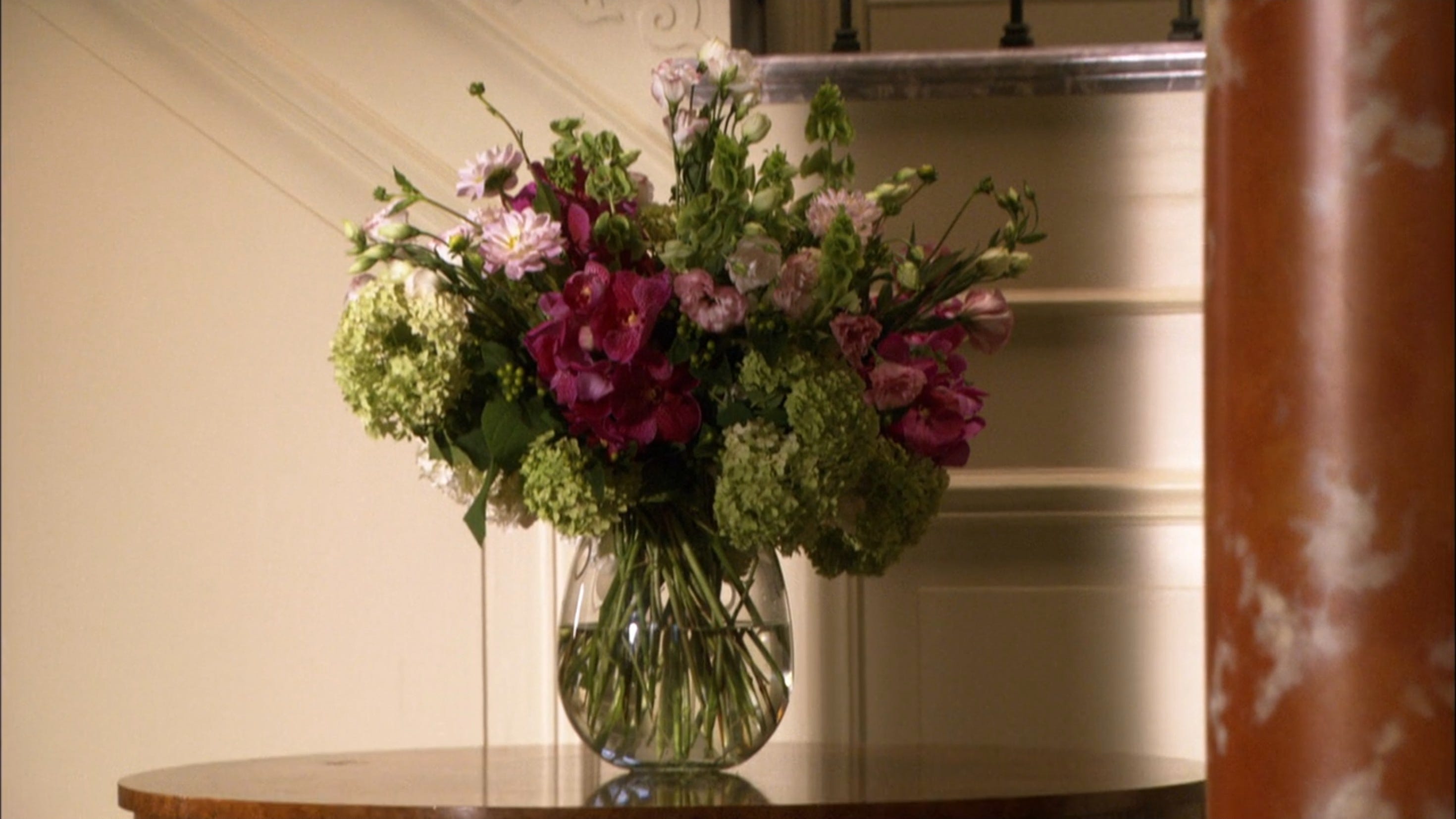
I’m currently rewatching The O.C. with my friend Dara, who’s watching it for the first time (lucky!). Wealth on the West Coast looks very different from wealth on the East Coast, but it’s interesting that hydrangeas carry many of the same associations in both places.
In the series, Julie Cooper, a social-climbing Newport Beach housewife (love her), takes on a job designing the interiors of her wealthy boyfriend’s model homes. One of her first requests is that they use only hydrangeas. Even in Southern California, where hydrangeas aren’t as naturally associated with the landscape as they are in New England, they still function as a visual marker of affluence, status, and aspirational living.
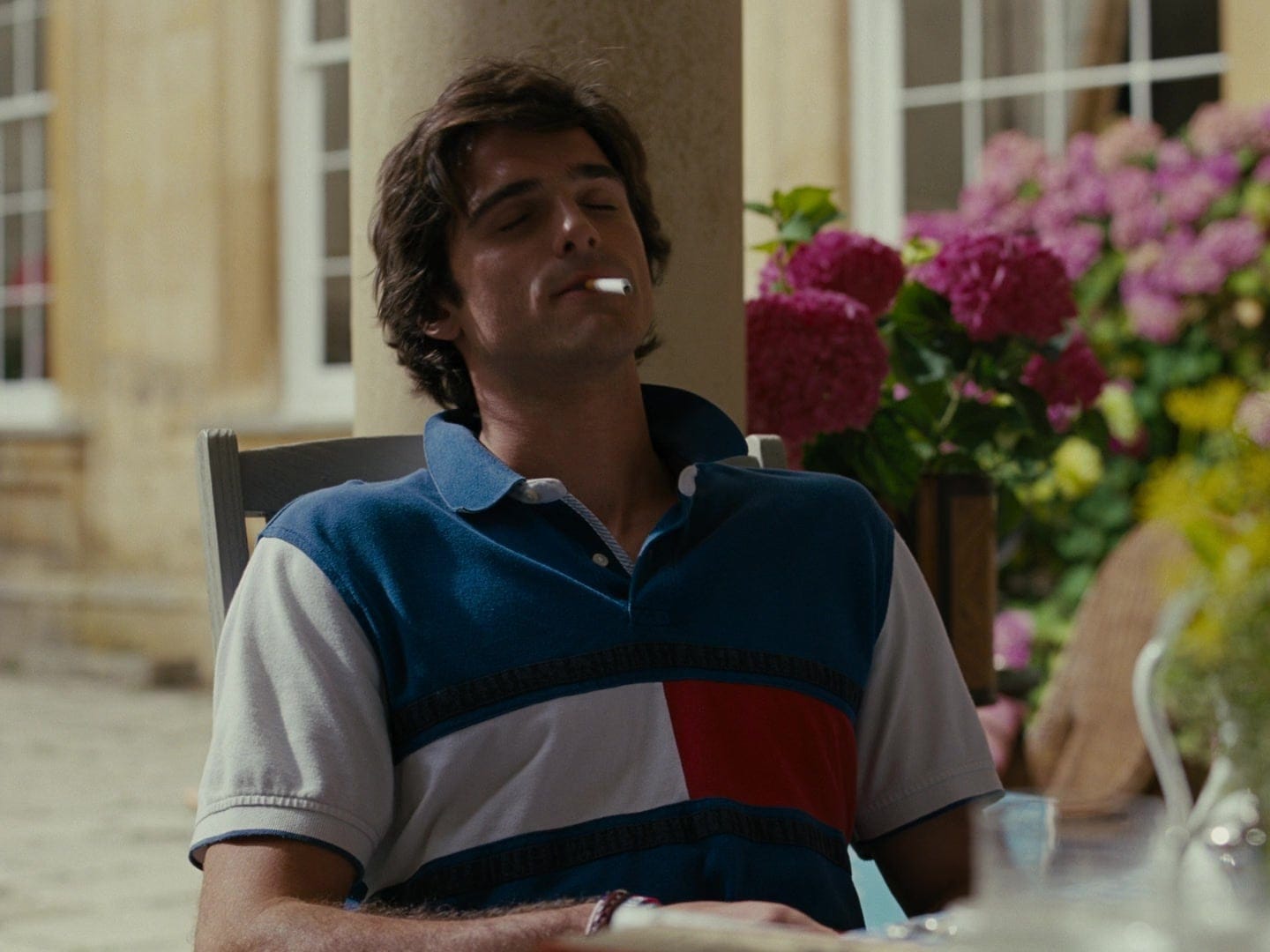
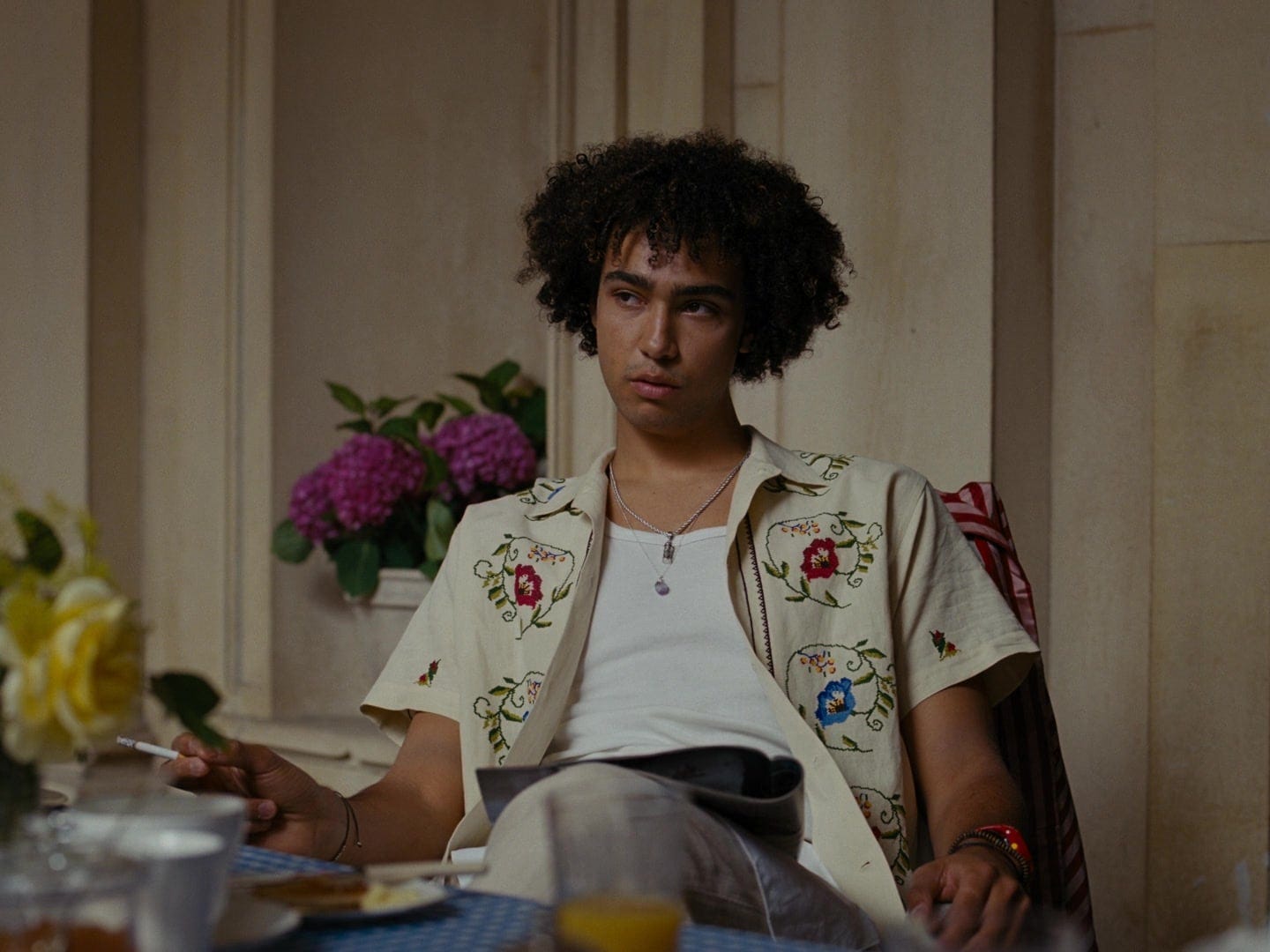
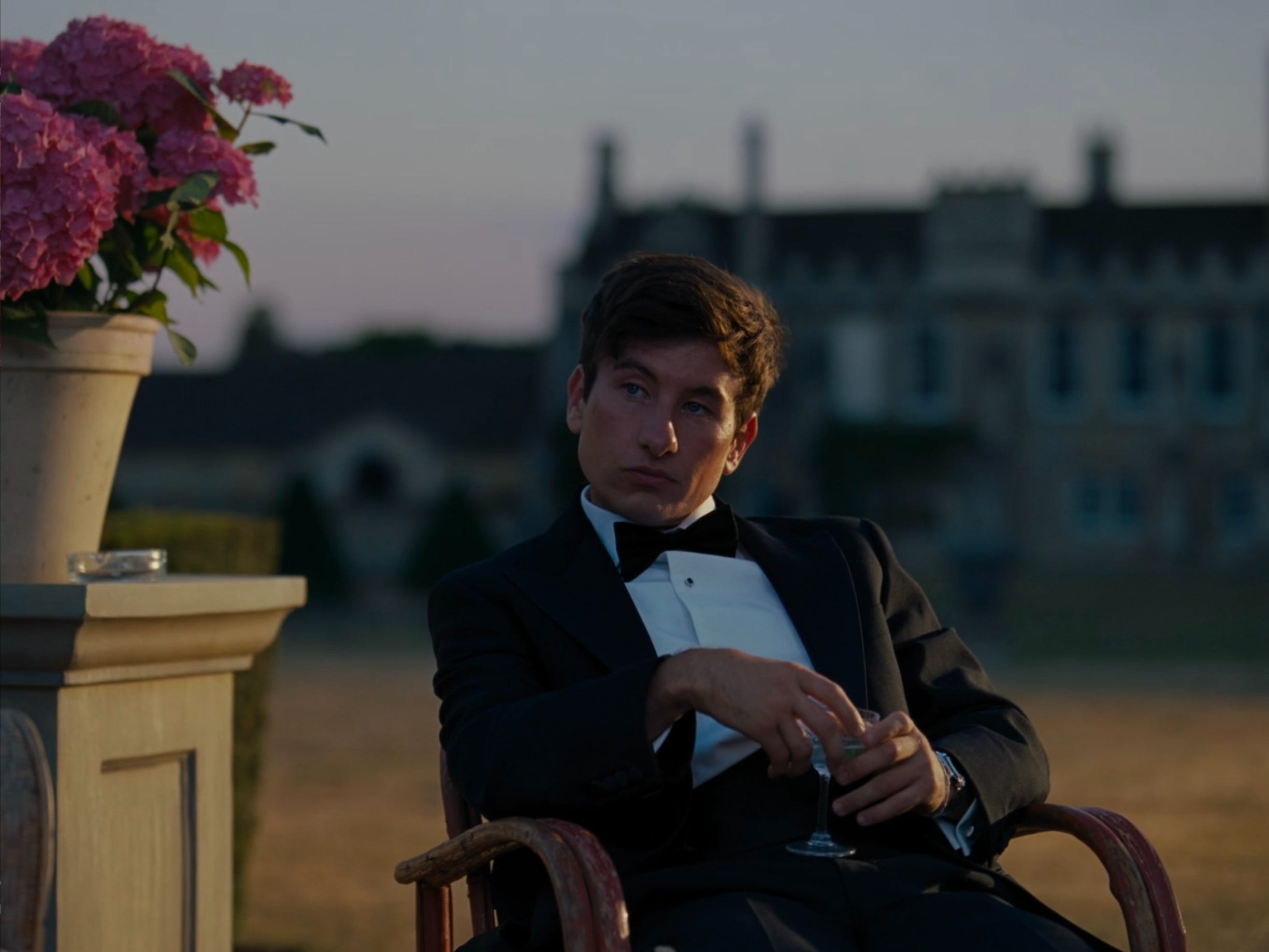
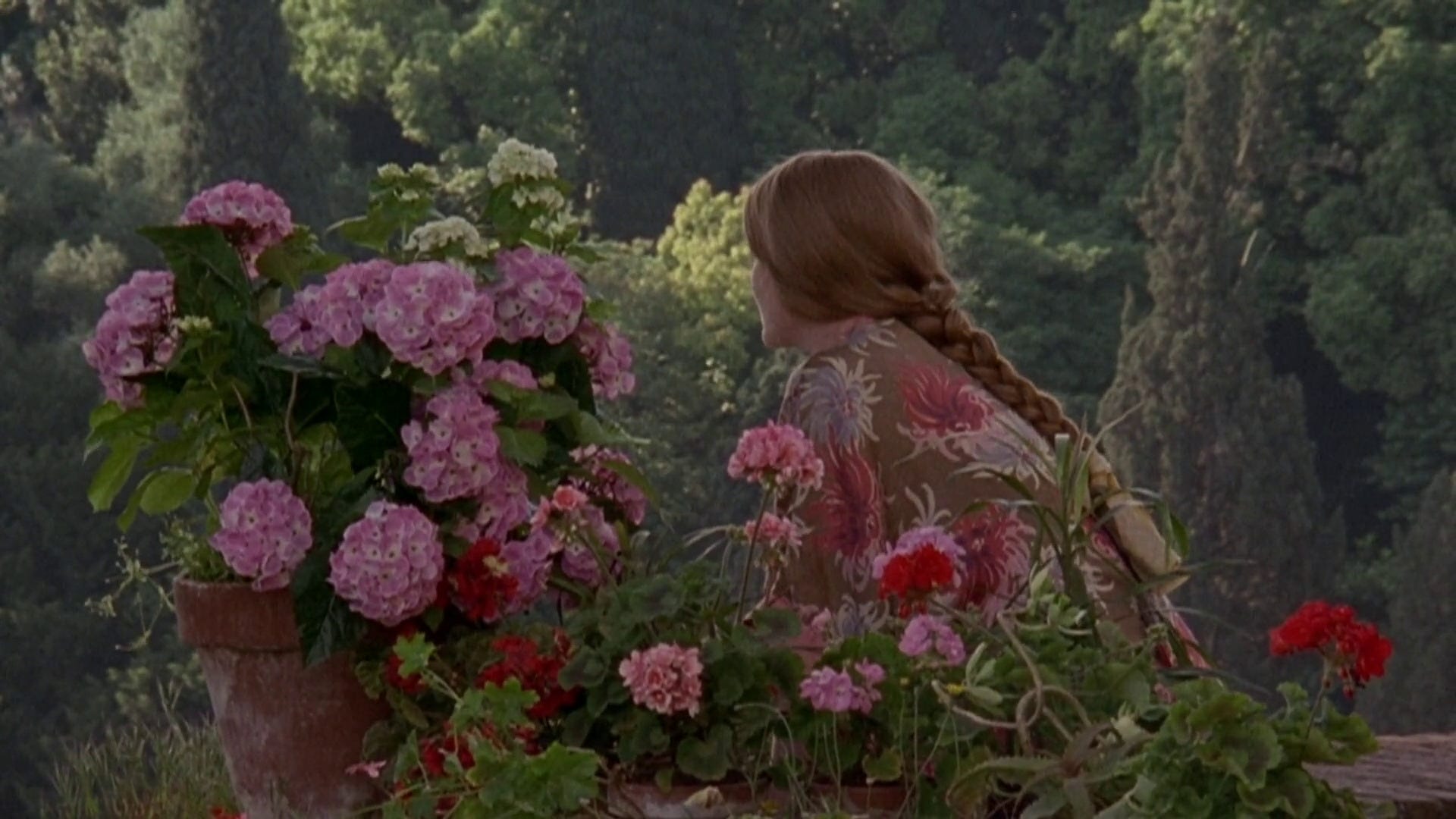
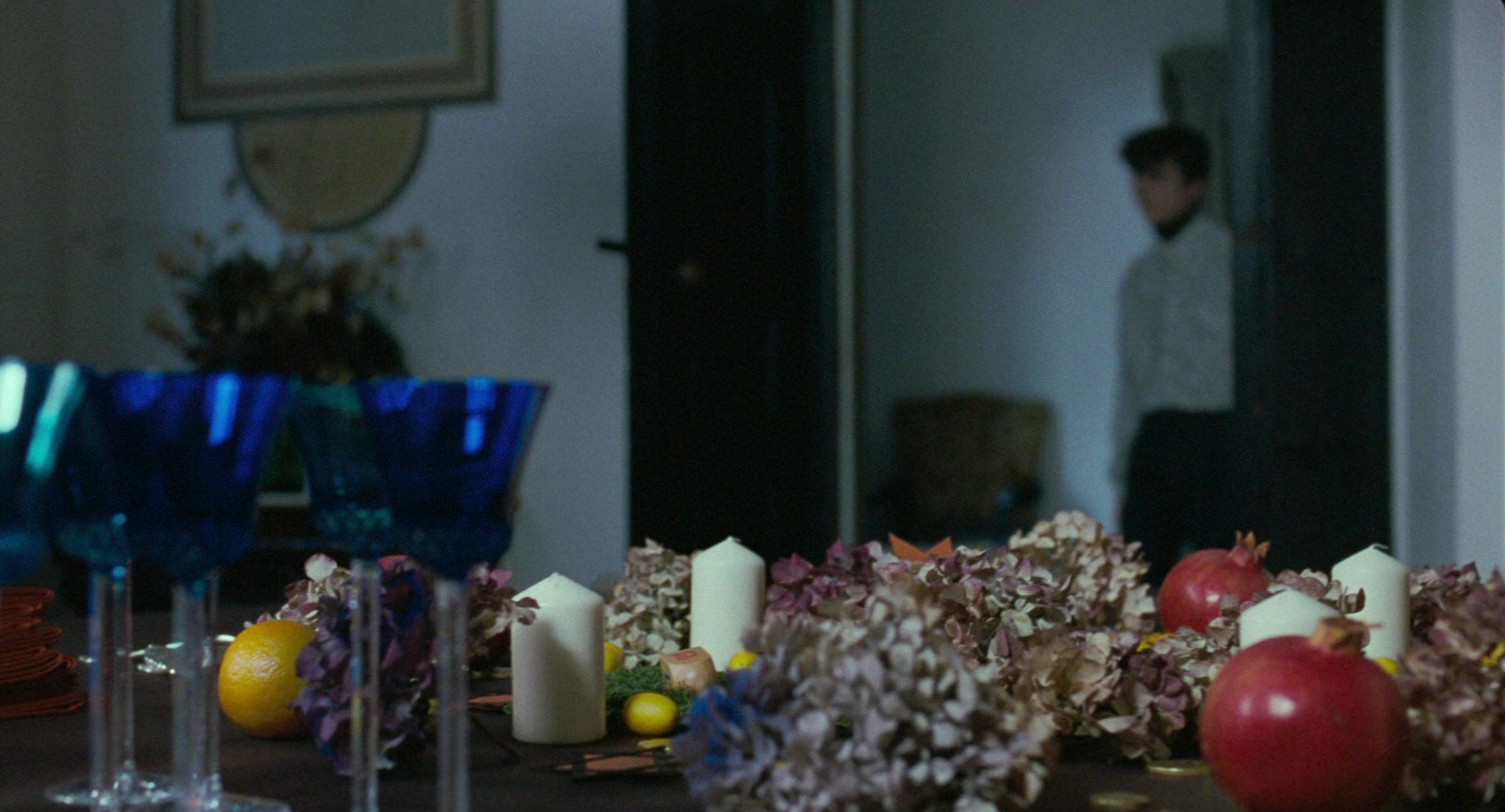
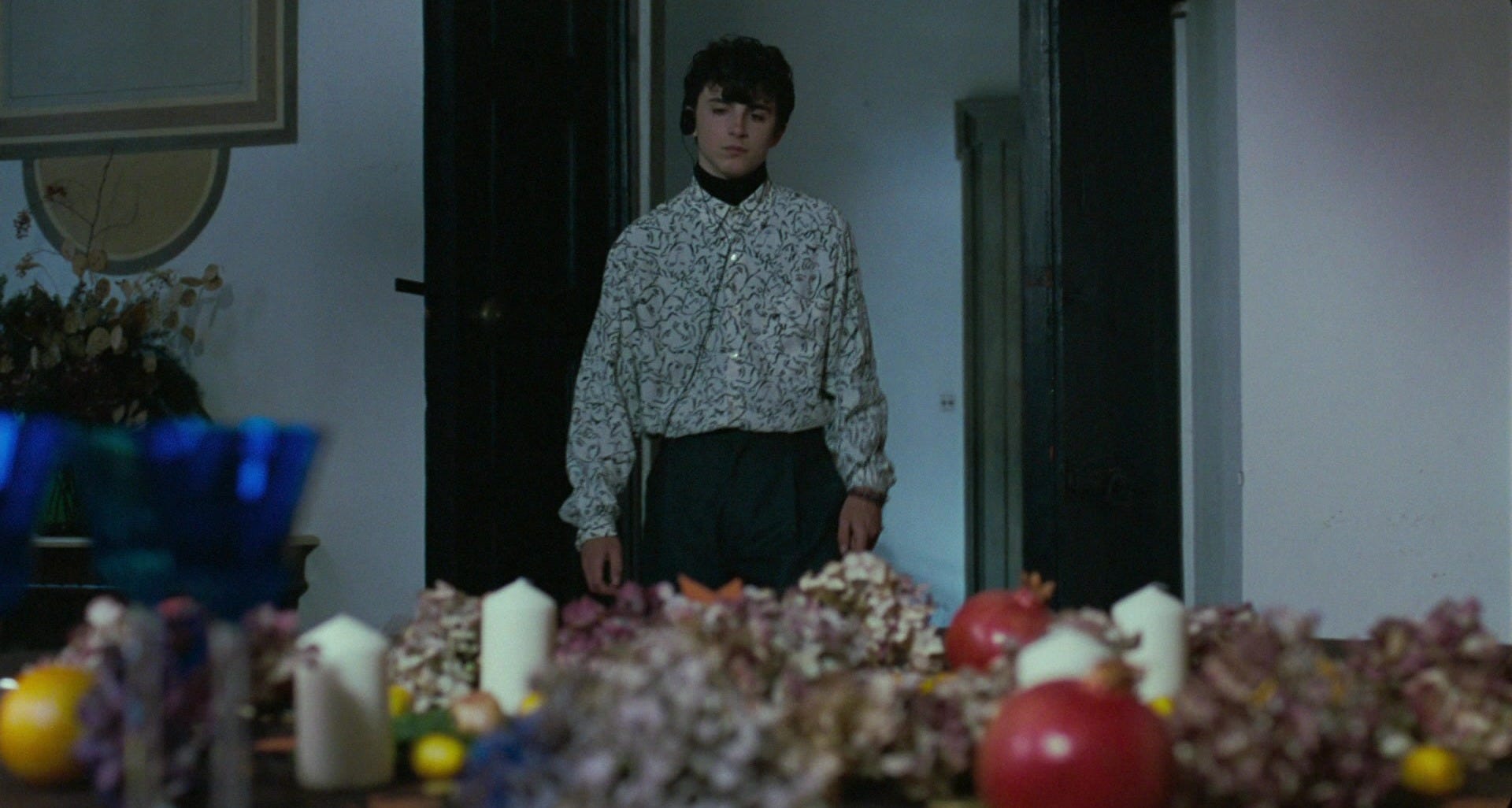
Both Saltburn and Call Me by Your Name unfold over the course of a summer. Like Pauline at the Beach, summer becomes a season of possibility, reinvention, and desire. Maybe that could mean plotting your way into an aristocratic family's estate in the English countryside. Or it means falling into an intense and secret romance with an older man in Northern Italy. Whatever form it takes, summer in these films becomes a time when ordinary life is suspended and anything feels possible.
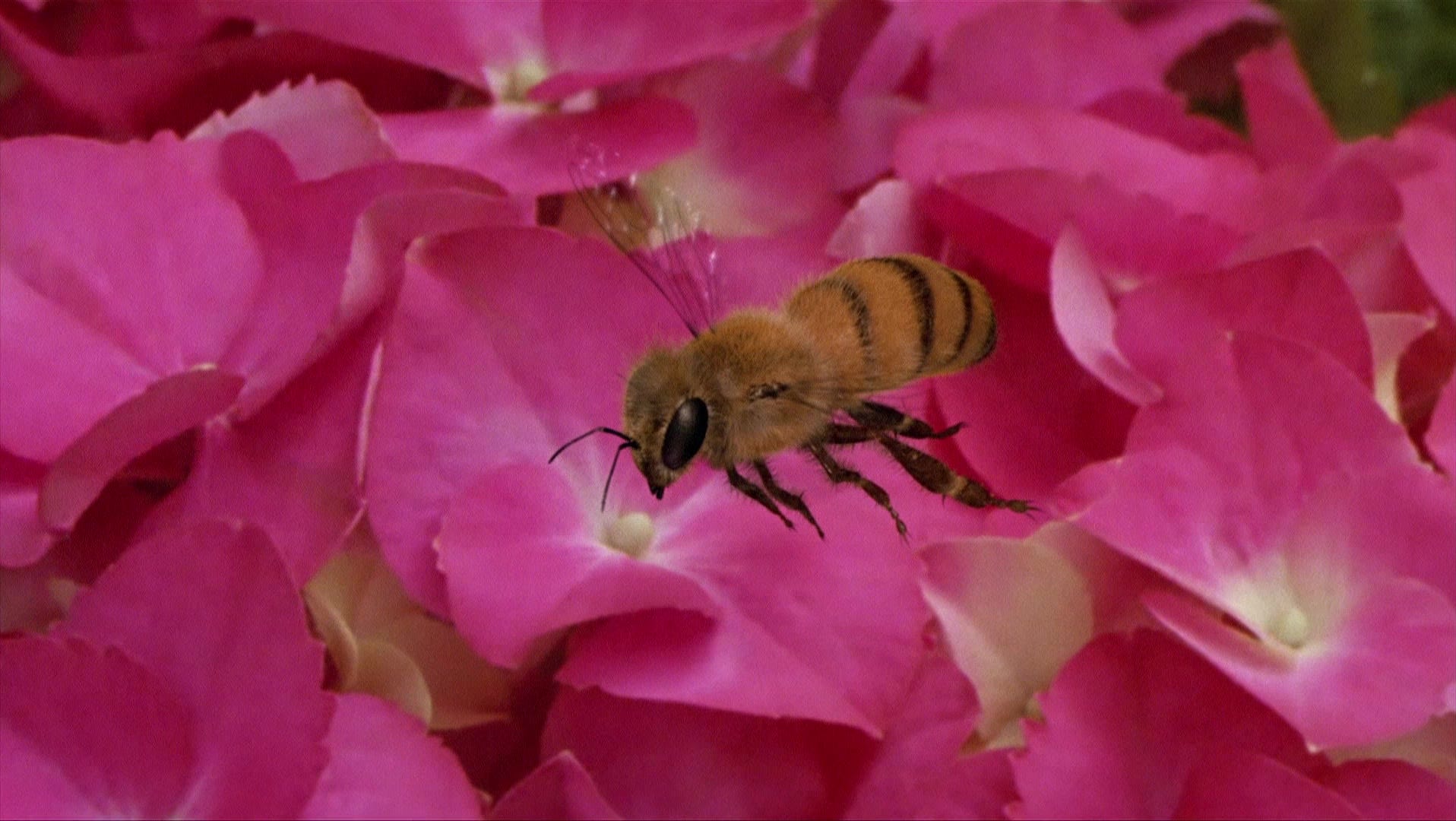
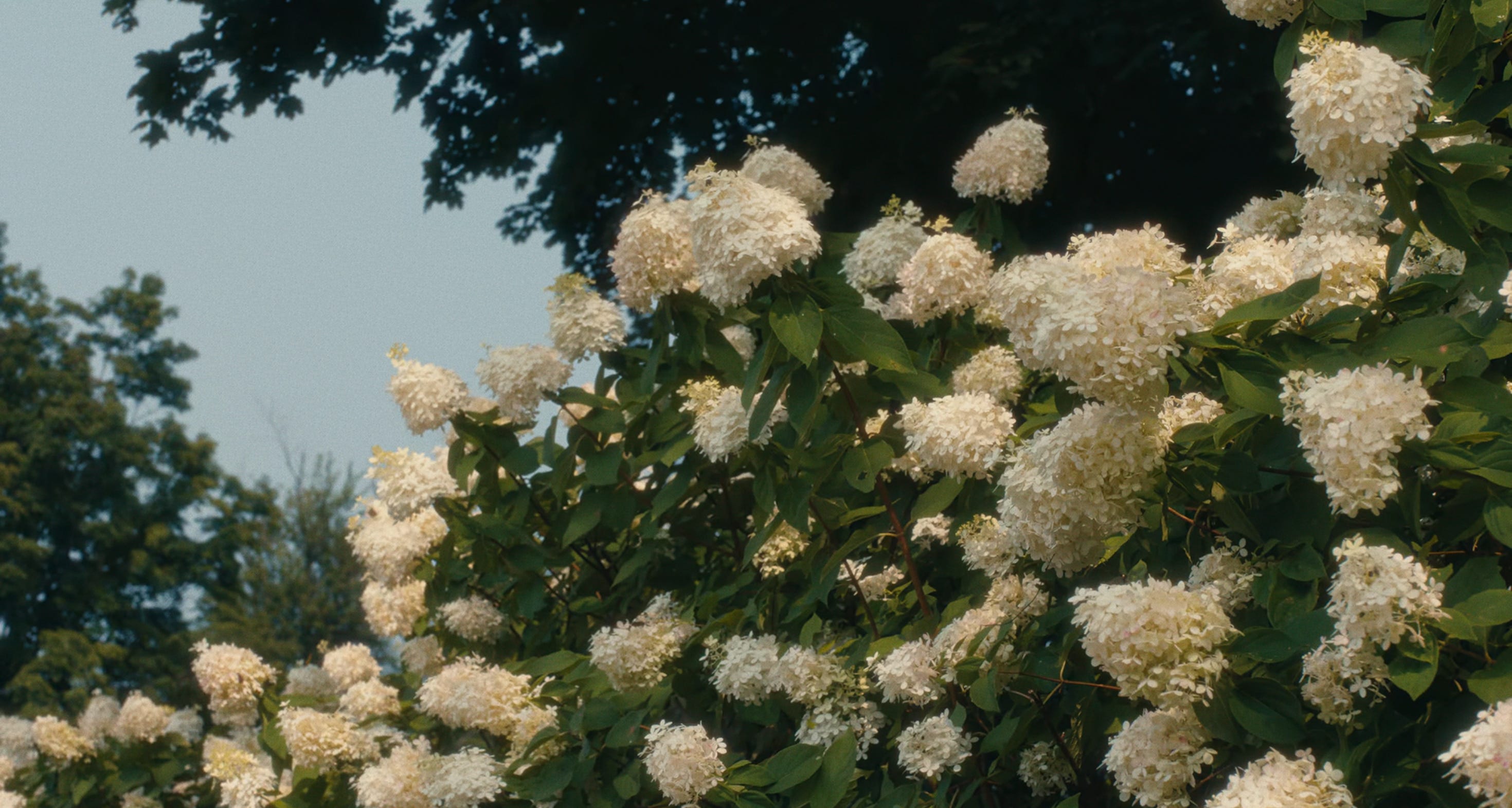
Hydrangeas are flowers of abundance and transformation their colors shifting depending on the soil around them. Like the characters who move through these movies, hydrangeas are shaped by their environments, becoming something different depending on where they take root.

Thank you for reading! You can follow me on Instagram for more frequent posts about flowers in cinema. For collaborations or inquiries, my email is flowersincinema@gmail.com.
Love,
Iris Diane

Keep reading:



ooooh love the little nicky and clockstoppers caps, great pulls
Hydrangeas grow RAMPANTLY around Portugal and the Azores. They're so beautiful. They always remind me of my grandma. Thank you for this. <3