

Carnations
They’re filler flowers (and that’s okay)!

This post doesn’t fully show in email. Check it out on the Substack app or desktop for the full experience. Trust me it looks way better!

Hello and happy 2026! I hope you all have had a good start to the year so far!
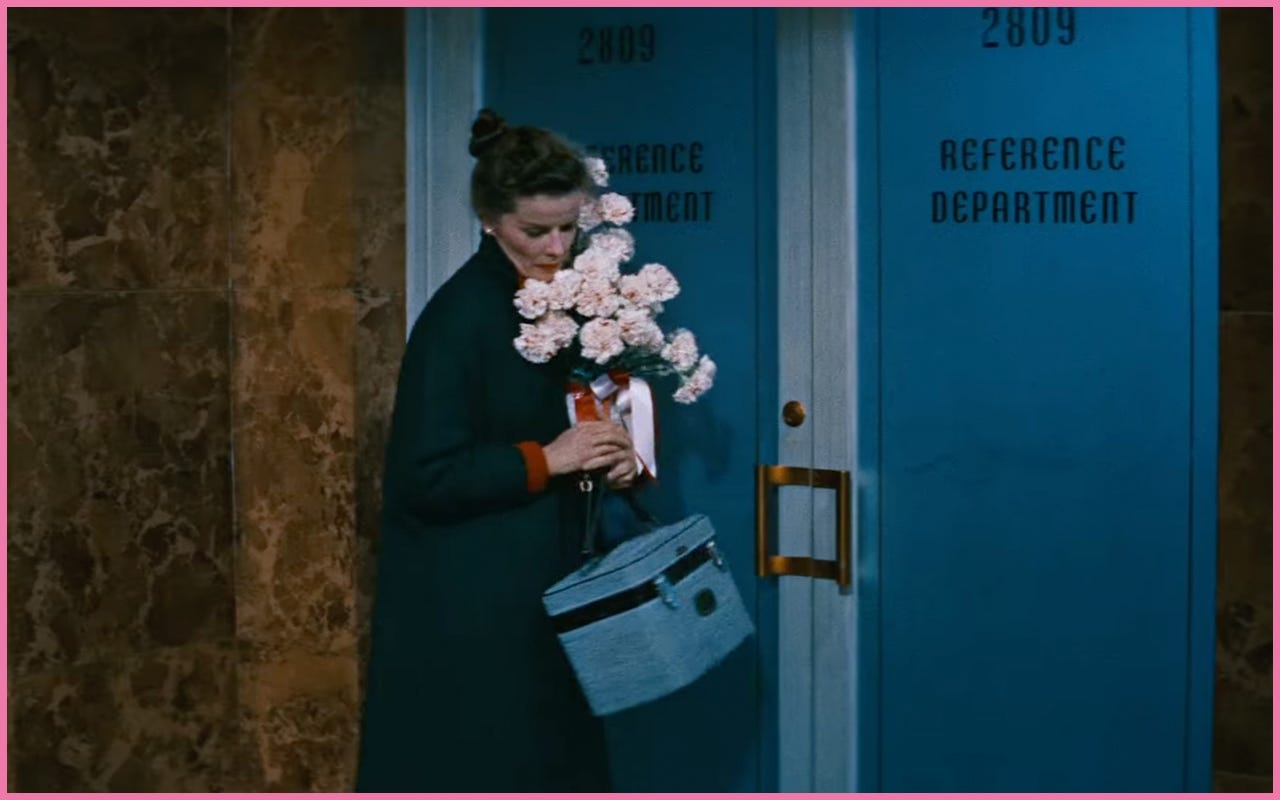
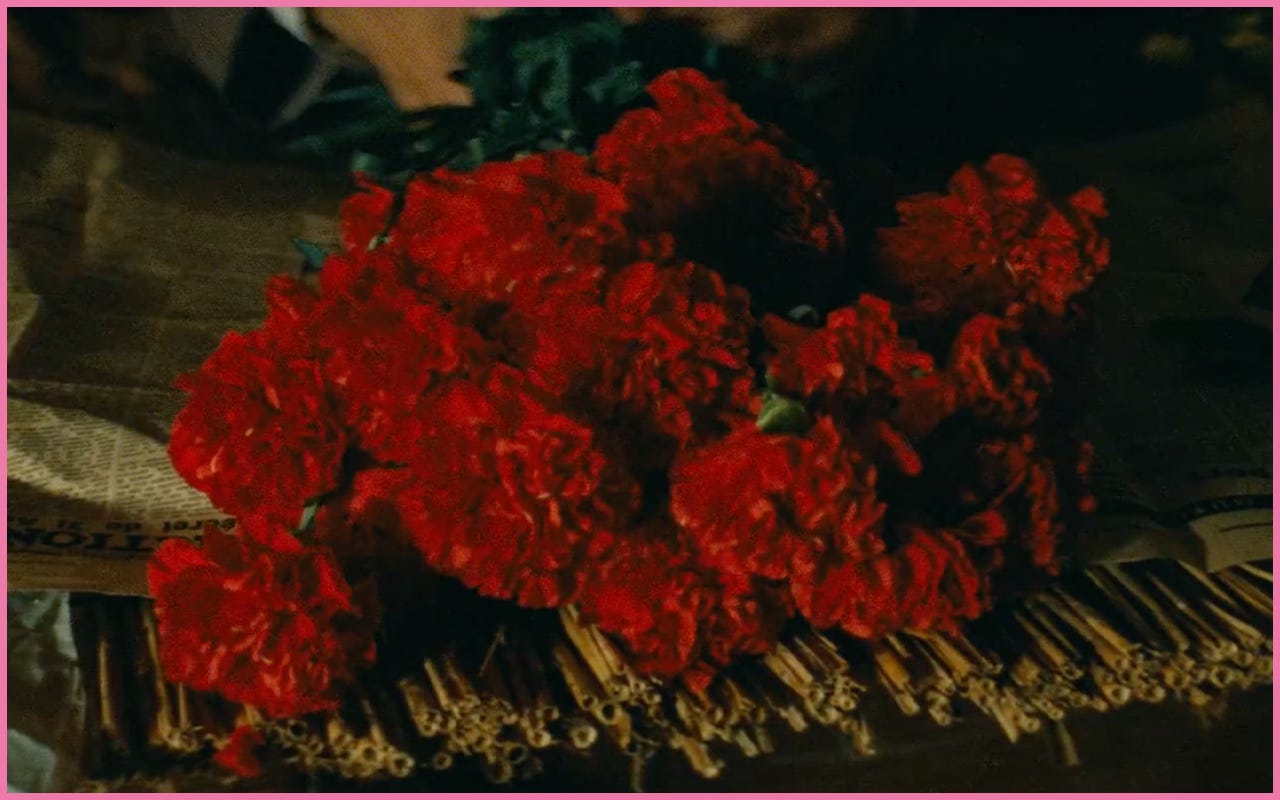
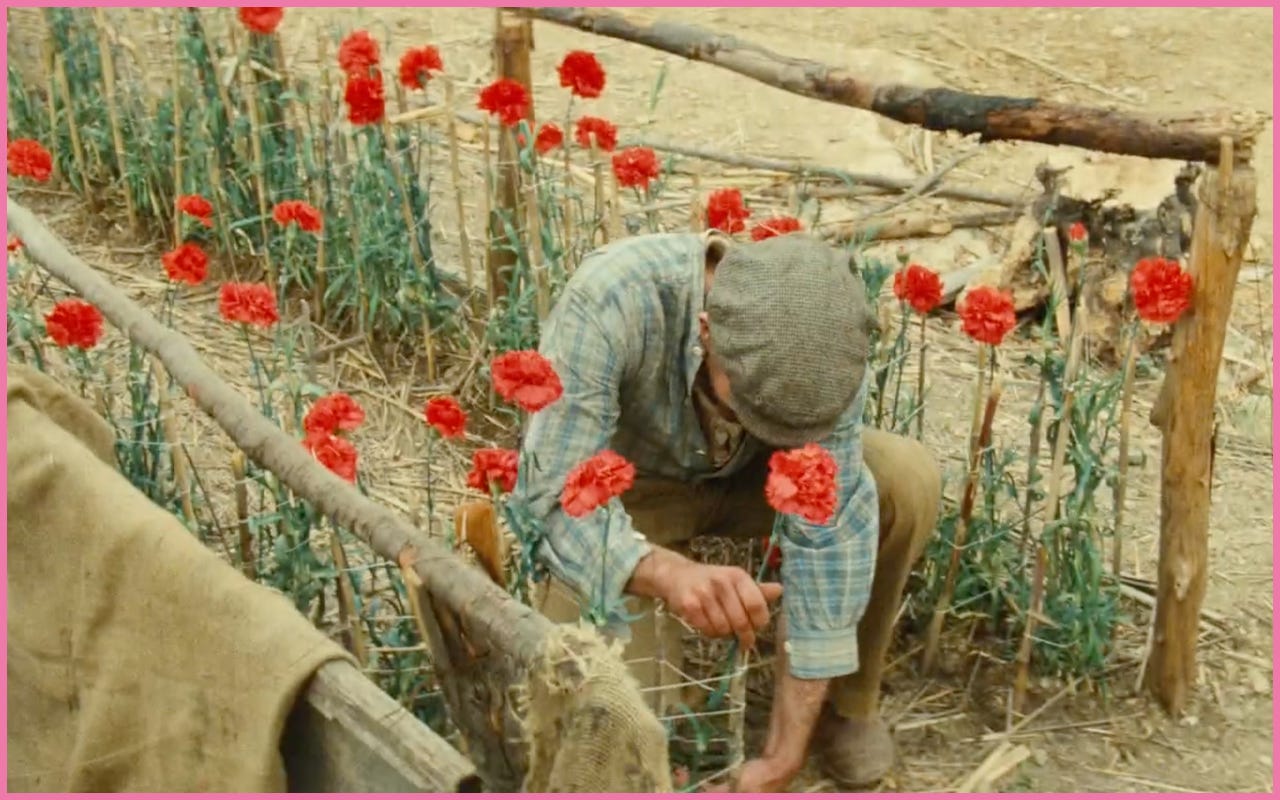
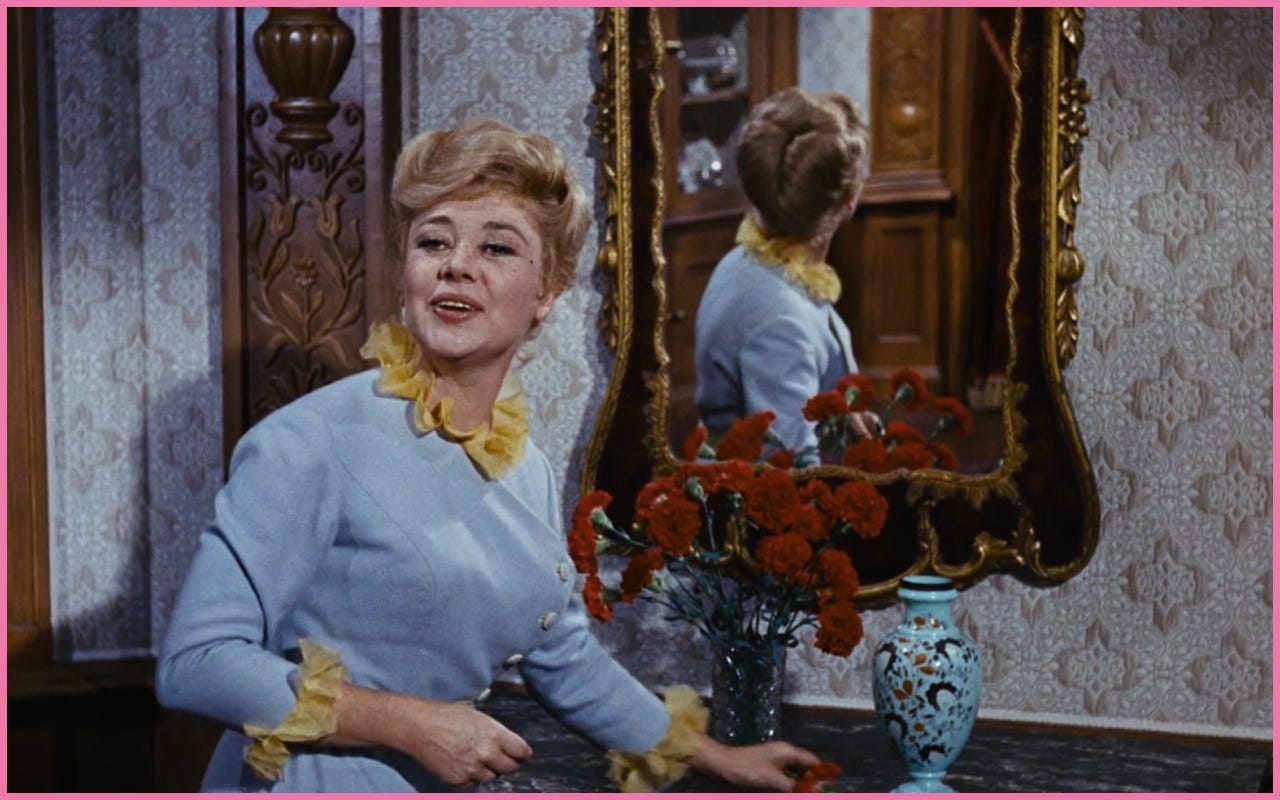
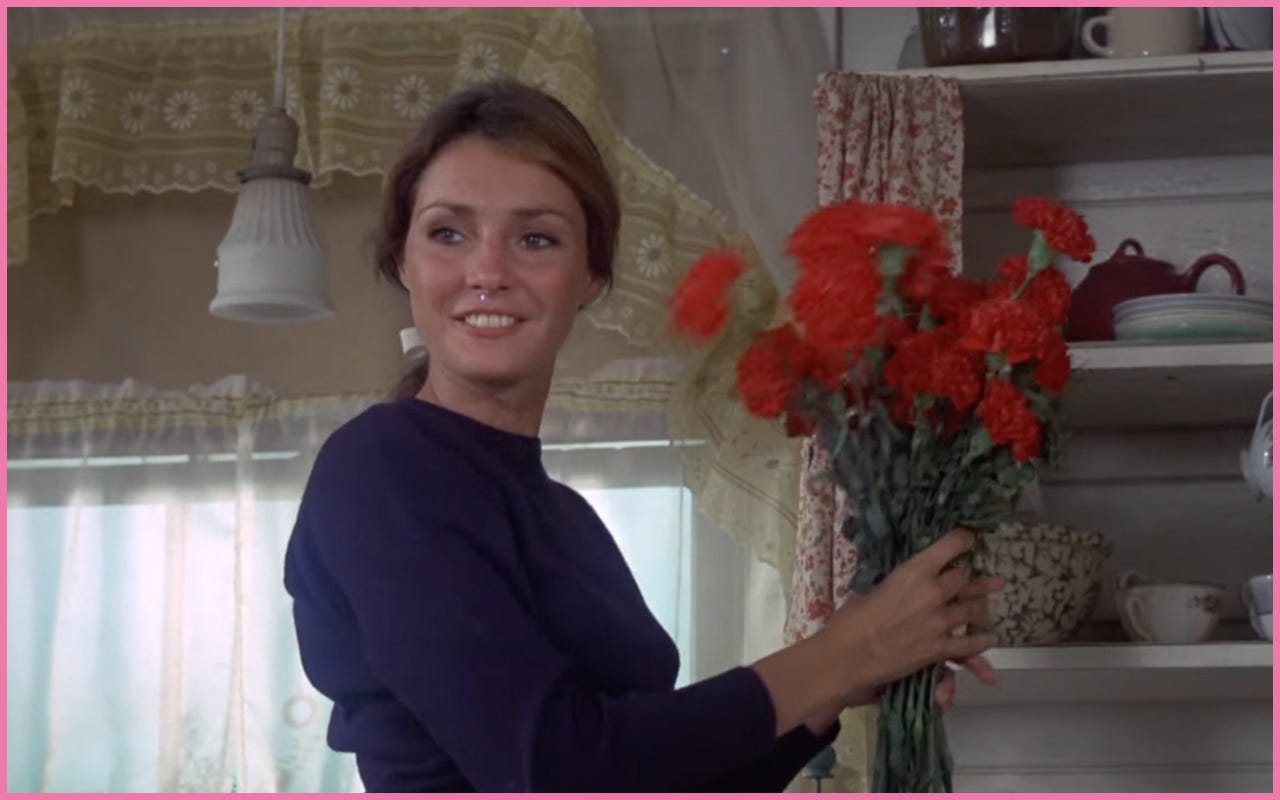
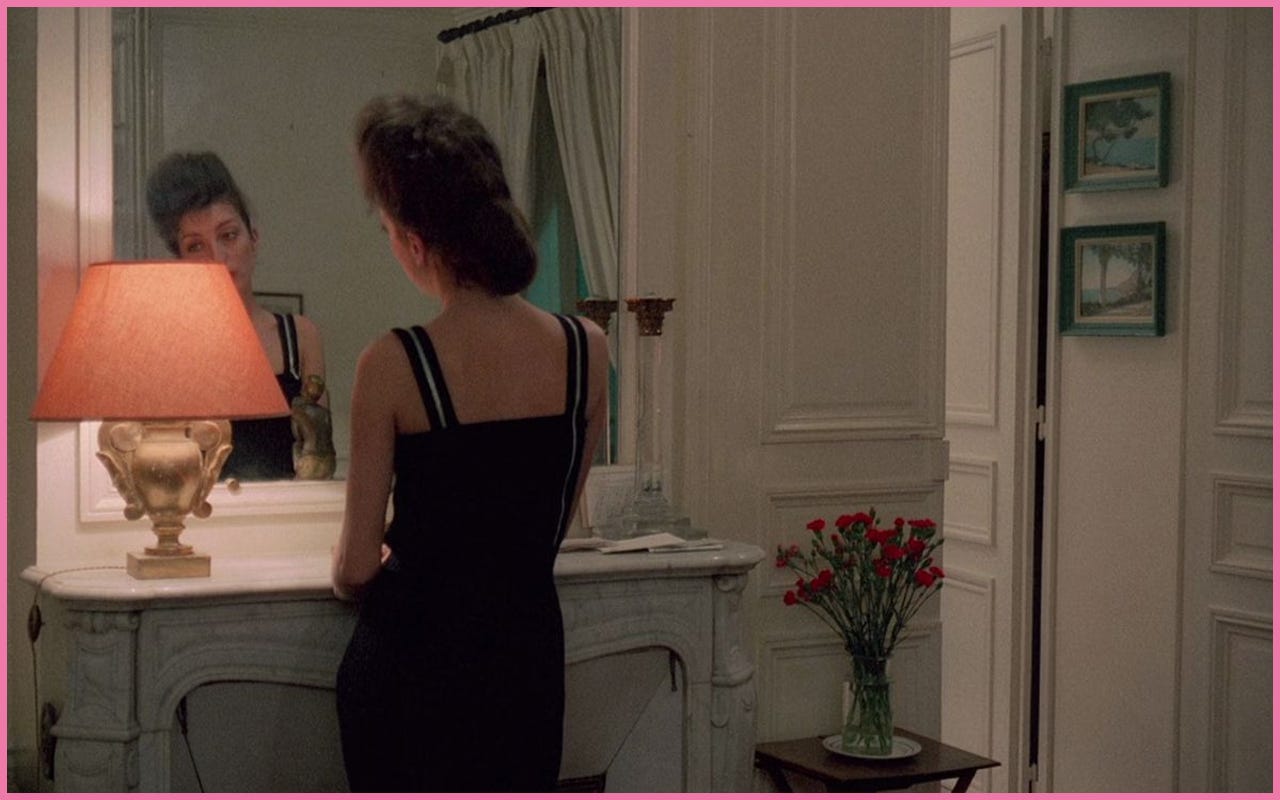
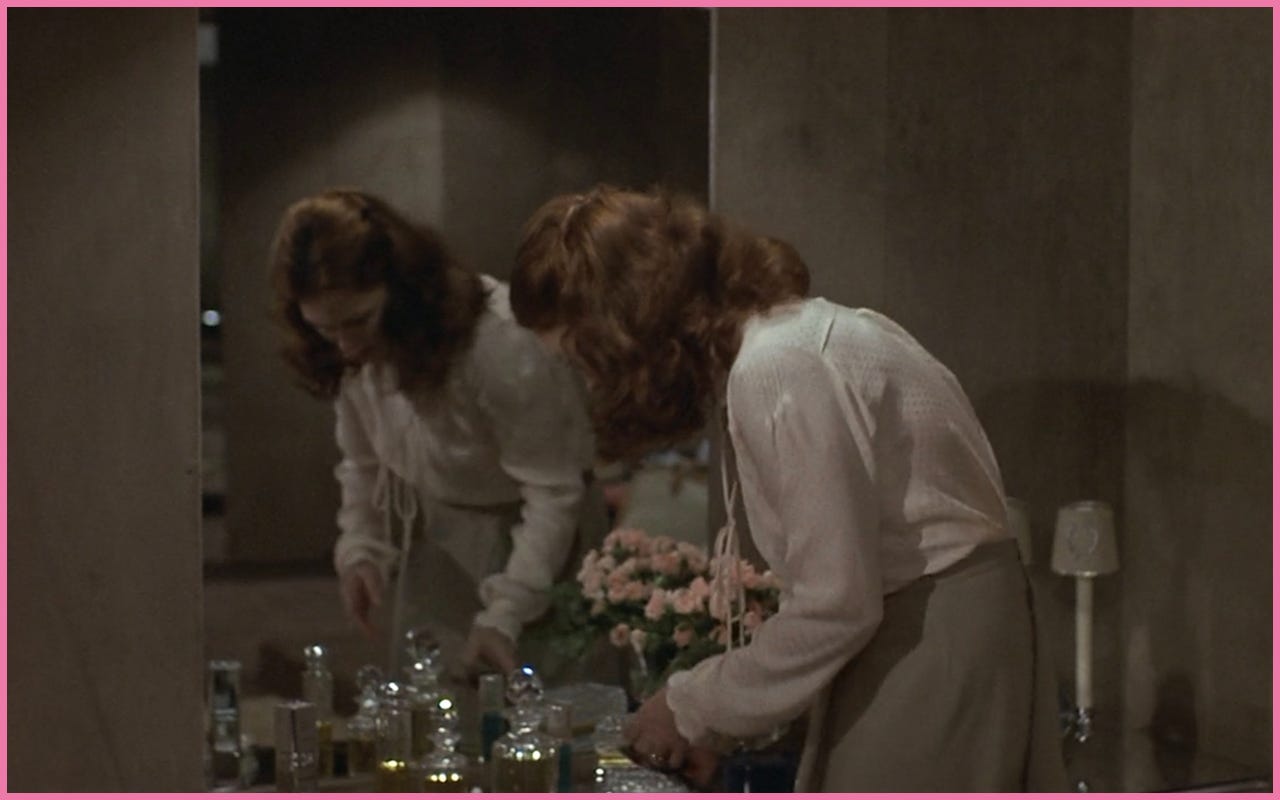
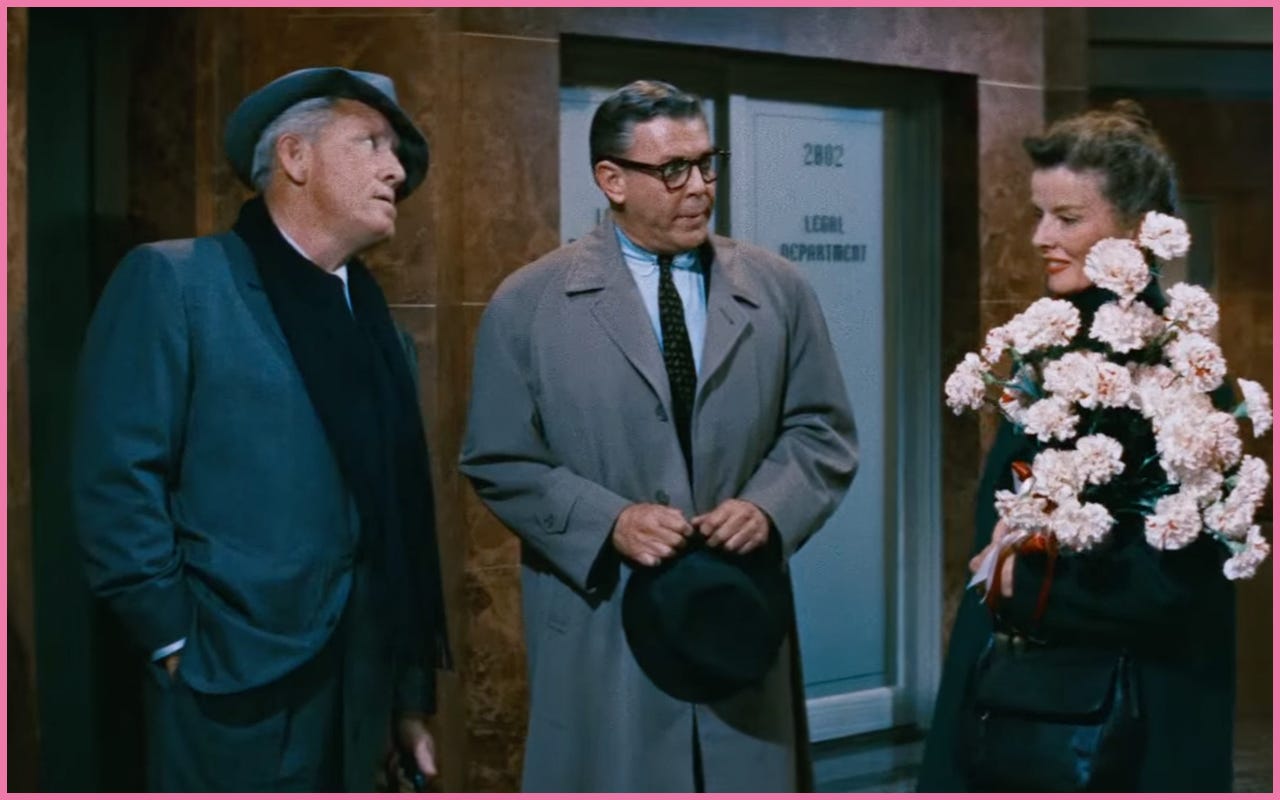
January’s birth flower is the carnation. It’s classic and long-lasting. It’s not the most unique or most prestigious flower, but it is reliable. I find red carnations often appear in movies when there isn’t a florist on set (you can always tell), likely because they are still visually striking and inexpensive.
I touched on carnations briefly in my Mother’s Day newsletter back in 2024, talking about them in the context of motherhood and its history. Since it’s January, I felt it’s time to dedicate an entire newsletter to the carnation and explore all its symbolic meanings.
History
The scientific name for the carnation is Dianthus, derived from the Greek words dios (divine) and anthos (flower), meaning “flower of the gods.” Carnations are native to the Mediterranean, with origins spread across southern Europe and the surrounding region. Some believe the carnation’s name may also come from the word “coronation,” as the flower was used in ancient Greek ceremonial decorations1. Cultivated for over 2,000 years, carnations were first mentioned in Greek literature.
A filler flower?
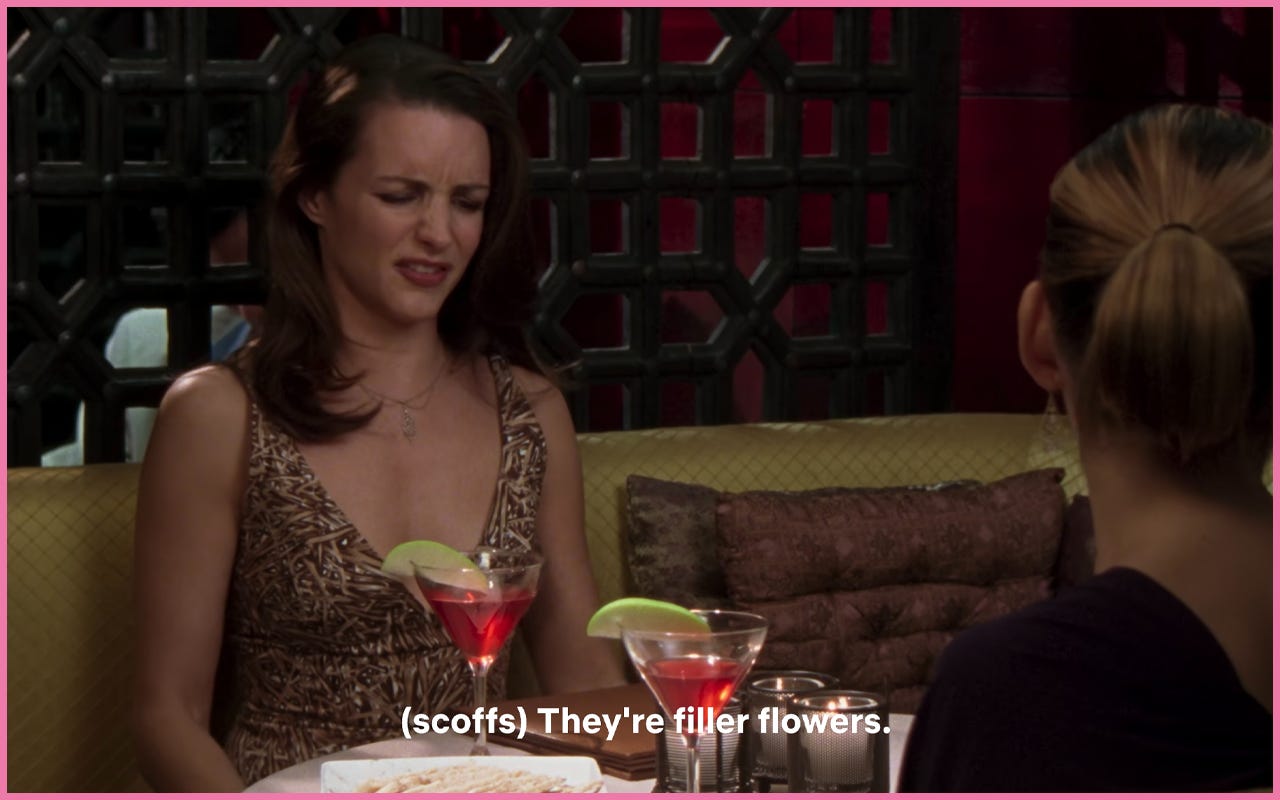
Carnations never started as what we now think of as filler flowers. Their downgrade to “filler” status is mostly economic. They are grown in large quantities, dyed in every color imaginable, easy to ship, and long-lasting (often up to two or three weeks). They became overexposed and generic. For florists working at scale, carnations are practical: they add volume, hold up well, and bulk out arrangements without driving up cost. I like filler flowers, but I wouldn’t say carnations are my favorite, but I like that they are dependable and can hold everything together.

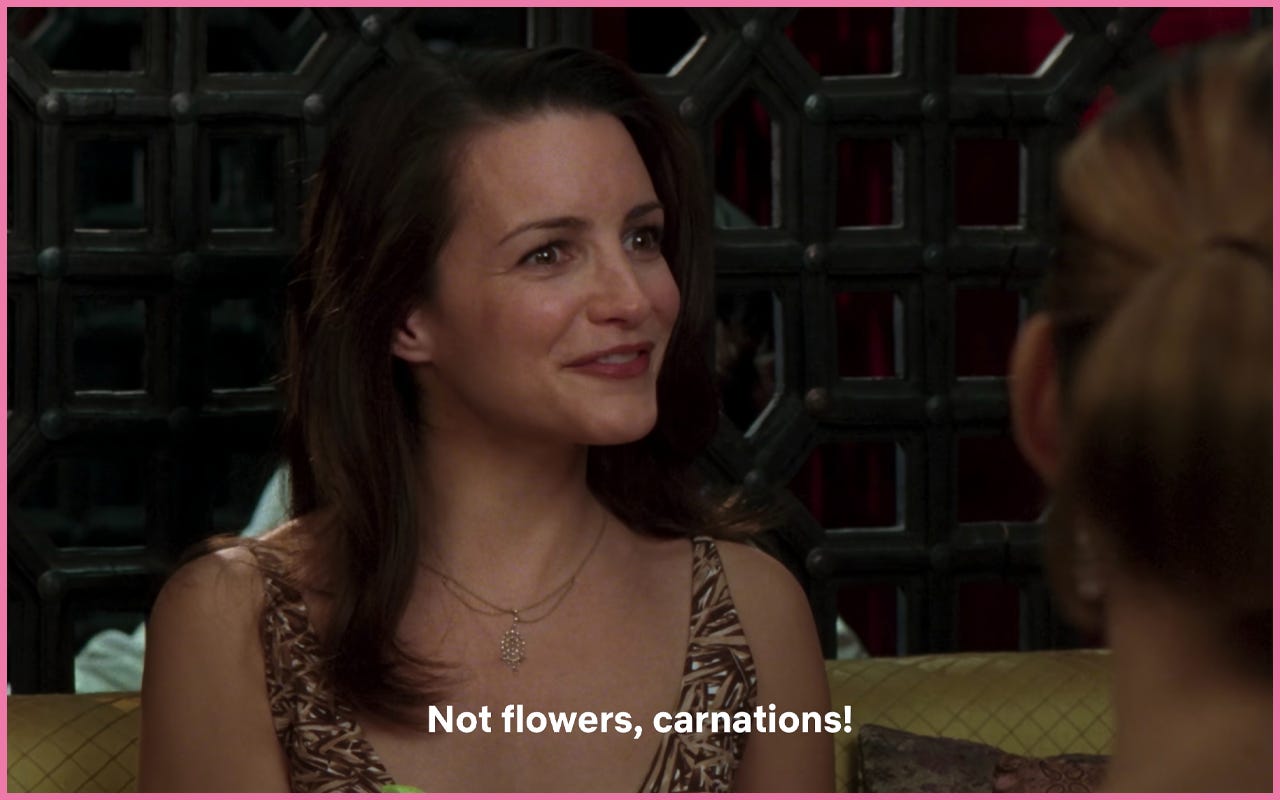
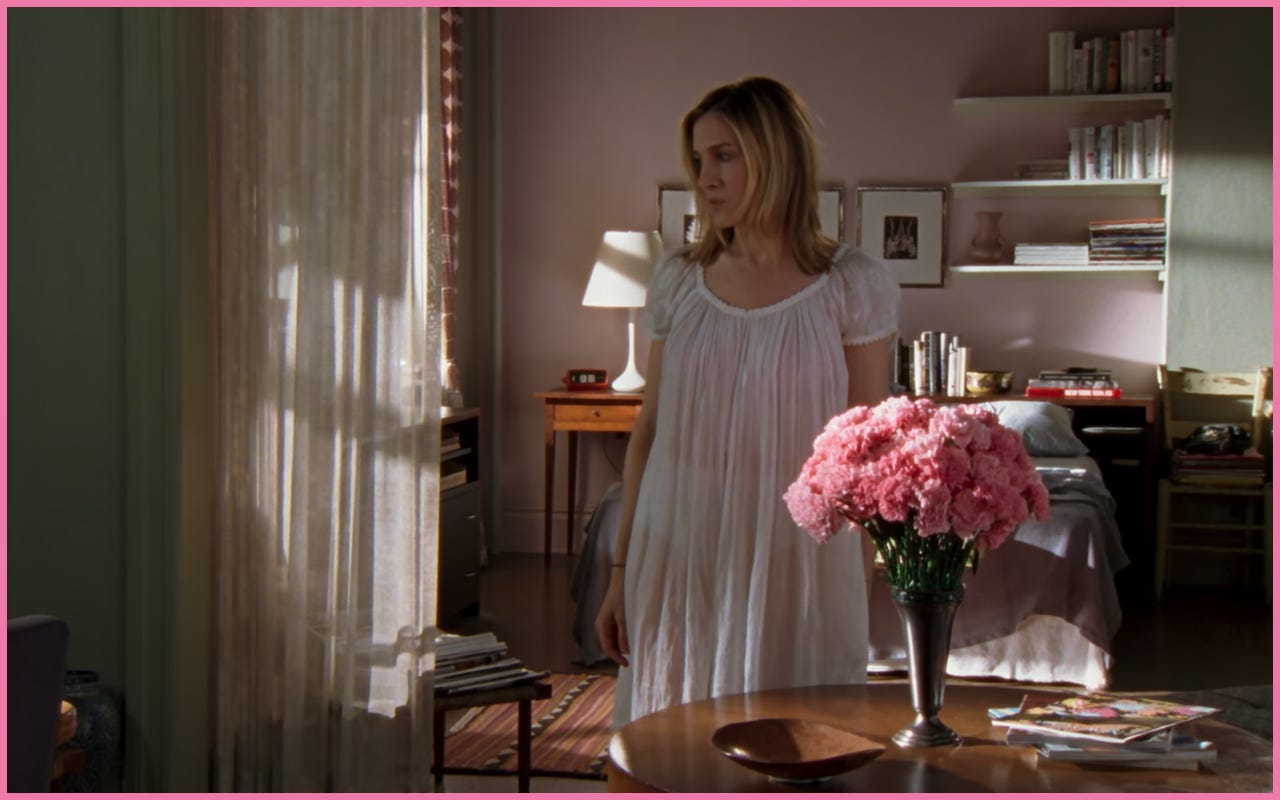
Although if a man gifted me a bouquet of carnations, I’d be a little peeved (it’s that serious). In Sex and the City season 6 episode 6, “Hop, Skip and a Week” Carrie’s boyfriend Berger gives her a bouquet of pink carnations. This happens after Charlotte says carnations are filler flowers and show a lack of effort on a guy’s part. Carrie chimes in and says she actually likes carnations, especially pink ones, and that they are “making a comeback.” Not long after, Berger shows up at Carrie’s apartment with a surprise bouquet of pink carnations. Carrie loves the flowers and kisses him.
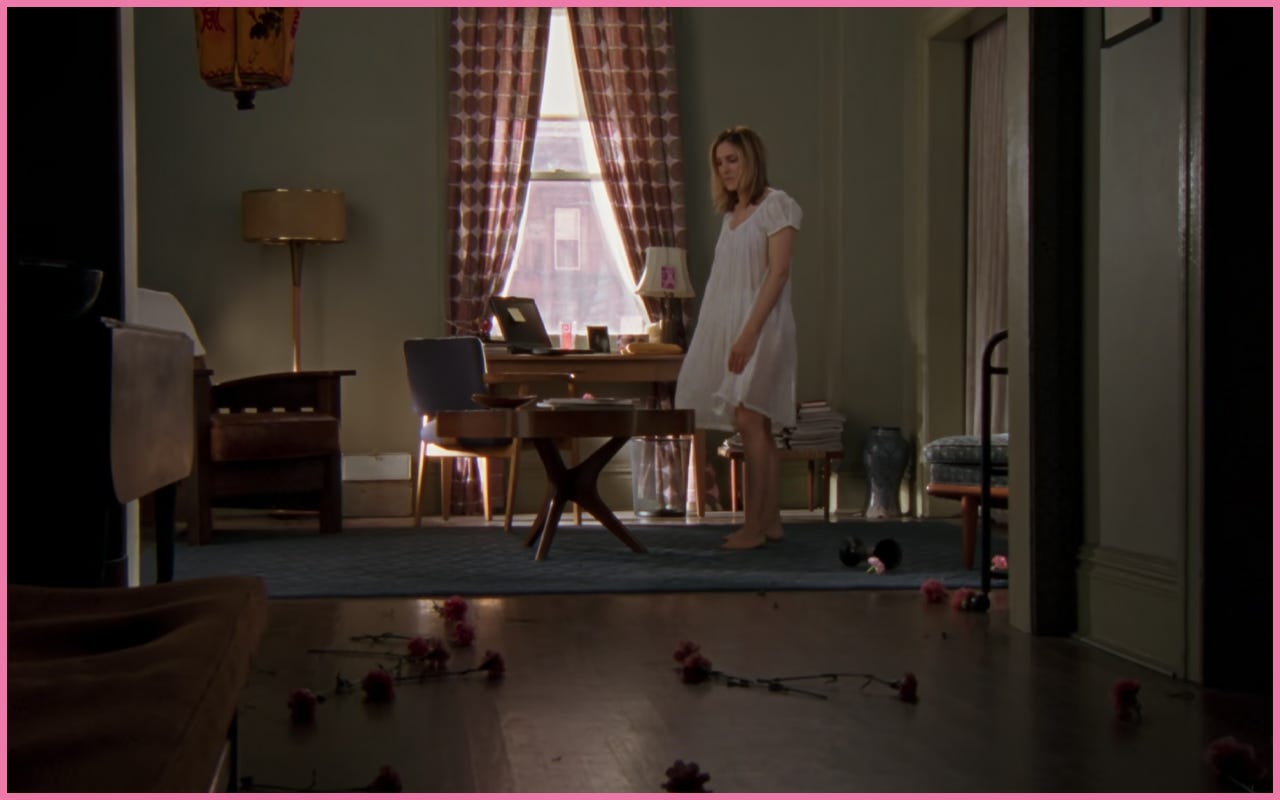
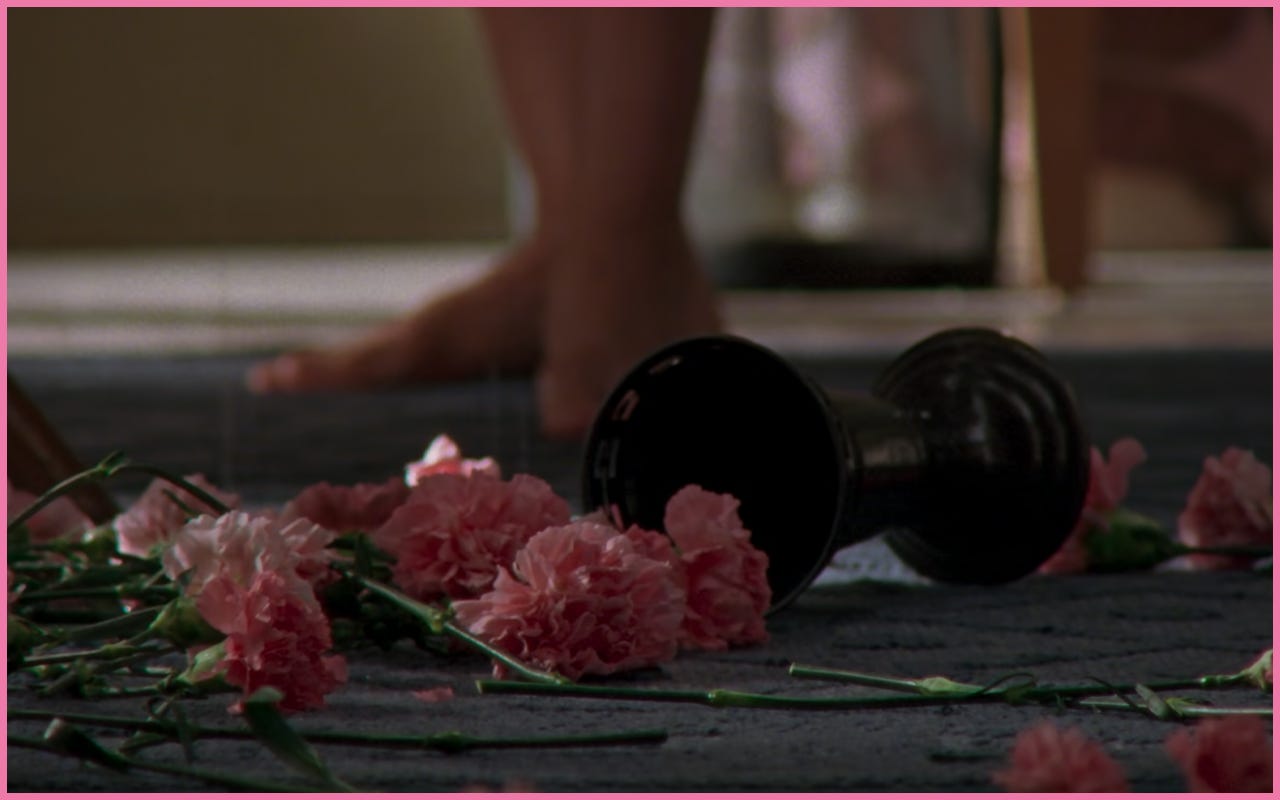
The episode ends in a classic Sex and the City and slightly cinematic way, with Berger secretly leaving Carrie’s apartment and breaking up with her via a Post-it note that says, “I’m sorry I can’t, don’t hate me.” Carrie knocks over the vase sending the flowers scatter across her apartment while she stands there quietly. Woah.



Color meaning
Different color carnations symbolize different meanings:
Red carnation symbolizes admiration
White carnations stood for purity, innocence, and remembrance
Purple carnations symbolizes unpredictability
Pink carnations symbolizes gratitude
Yellow carnations symbolizes disappointment
The green carnation isn’t a natural color. It was created in the late 19th century by dyeing white carnations green. The flower became a symbol for gay men in Europe, its unusual color standing out just enough without drawing suspicion. Oscar Wilde asked his friends to pin green carnations to their lapels for the 1892 premiere of his play Lady Windermere’s Fan.
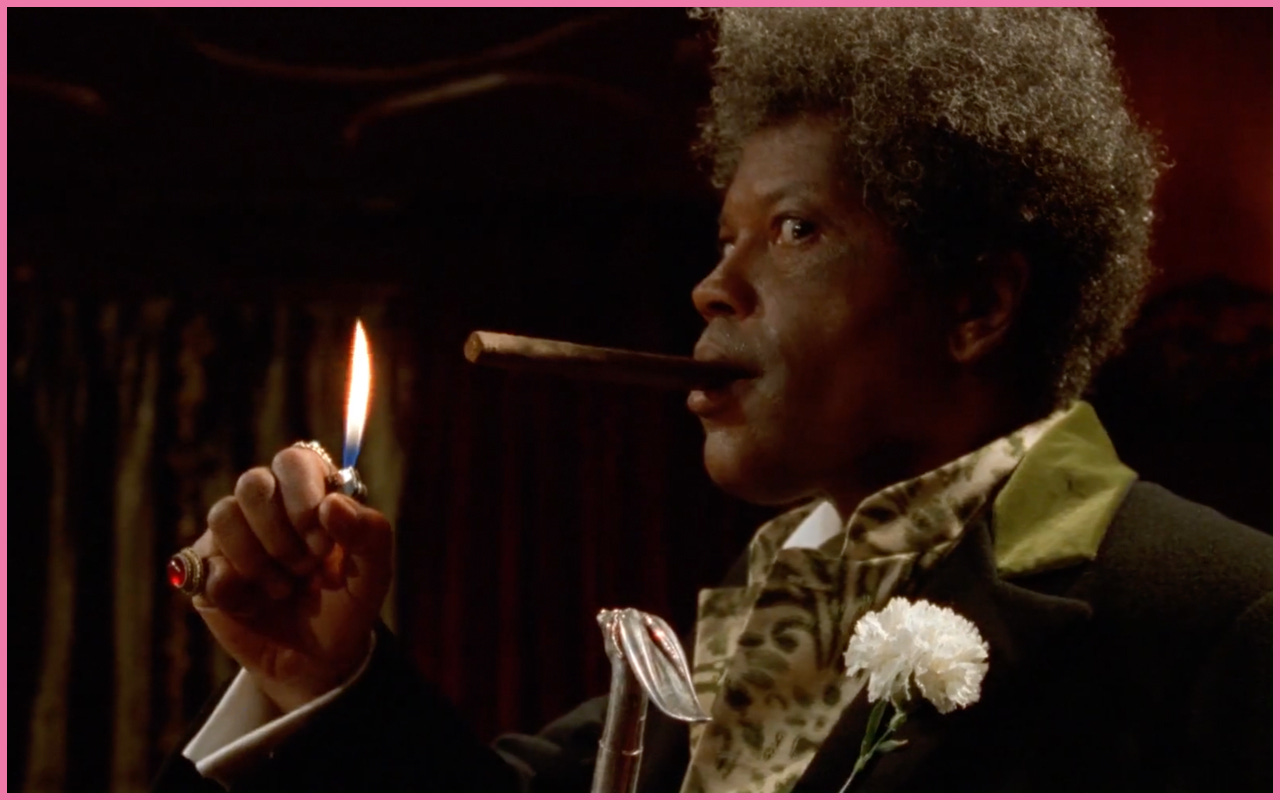
Boutonnière
The French word boutonnière means “buttonhole flower.” Carnations often end up in boutonnières for practical reasons. Since they are very sturdy flowers, they can survive hours of hugging, dancing, and heat, and they hold up well when pinned to fabric thanks to their thick petals and stems. They can go a long time without water and still look fresh, which isn’t the case for many other flowers.
In the 16th century, boutonnières were worn to ward off evil spirits, bad luck, and disease, and to mask unpleasant odors in a time before regular bathing and modern hygiene. Once carnations became the standard for formal wear in the 19th and early 20th centuries, they simply stuck. Even when other flowers are used today, like red roses, the mental image of a boutonnière is still a carnation.
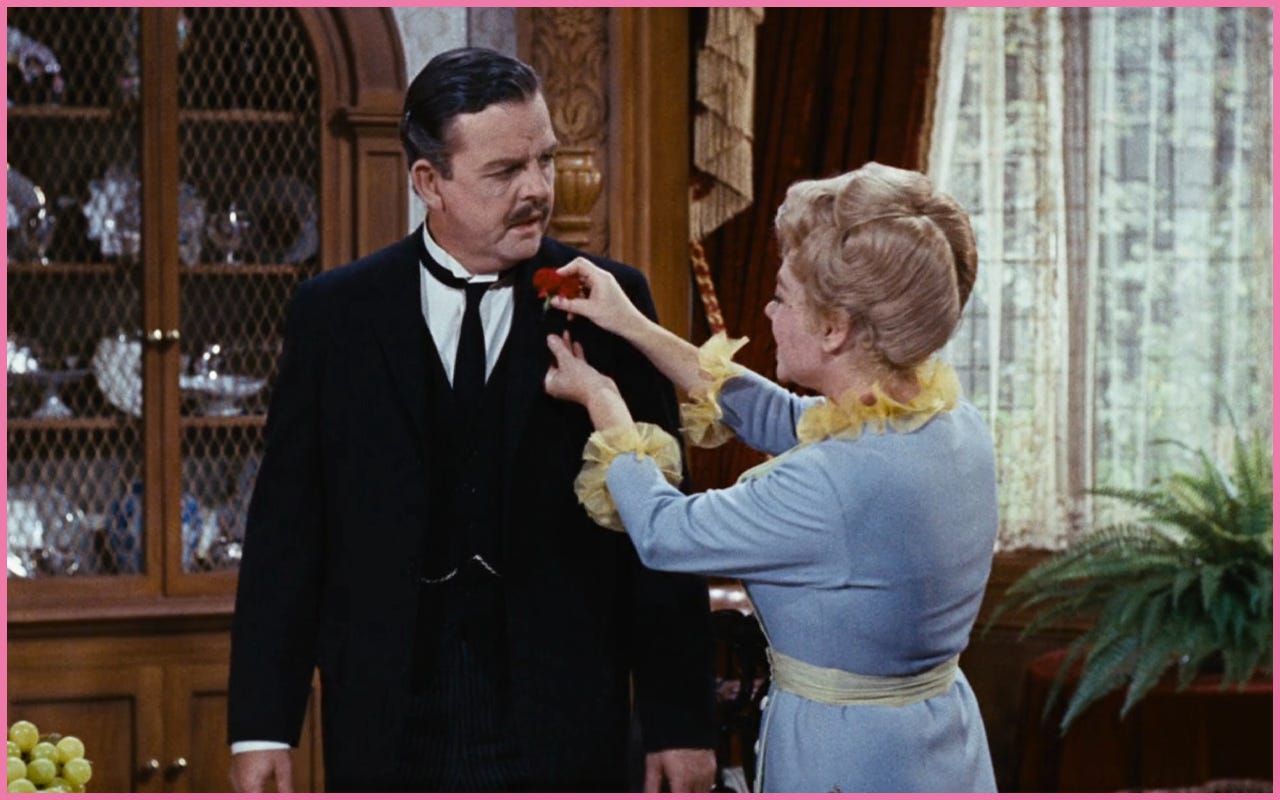
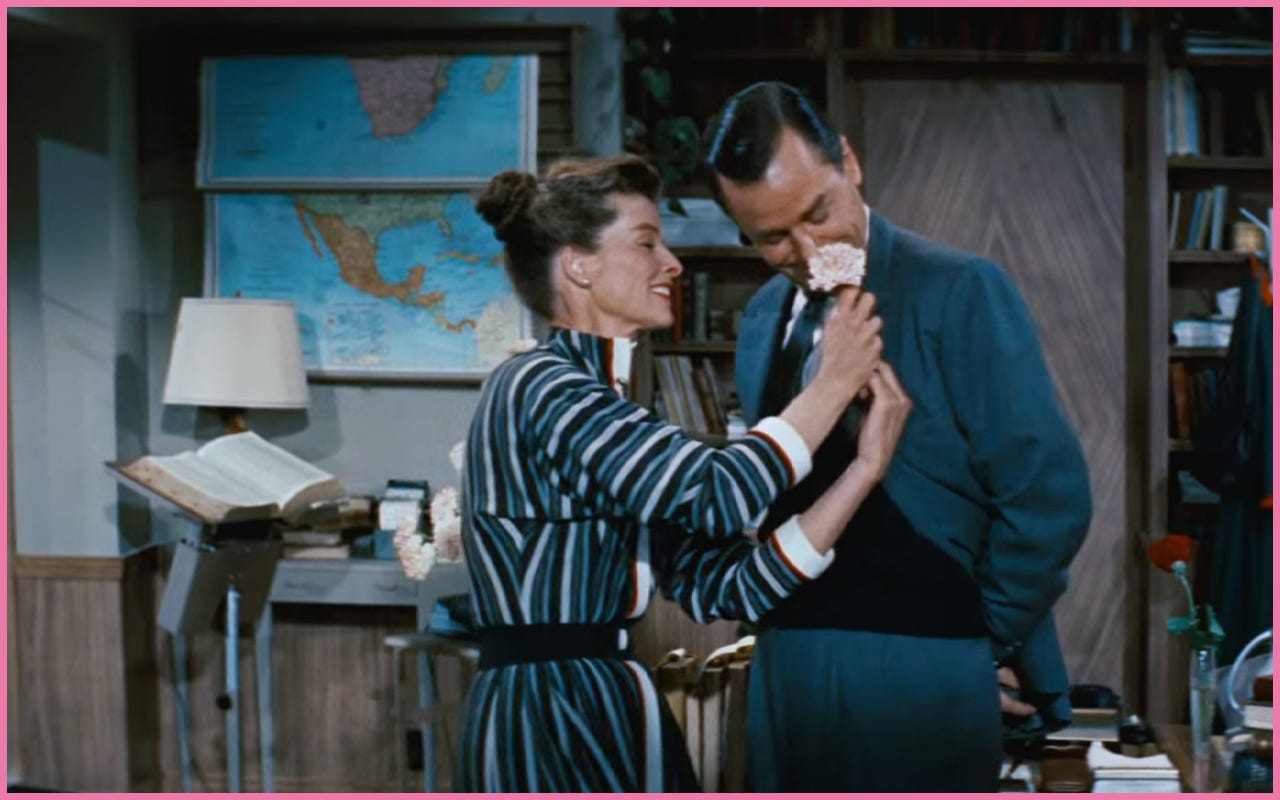

White carnations in weddings symbolize pure love, innocence, faithfulness, and good luck for the new couple. Good luck is something Priscilla could’ve used in that marriage to Elvis.
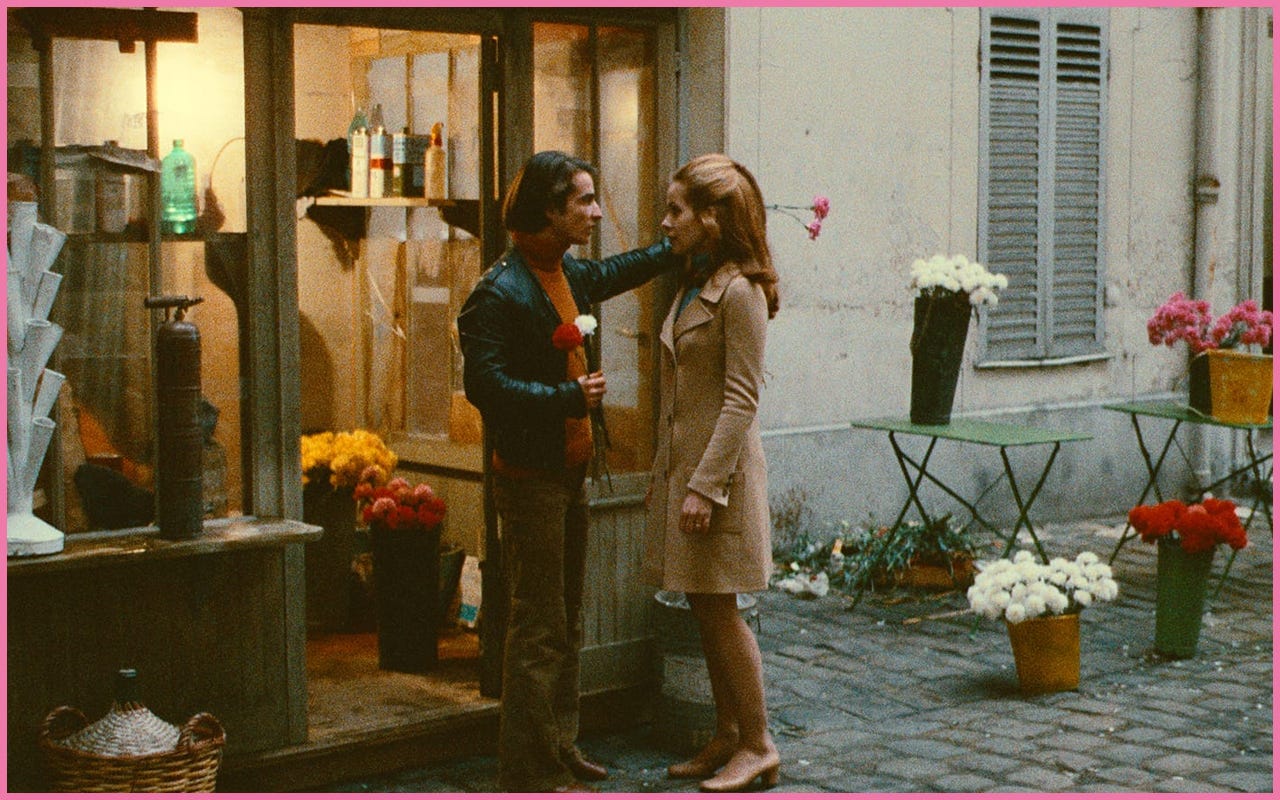
Dyeing ? Colorado?
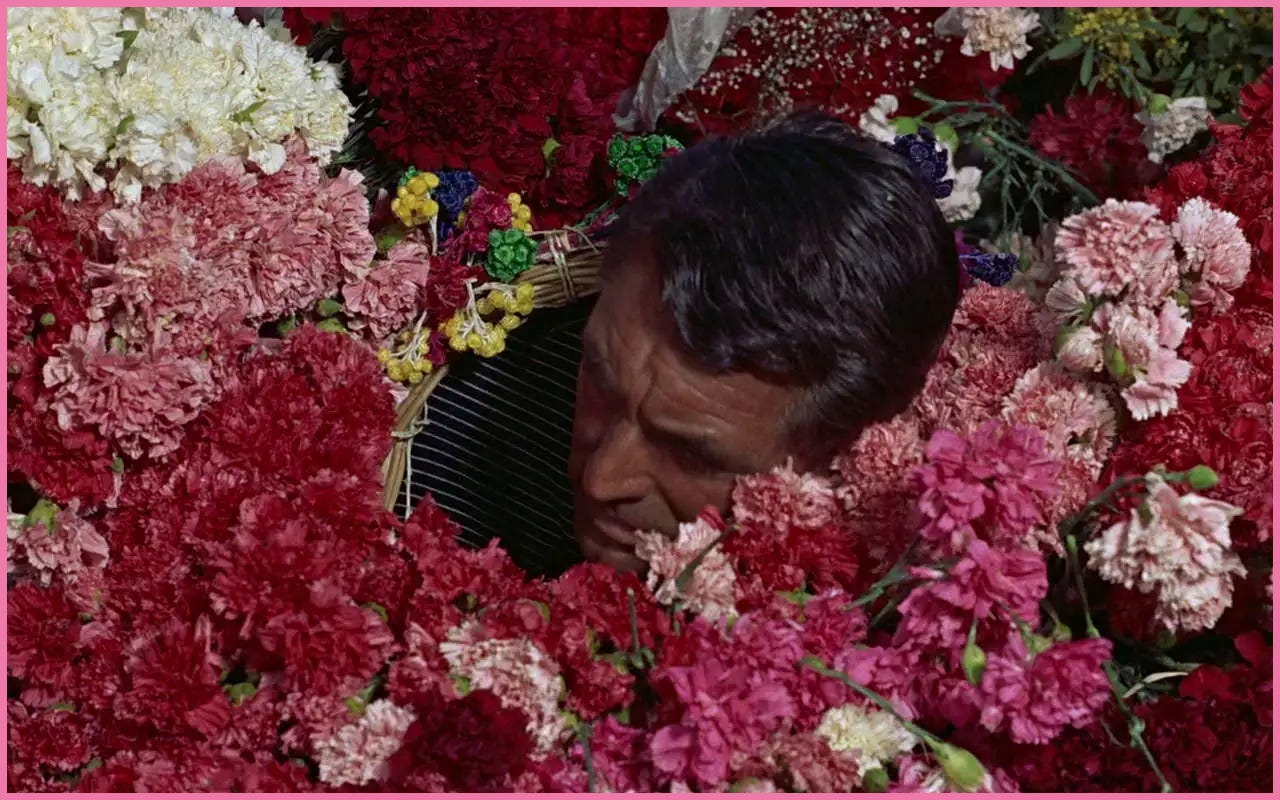
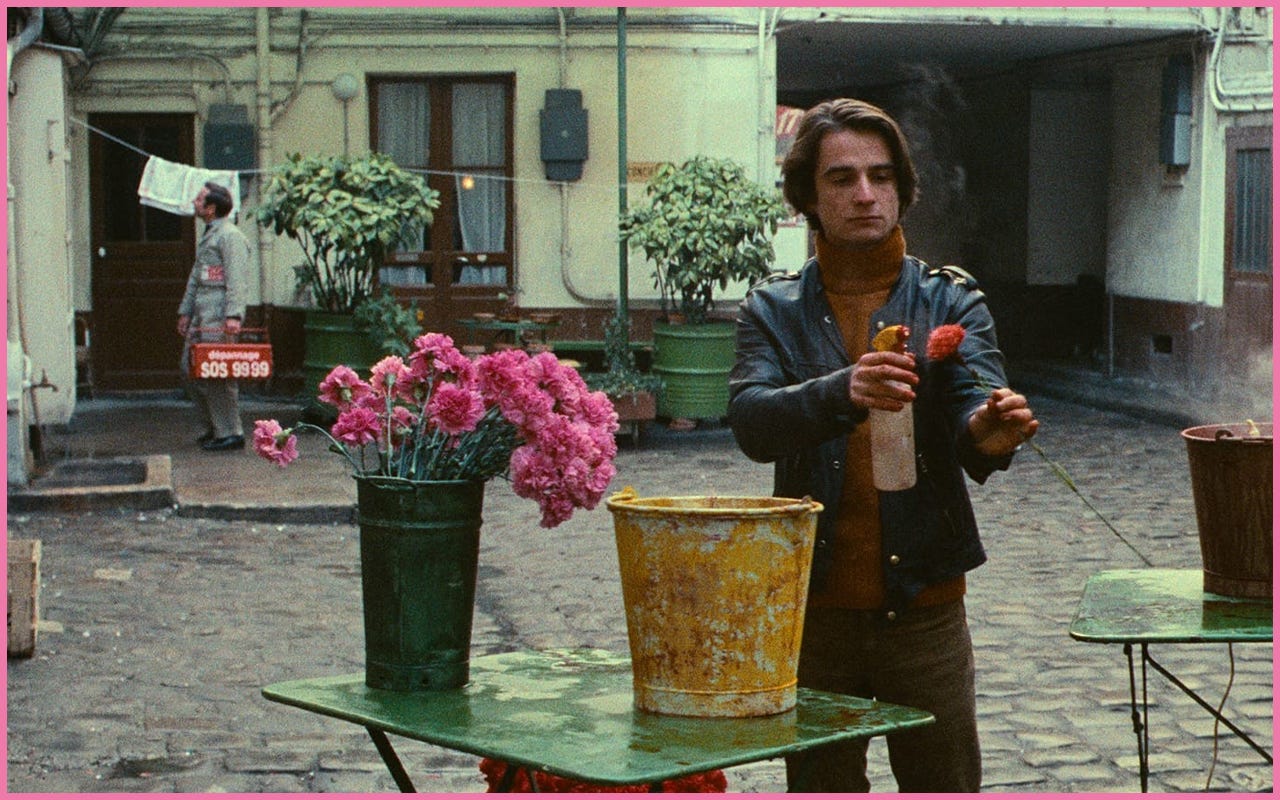
In the opening scene of Bed and Board (1970), Jean‑Pierre Léaud plays Antoine Doinel, working in a courtyard trying to dye carnations for flower shops. His experiments with coloring agents quickly go awry, leaving him with ruined flowers and ultimately costing him his job.
Decades earlier, in the 1880s, an irrigation ditch was built to channel water from Platte River Canyon into Denver, making greenhouse cultivation possible and fueling rapid growth in Colorado’s floral industry. The state’s climate, with high-altitude sunlight, warm days, and cool nights, proved ideal for growing carnations. By 1929, Colorado’s flower industry was making more money than gold, with carnations leading the way.
In the 1950s, Englewood, Colorado, florist and greenhouse owner Herman Oliner experimented with a process to dye carnations. His innovation helped expand the market for Colorado growers, and by 1954 the Englewood Chamber of Commerce celebrated the city as “Carnation City” for its thriving industry.
According to Herman’s nephew, Myron, his uncle’s greenhouse was in the heart of Englewood “on Elati Street just south of Hampden. Uncle Herman obtained a patent for the dye process to color the carnations. I was just a young boy when we lived a half block away, but I remember the warmth of the greenhouse and the lovely smell of the flowers. It was great fun!” 2
– Highlands Ranch Historical Society
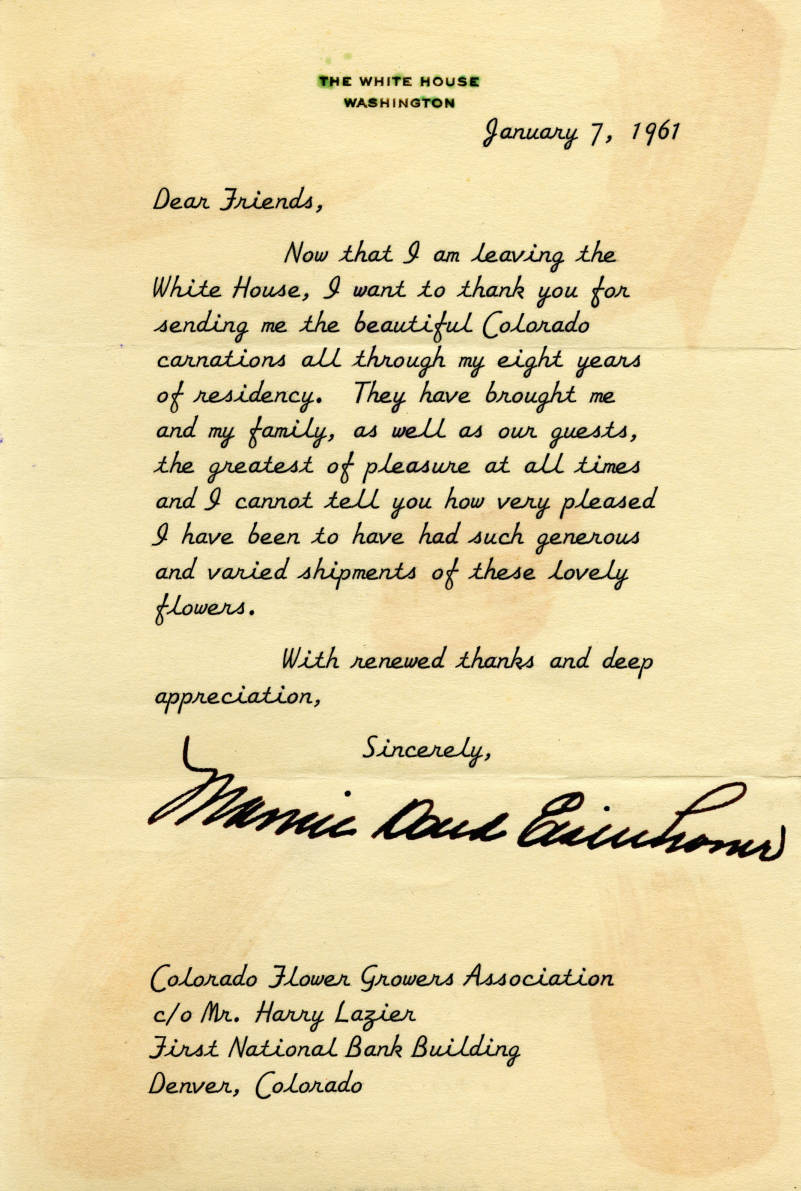
First Lady Mamie Eisenhower wrote to the Colorado Flower Growers Association to thank them for the regular shipments of carnations she received during her eight years in the White House.
While California produced more carnations overall, Colorado became renowned for the quality of its blooms, which were consistently judged the finest and even carried a gold seal to mark their perfection.

Mother Of Mother’s Day
The carnation is the official Mother’s Day flower. The celebration of Mother’s Day, which honors all mothers and their sacrifices for their children, only spread across the country in the early 1900s, due to activist Anna Jarvis. Throughout Anna’s youth, she heard her mother express her desire for someone to one day construct a monument for all moms, living and dead. Anna’s mother passed away in 1905, and she promised at her grave that she would be the one to make that dream come true. Her mother loved carnations, so she gathered hundreds of them for her funeral. Over the years, she began a never-ending campaign to persuade governors in every state to establish the second Sunday of May (the closest Sunday to her mother’s death anniversary) as Mother’s Day. 3
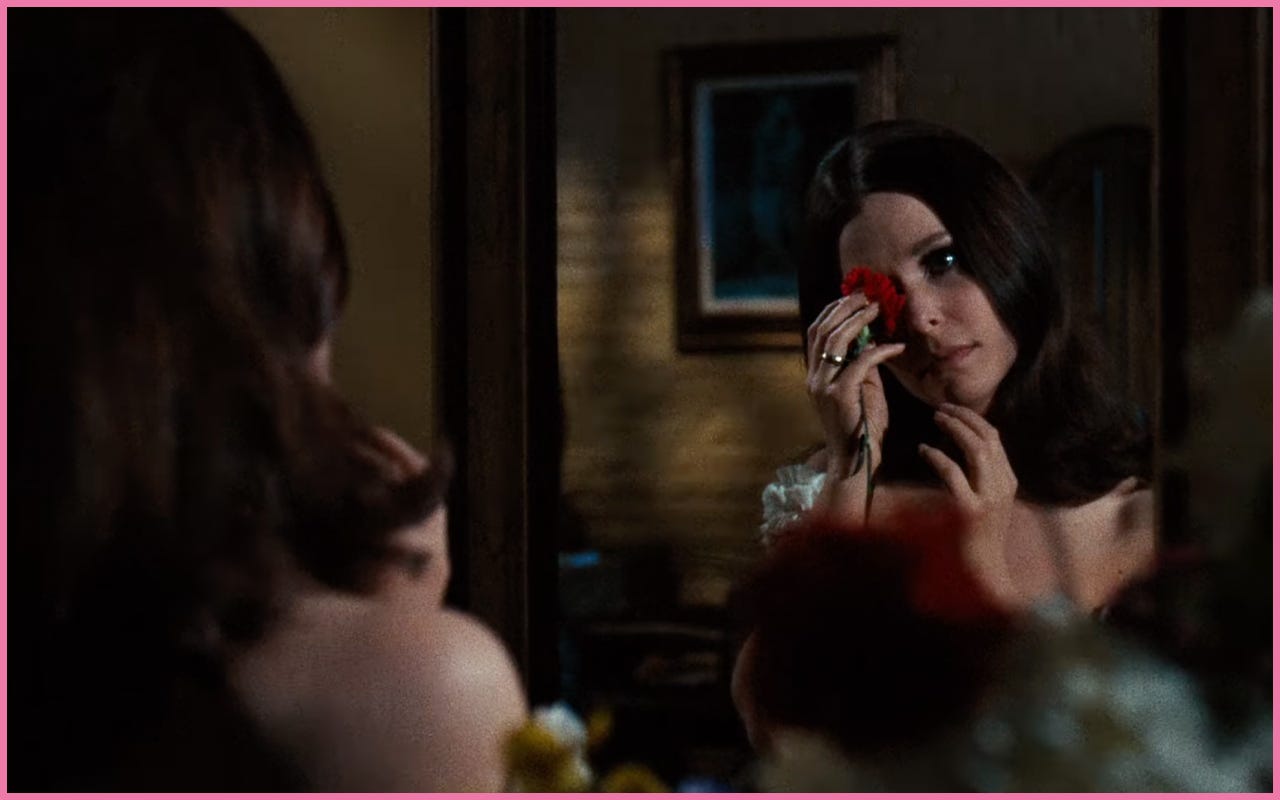

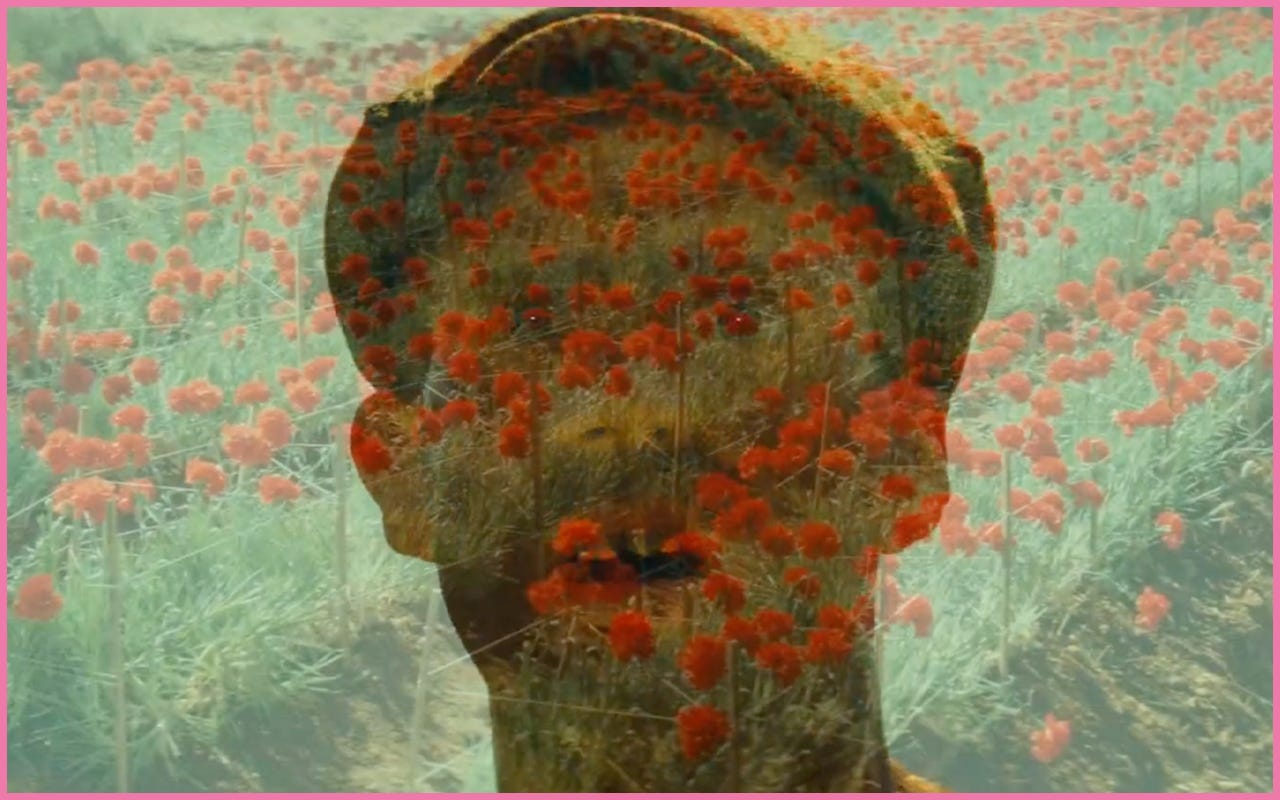
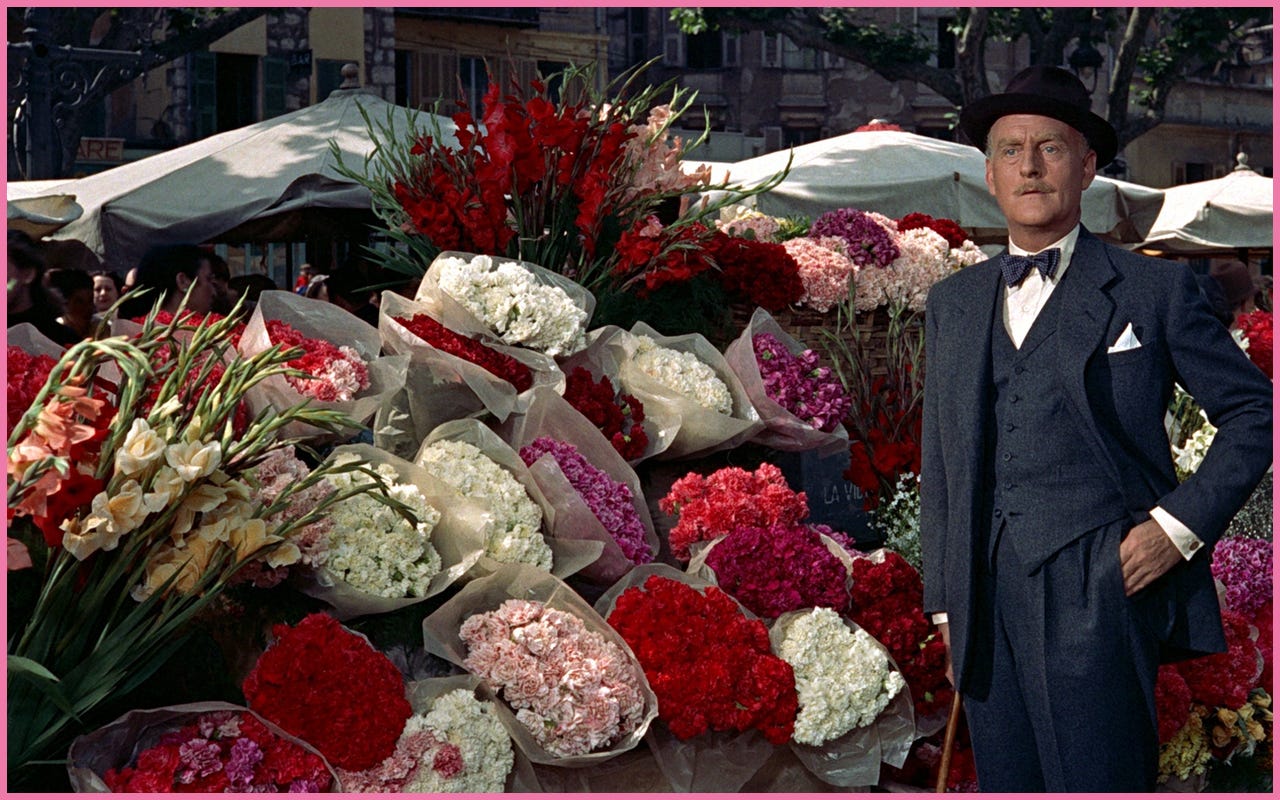
Whether you love them or loathe them, carnations have left their mark on history, from a symbol of gay identity to a celebration of motherhood. The red carnation is Ohio’s state flower and Spain’s national flower, a flower that travels all over the world. Carnations remind us that even the humblest flowers can hold a remarkable significance.
Love,
Iris Diane

Keep reading


Footnotes
https://www.shakespeare.org.uk/explore-shakespeare/blogs/the-fairest-flowers-o-the-season-are-the-carnations-illustrations-of-carnations-in-rare-and-early-printed-books/
https://thehrhs.org/carnation-city/
https://flowersincinema.substack.com/p/what-a-terrible-combination
Carnations are so beautiful. My favorite color is called “hypnosis lavender” and if you catch it in the right light it has an iridescent look. Also there is a natural lime green carnation called Marty I believe…
I loved reading this! I’ve got a real soft spot for carnations.